The SKTCHD AWRDS: The Comics of 2025
The Comics of 2025 now stand revealed.
Or at least my Comics of 2025 do, as The SKTCHD AWRDS get to the main event today after my Creators of 2025 dropped last week. This edition finds my 25(ish) comics of the year receiving awards to highlight what made them my favorites. It’s worth noting that this doesn’t just cover single issue comics or graphic novels. Those types of comics are included, but so are manga titles, web-based comic strips, Kickstarter comics, blink and you’ll miss it digital releases, and a whole lot more. And while that’s a lot already, my actual reading list was far, far more robust and existed across even more formats. That was the only way to end up with a final list of favorites that looks like this. It was a heavy year of reading, but one that resulted in maybe the most eclectic list of comics ever highlighted in The SKTCHD AWRDS.
That said, it couldn’t just be any comic. I had very specific guidelines that helped me decide which releases could make the cut. After all, I am a rule-based creature, and this is the only way I could get to the right results. So, what were those rules? Well, they were the following:
- This isn’t a list of the “best” comics of the year. I don’t believe I can determine that on my own. What I can do is share my favorites and what I loved about them. That’s what this is.
- Another reason this isn’t a “best of” list is while quality was my primary determinant, I’d be lying if I said the pleasure of the reading experience wasn’t crucial to me. So, keep that in mind.
- I only considered a single-issue title if it released a minimum of three issues within the confines of the year or if it was a complete story within whatever number of issues it released.
- Work released in 2025 was my sole focus. However, if I read a title in single issues in 2024 or before, it wasn’t an option. Apologies to many, many trade paperbacks, as well as some graphic novels that were rereleases or collected works released in another form!
- That said, there were a couple exceptions to that previous rule made in here for stories that never had a standalone print release before 2025. It’s a cheat, but it’s a reasonable one, in my opinion.
- One other exception: If a comic was published in another language before 2025 but arrived in English for the first time this year, it was eligible for these awards.
That’s it! Let’s get to handing out awards, as all 25 winners of The SKTCHD AWRDS can be found below. It’s even open to non-subscribers. If you enjoy this piece and would like to support the work that went into it, consider subscribing to SKTCHD to read more work like it and to back the work I do.
The Absolute King Award: Absolute Batman
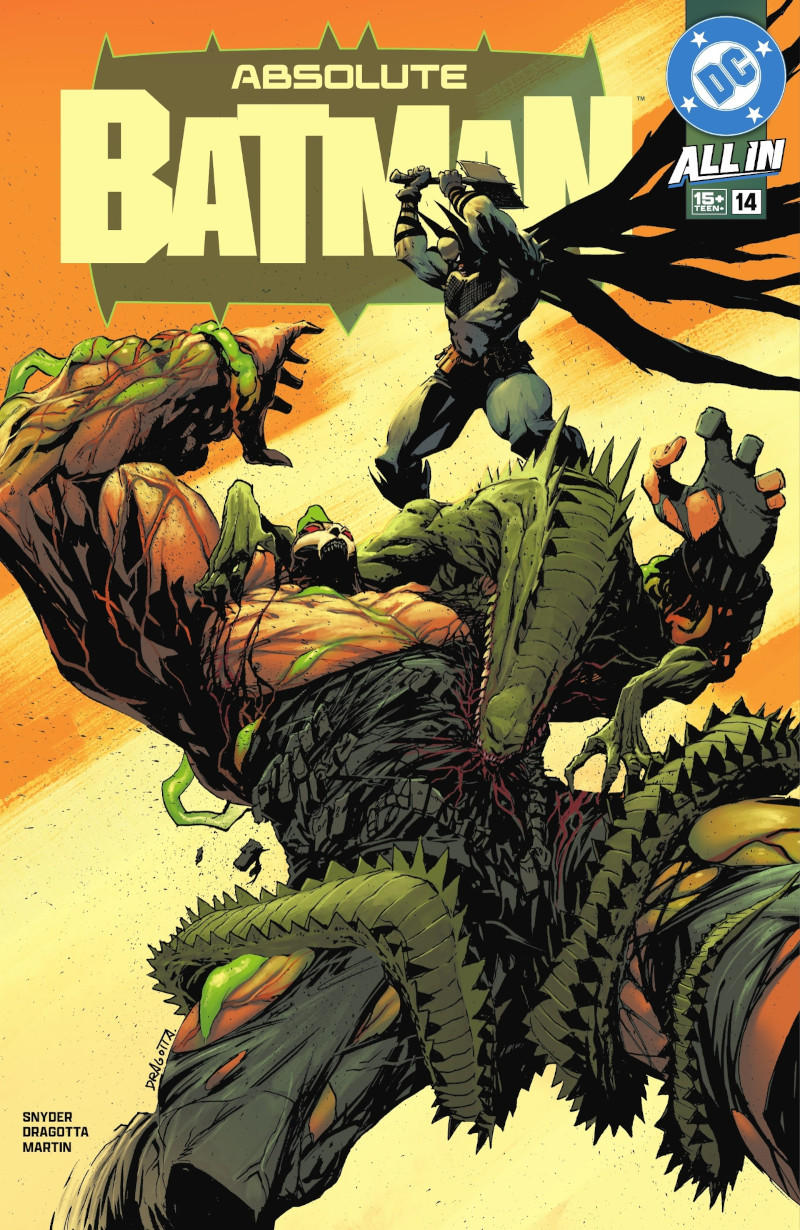
Why It Made the Cut: Here’s a funny thing about the cover to Absolute Batman #1 I only noticed recently, something that wasn’t intentional but still feels meaningful: If you wanted to, you could see the Image Comics “i” logo on it. Or at least part of it. It’s not there, but it is there, right behind Batman, if you look for it.
The reason I bring that up isn’t to expose some sort of trickery by artist Nick Dragotta or anything of that sort. Instead, that accidental Image “i” feels like a subconscious statement of intent, an inadvertent admission that while this may be a Batman book, Dragotta, writer Scott Snyder, colorist Frank Martin, and letterer Clayton Cowles meant to bring a creator-owned energy to this series. And they absolutely have. Absolute Batman is the comic book king of escalation. It started big and has only gotten wilder and more unexpected with each passing issue. It’s not an Image book, but it’s tapping into that “anything goes” mindset with Batman in a way I’m not sure we’ve seen before outside a few legendary exceptions. That’s proven to be a delicious and intoxicating flavor for readers, who cannot seem to get enough of the madness the team brings to this series.
That alone would have earned Absolute Batman a spot on this list. It’s a great comic, and a comic that’s trying to be more than what we expect. That deserves to be rewarded, in of itself. But when you throw in the annual for the series that starred three different cartoonists in Daniel Warren Johnson, James Harren, and Meredith McClaren, it gets even further into that creator-owned vibe, with writer/artists leading the way on maybe the most renowned and talked about single issue release of the year, albeit one I’m admittedly lower on than the consensus. Regardless of the result, the intent was to take a big swing and in a way we don’t usually see from a publisher like DC, and my god, what a swing it was.
That’s Absolute Batman’s entire vibe, though. It swings for the fences. While it doesn’t always make contact, I respect the hell out of the attempts — especially when the team does connect.
The Absolute Queen Award: Absolute Wonder Woman
Why It Made the Cut: Each comic book is the result of a creator or creators choosing from a menu with an infinite number of choices. From the scripting process and layouts to the actual drawing, coloring, and lettering of the issue, someone has to decide every step of the way “this should go there,” “that shouldn’t happen at all,” or “this should look like that” from a list of options that has no limits. It’s a choose-your-own-adventure story, and quite often a team-based one at that, somehow multiplying that already infinite number of possibilities to an even greater one when that’s not even theoretically possible. So, needless to say, it’s understandable when a comic doesn’t work. It’s a miracle when one does!
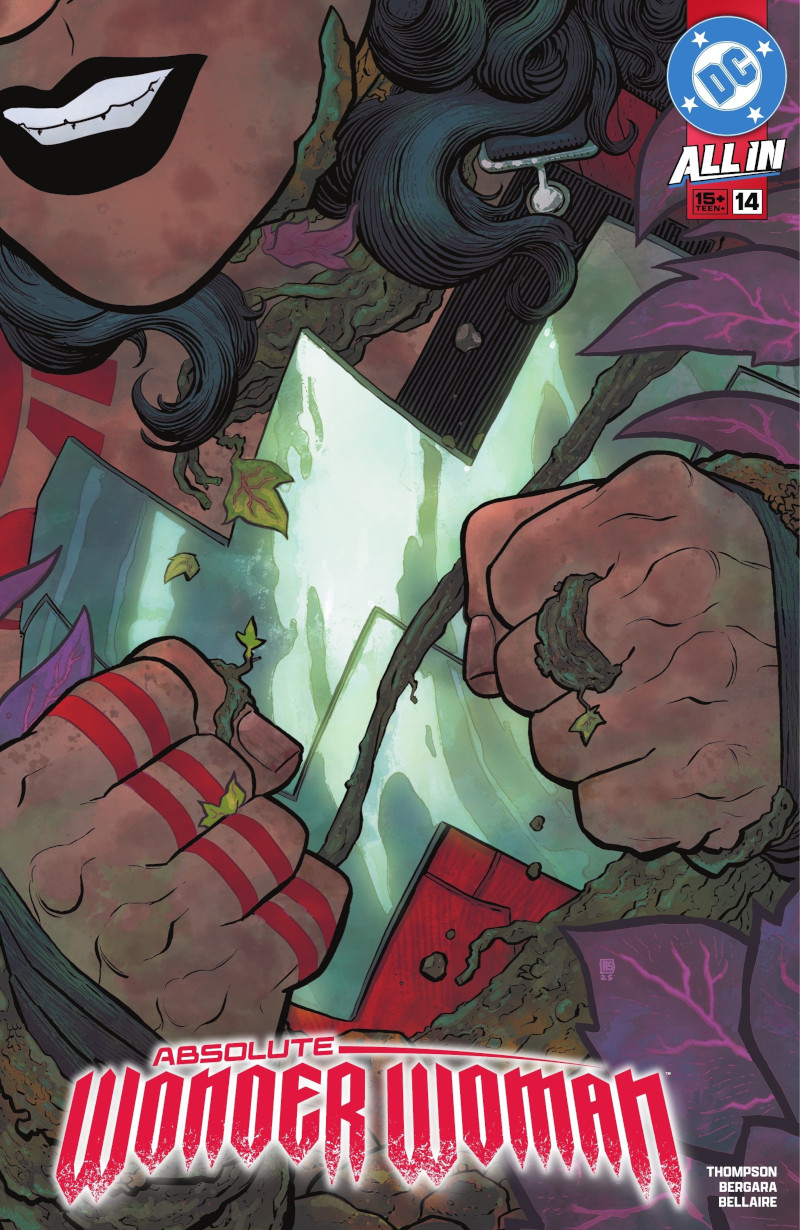
That’s why Absolute Wonder Woman is so impressive. It finds the core team of Kelly Thompson, Hayden Sherman, Jordie Bellaire, and Becca Carey — as well as guest artists in Matías Bergara and Mattia De Iulis — looking at those infinite options in front of them and somehow making the choice necessary to elevate their book each time. Whether it’s a quiet line from Thompson, a look by Diana from Sherman, an idiosyncratic color selection by Bellaire, or the right lettering choice by Carey, this team always seems to land on the move that will lift the book and creative team up into a higher stratosphere than we’d typically expect. They’re less a collection of individuals and more of a Voltron-like collective, assembling to execute a unified comic vision in a way we rarely get.
That’s an atypical thing. Not every team aligns in that way, or does so on a consistent basis. But it’s something this team does with apparent ease, and has been since the first issue arrived in our lives. Absolute Wonder Woman is a comic that’s greater than the sum of its parts, one that results in not just the strongest title from the vaunted Absolute line, but the finest superhero comic going today.
The Real World Award: Assorted Crisis Events
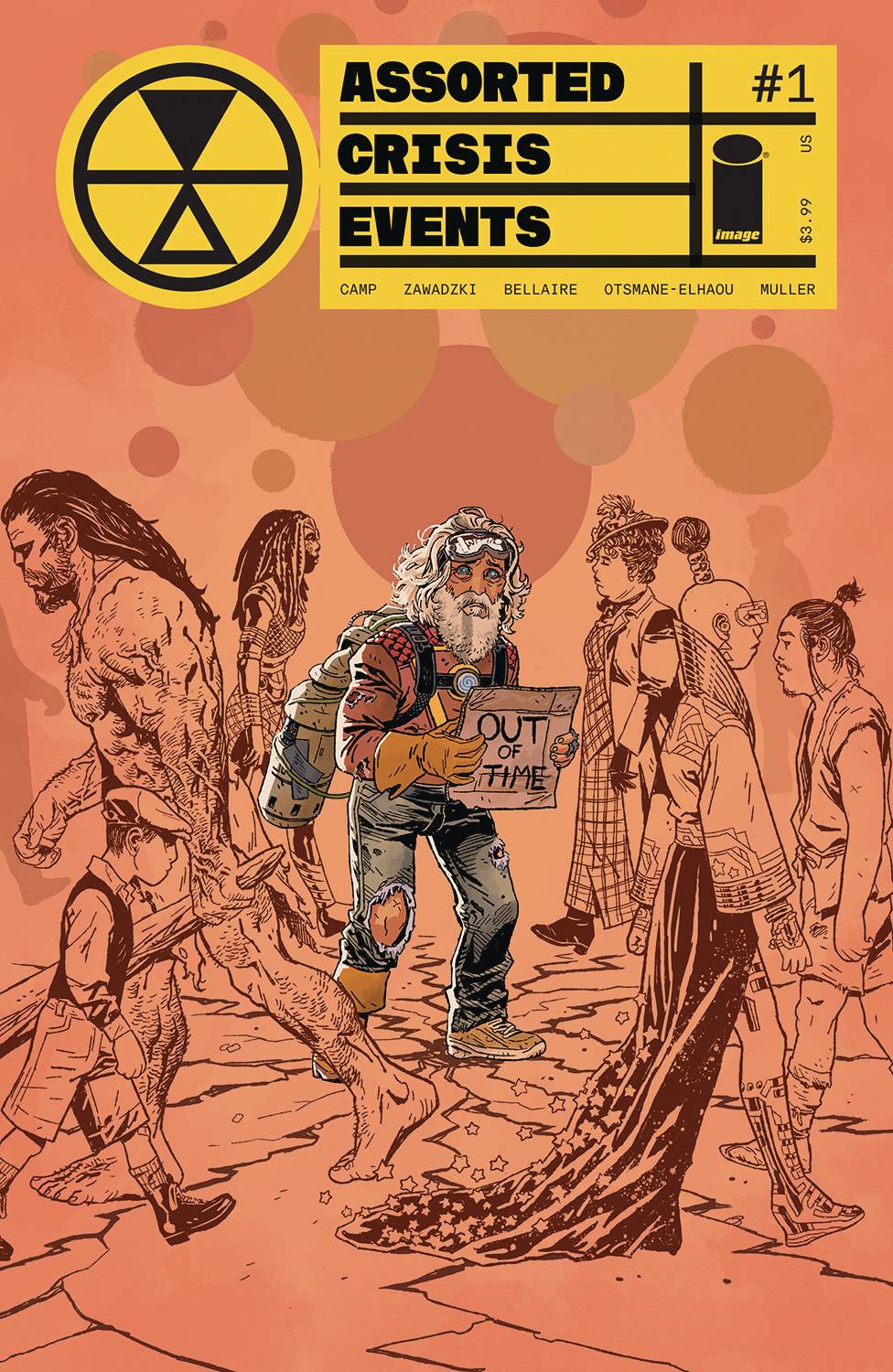
Why It Made the Cut: Telling a story about regular people can be difficult in single issue comics, because there’s some level of expectation that everything and everyone has to be heightened. It can also be hard to succeed while telling a science fiction story in single issue comics, if only because it can be challenge to stand out when there are so many others in the space. Pair those two together, and one might have been dubious going into Assorted Crisis Events, this year’s new Image Comics series from writer Deniz Camp, artist Eric Zawadzki, colorist Jordie Bellaire, and letterer Hassan Otsmane-Elhaou.
It is, at its core, a story about regular people trying to live their lives as everything breaks down around them in a science fiction story, one in a normal city that is constantly in chaos because a fracture in time has led to different periods bleeding into one another. And yet, the choice to marry normalcy with anything but was an inspired one, and it results in a story that feels incredibly of the moment, as we trod through our normal existences as the unimaginable surrounds us at all times. It also ensured that Assorted Crisis Events feels like nothing else on the stands, a comic that is half gut punch factory and half an insight into the human condition, and then somehow half again a gripping yarn that’s always changing and shifting thanks to its nature as a series of vaguely connected one-shots set within the same structure.
It’s a wild book, one that will admittedly make you feel pretty bad in the process of reading it. That “gut punch factory” comment was not a joke. Assorted Crisis Events puts its characters through the ringer, with no one escaping the issue unscathed, including readers themselves. It might change you, or at the very least, make you feel as if you need to change. That’s a lot, which may make this a polarizing read. But it’s also an incredible one, one that merges the real world and a fantastical one in a rare way, and results in something unlike any other comic on the stands in the end.
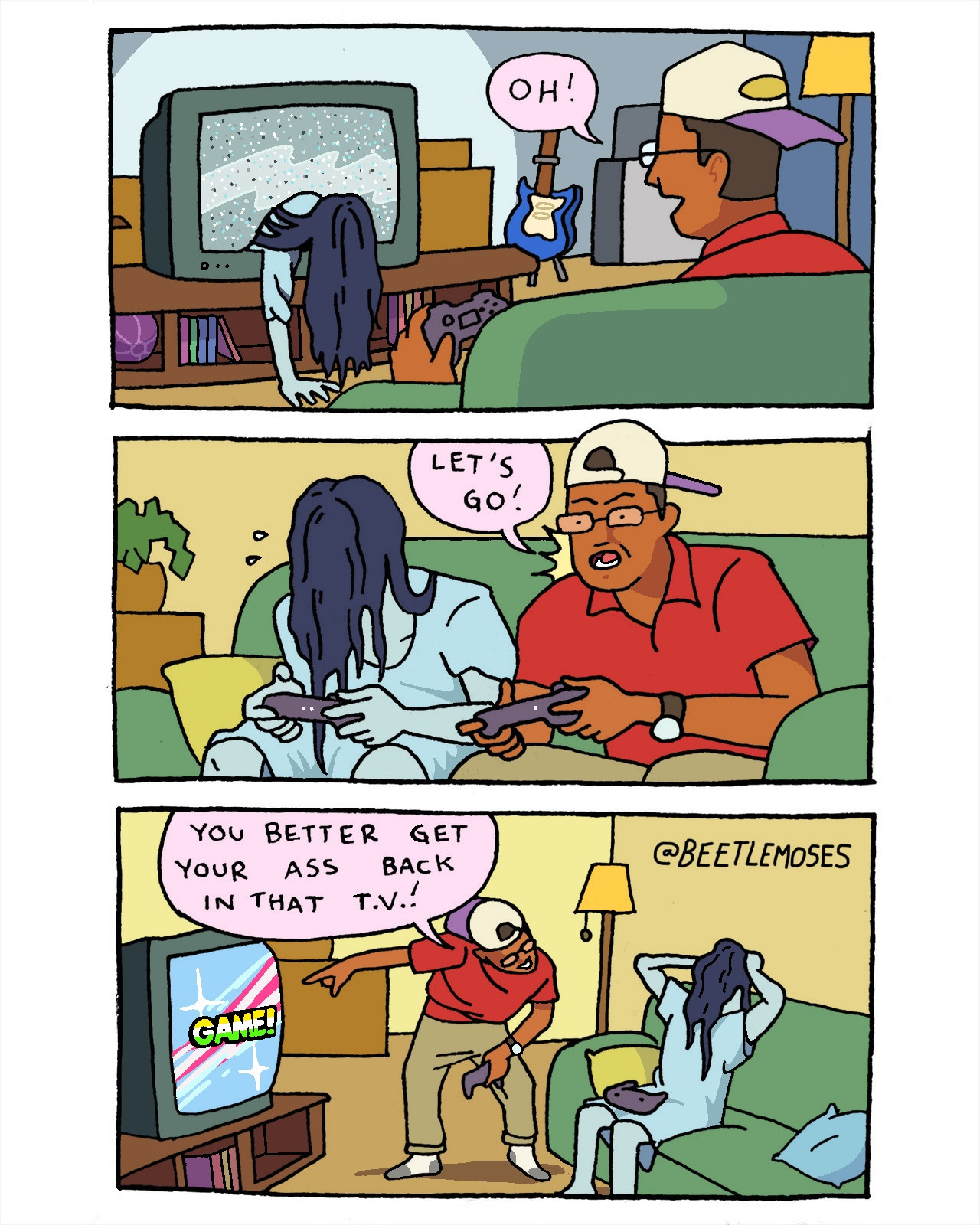
The Comic of the Year Award: Beetle Moses
Why It Made the Cut: There’s nothing else like Beetle Moses.
It’s a comic that is, on its surface, pretty simple. It’s a comic strip. We’ve seen those before, right? It’s two or three panels, and it typically results in a joke. More than that, it’s a social media based one, which tend to be quick hitters that you laugh at and move on from. That’s not to demean those types of comics, but they’re algorithmic delights, strips we are entertained by above all. That’s a great thing, and I enjoy many of those strips.
But to look at Beetle Moses on the surface is to ignore its depths, which is where the true magic lies. I’ve described this comic strip — which is by a cartoonist also named Beetle Moses, but his real name is Harris Fishman — as a unique fusion of traditional comic strip structures and meme culture, but even that is underrating what it is. It’s a carefully cultivated joke telling machine, one built on preposterous concepts that somehow elevate into high art, albeit high art that is sometimes about a dude cooking the girl from The Ring at Smash Brothers after she dares to climb out of his TV.
I mean, just look at the subtle choices throughout that strip above. The tiny decision to actually show the player one and two lights on their controllers. The classic Smash Bros. “GAME!” striking across the screen after he crushes her. Her anguish at the loss, as he haunts her in victory. Even something small like the classic white socks he’s wearing. Beetle Moses strips rarely orient on pop culture to this degree, but when he takes that path, the details he brings to the strip turn a dumb joke into a rich one that rewards someone who spends the time necessary to explore the full breadth of the gag. It’s funny without noticing those things. But the wonder of Beetle Moses is in those details.
Whether it’s in his typical strip comics or longer form works like my personal favorite in The Flyer, Beetle Moses exists at its base level as one of the funniest comic strips we’ve ever seen but extends far beyond that, becoming almost a Rorschach test for its reader. A strip could just be funny, or it could be emotional, inspirational, meaningful, or whatever else you get out of it. It depends on the person and what they get out of it. That’s an unusual thing, one that reinforces just how atypical this typical seeming comic is.
But I’ll tell you what I get out of Beetle Moses each and every time I read it: That it was my favorite comic of 2025, and it was from the time I started reading it.
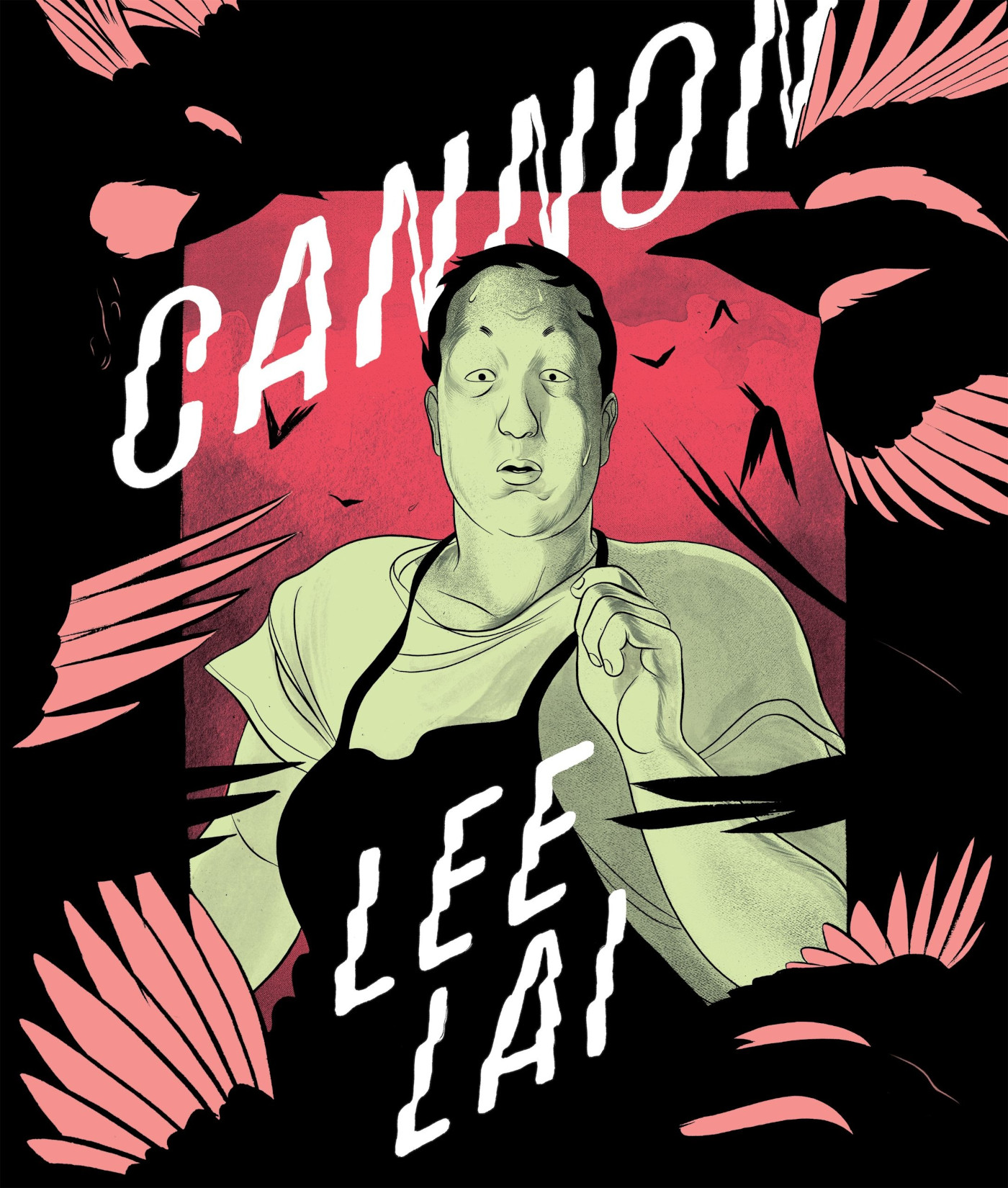
The Just Right Award: Cannon
Why It Made the Cut: Every decision Lee Lai makes in Cannon works. I’m not trying to overstate things or create hype or do anything like that. It’s just a point of emphasis I want to make because it underlines how in command of her craft Lai is in this book. We already knew the cartoonist had incredible potential thanks to Stone Fruit, Lai’s debut graphic novel that was one of my Comics of 2021. But Cannon finds her putting all that potential together in a comic that is filled with staggering cartooning, potent character work, and a story that anyone can feel, if they leave themselves open to it.
Cannon is about a character named Lucy, or “Cannon” as her best friend Trish calls her. She’s someone who excels at life in a lot of the ways you’re expected to. She’s good to her family, perhaps too good, she’s an exceptional chef who works at a renowned restaurant, one that takes advantage of her in multiple ways, and she’s unerringly generous to the people in her life, sometimes to her detriment. Cannon is a kind-hearted person, but also someone Lai suggests is struggling in her put-upon position, and does so in ways that are genuinely impressive and subtle at times. Whether it’s how Lai layers the lettering in Cannon and Trish’s conversations or the recurring imagery of a mischief of magpies surrounding her as things build to a boiling point, Lai uses clever visual storytelling to help us better understand Cannon’s status and relationships without needing to be over the top. It’s remarkable work.
But that’s Lai for you. Throughout Cannon, everything she does is just right, and that’s true of moments both big and small. One of my favorite beats in the whole story involves a face Cannon makes that is as simple as simple can be, with Lai depicting her with small dots for eyes and a barely there mouth saying everything that needs to be said. Choosing the right moment to dial things up and when you should bring them back is tough to do for even the most veteran of cartoonists. But Lai plays that like an absolute master here, resulting in a graphic novel that stands out in a year filled with greatness.

The I Never Award: Do Admit! The Mitford Sisters and Me
Why It Made the Cut: What else is there to say about Do Admit! The Mitford Sisters and Me that Oliver Sava and I didn’t cover in our Double Take review a little while back? This Drawn & Quarterly release about the Mitford Sisters, a sextet of movers and shakers from high society that played shockingly consequential roles in the 1900s, and the book’s own creator in cartoonist Mimi Pond was a revelation to me in every way it could be.
I never heard of the Mitford Sisters before reading this, a fact that I am still astonished by given what their lives entailed. I never had read a comic by Pond before this one, and I was staggered by her unique gifts and sheer inventiveness with the comic book form. I never had seen page layouts like the ones Pond deployed here, and that feeling was repeated constantly throughout my read. This is a 452 page tour inside the history of the Mitford clan and Pond herself, and it’s also a 452 page tour of fresh, innovative ways to deliver a comic book page. It was, and is, an astonishing achievement, which in of itself would have ensured its place on this list.
Pair all that with the fact that this beefy biography was a breezy, propulsive read told with real humor and insight, and you have something that doesn’t just make the list. It nearly topped it. Mimi Pond has been making comics for a long time, and I feel like a fool for never having read her work before this. She’s clearly a master of her craft, and someone who brings an uncommon approach and mindset to the form. That’s why I do in fact admit that this is a special comic, and one I never saw coming.
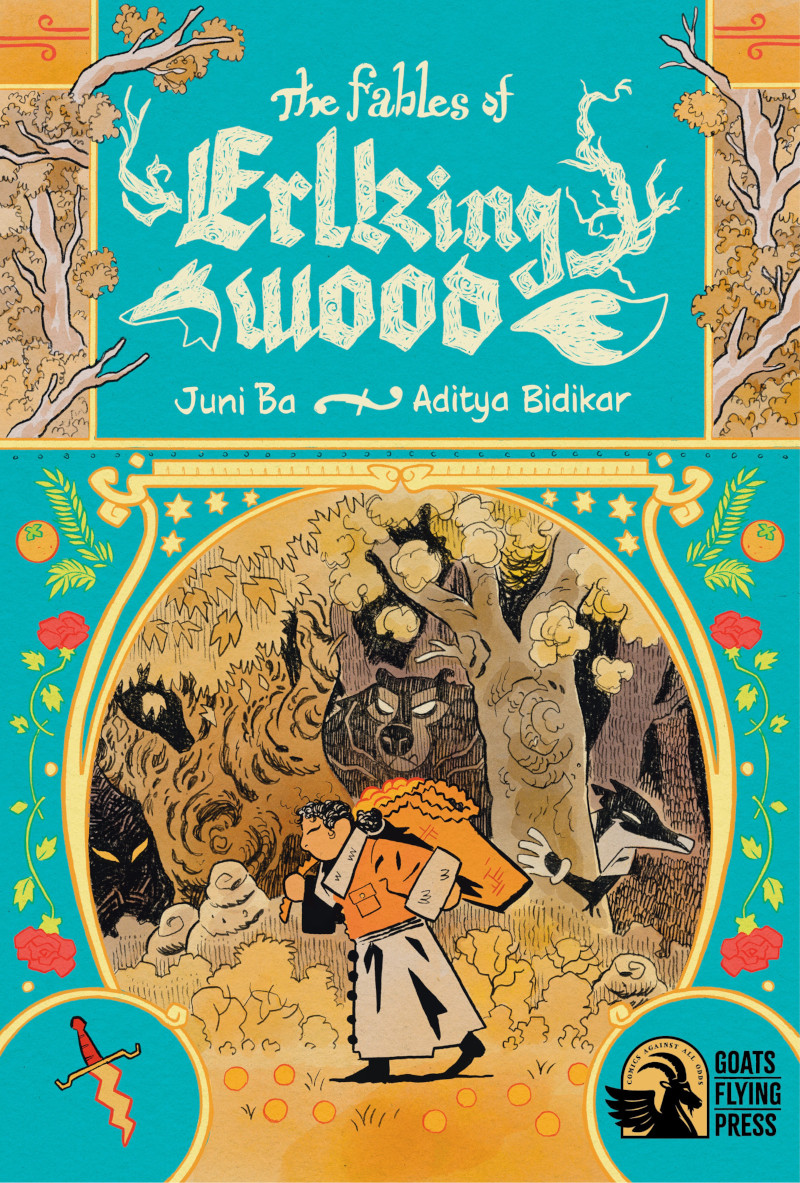
The One-of-a-Kind Award: The Fables of Erlking Wood
Why It Made the Cut: No one makes comics like Juni Ba.
He’s a true one-of-one, someone who always marches to the beat of his own drummer and whose sole rule to comic-making seems to be, “What rules?” Every book he releases is a tour inside a different part of his brain, an exploration of something that interests him in the form of a story that’s singularly Ba, from the art and characters to the structure and approach. That’s always the case with his work, but it might especially be the case in The Fables of Erlking Wood, Ba’s latest graphic novel with letterer Aditya Bidikar that was published by Goats Flying Press. There’s nothing else like it in the world of comics, including from Ba’s own work.
Now, that approach can be high variance for me as a reader. But even when I don’t love the work, I appreciate how fully he is willing to embrace whatever interests him in the moment. That is not the case here, though. I previously thought Mobilis, his post-apocalyptic TKO release starring Captain Nemo and his young ward, was his magnum opus. But even then, I noted that it was his magnum opus so far. The Fables of Erlking Wood feels like the most fully realized version of Juni Ba yet. It’s a sprawling story told across significant spans of time in a single region that explores relationships, life, death, expectations versus reality, what we do to each other, and a whole lot more — and it’s magnificent.
All of it hits, and that’s at least in part because its cast is so transcendent. Its disparate characters across time wear the pain of their lives and betrayals and tragedies on their sleeves, and even though much of the story is told across seemingly disconnected vignettes within this world, the emotions of those stories and those characters tether the whole thing together. It’s incredible work. And it’s all brilliantly executed by Ba, someone whose storytelling approach is unique but whose art is even more so. It’s almost impossible to describe how Ba brings a comic to life, as it has a cartoon-like feel but also storybook-like elements, with his inks being Mignola-esque in how he does them. There’s a weight to them that adds to the import of the story, and the visuals ground everything even though its often about fantastical things happening to anthropomorphic beings and mythical demons.
That adds up to a one-of-a-kind comic from a one-of-a-kind creator. The Fables of Erlking Wood is an incredible graphic novel, especially when you consider the work Goats Flying Press put in to make sure this book looked as good as it could. This is an incredibly well-produced graphic novel, with its design choice and paper stock and everything else elevating something that was already great. The Fables of Erlking Wood is, once again, Ba’s magnum opus, and one I suspect will only hold the top spot for so long.
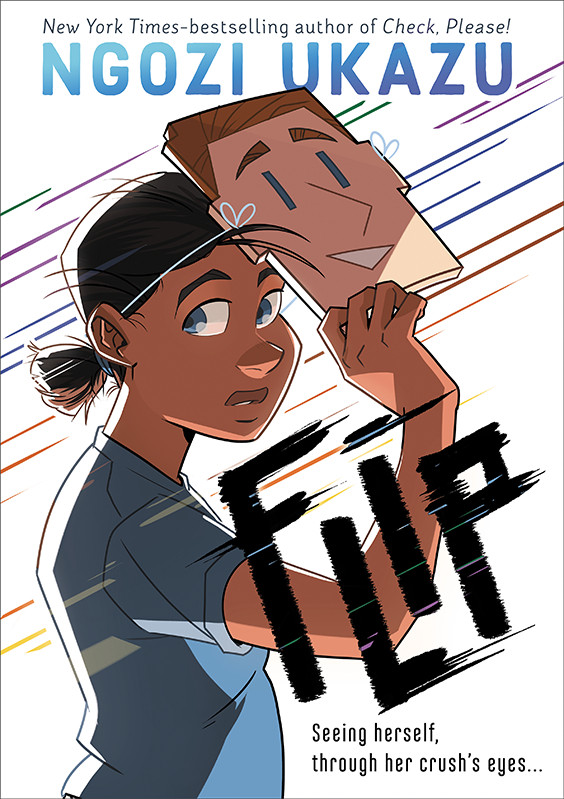
The Unexpected Award: Flip
Why It Made the Cut: I’m admittedly biased in favor of comics by cartoonist Ngozi Ukazu. She might be on my Mount Rushmore of “Comic Creators Who Make Comics That Feel Like They Were Made Just For Me.” 1 There’s just something about her work — the humor, the cartooning, the character acting, the specific flavors of fandom and passion that show up in each project — that speaks to both my head and heart. That’s why I was so excited for Flip, her latest graphic novel from First Second. Her consistent excellence meant my expectations were high, especially as someone who loves a good body swap story. So, I believed Flip would be good. But did I expect to come out of it thinking that it might just be her best work yet? No, not at all.
And yet, here I am, maybe thinking just that. 2
What I really appreciated about Flip is how much it takes the expectations of readers and turns all of it on its head throughout. We know this kind of story, right? It’s about a young, black, brilliant student who is in love with an incredibly successful, white, handsome guy who has never noticed her before, really, and what happens when somehow, someway, their existences get entangled and they become trapped in a classic body swap situation. We know this kind of story…but what if we didn’t? That’s where Ukazu comes from, who still hits on many of the tropes we expect from but delivers something even more magical in the process.
Not to get into spoiler territory, but what I’ll say about how she does that is she flips the endgame of this story type so it’s oriented on the self rather than the person you’re merged with. Like many body swap tales, Flip is a love story, but who the love is shared with is where this graphic novel becomes special. While it’s a hilarious slice of life-by way of-science fiction story with an elite cast — Chi-Chi, the book’s lead, is an all-timer, her best friends Esther and Yesenia are spectacular, and Flip himself (the character Chi-Chi body swaps wth) is a winner — and it’s filled with spectacular cartooning and enough K-pop to make you start listening to every available playlist in the genre, 3 Ukazu’s decision to turn the body swap experience into a mirror is what unlocks the whole thing. It results in a completely unique take on a well-trodden genre, and a comic that makes you feel more than just about anything else you could find from the medium in 2025.
The Existence Award: A Garden of Spheres
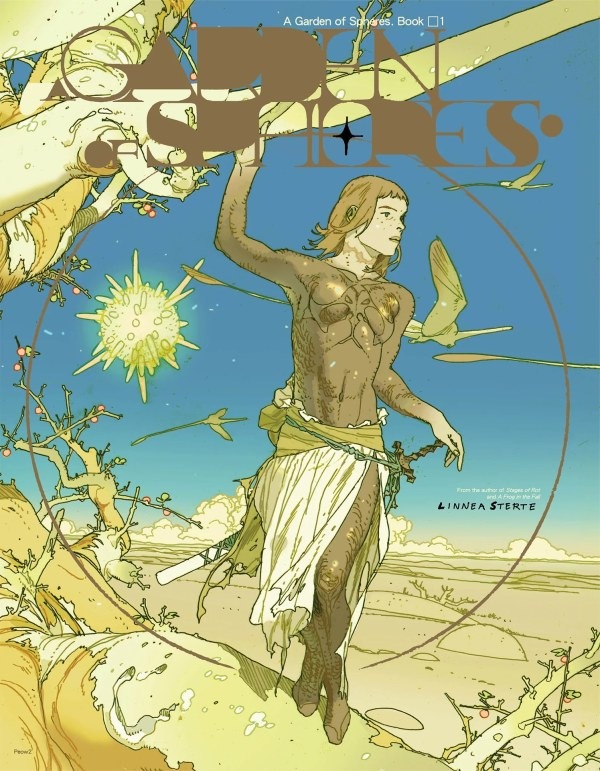
Why It Made the Cut: One of the most unique things about A Garden of Spheres, cartoonist Linnea Sterte’s recent Peow2 graphic novel, is the fact that it just exists. That might sound weird. I swear it makes sense. Sterte isn’t trying to tell a single narrative as much as she seems to want to drop readers into whatever is happening in the moment as a befuddled, bewildered maybe god tours the ongoing development of an effectively new world. It isn’t as laissez-faire as that might sound, as A Garden of Spheres is a cohesive story, in its own way, one that builds and expands as you pick up the pieces along the way. But we’re simply along for the ride as everything changes, just like its lead character who cannot help but be in the thick of things even as she just kind of floats through her existence as an immortal being.
That makes it feel quite unlike every other comic…ever?
And that’s a very good thing.
But it’s worth noting that it isn’t as ethereal as I’m making it seem. A Garden of Spheres is, for a lack of more erudite words, a hoot. It’s a grand adventure with a distant lead in the Un-Maker, a goddess or demigod or whatever you want to call her that cannot relate to anything and everything at times, and the book’s unusual gap between its scale and guide helps make this an entertaining, involving read. It’s a journey of discovery, as its lead carries us through the rapidly developing social and political landscapes of this world, even as she is generally pretty apathetic about all of it beyond a base level of curiosity. That results in a sprawling fantasy epic, one where a world is made in front of our very eyes and we’re given clashes between gods and living airships and ultrapowered beings, all the while taking its time to see the wonder and the whatever in any given situation. And I love that.
Not as much as I love Sterte’s art, though. This is an almost preposterously gorgeous comic. While the whole thing looks good, with its black and white sections popping thanks to the potency of Sterte’s line, it’s the parts in color that are truly awe-inspiring. The colors electrify, the character work stuns, and the landscapes are always brought to life in magnificent glory. But Sterte is unusual in that her art style almost reminds me of the book’s lead, in that she feels like a magnificently powerful talent that belongs nowhere. There are moments where you start to think you see certain influences within it, but a tweak here and a twist there takes you away from that. Sterte’s fully her own artist, and that ensures A Garden of Spheres feels like nothing else and everything you want at the same time.
The Feeling It Award: Good Devils: Don’t Play Fair with Evil
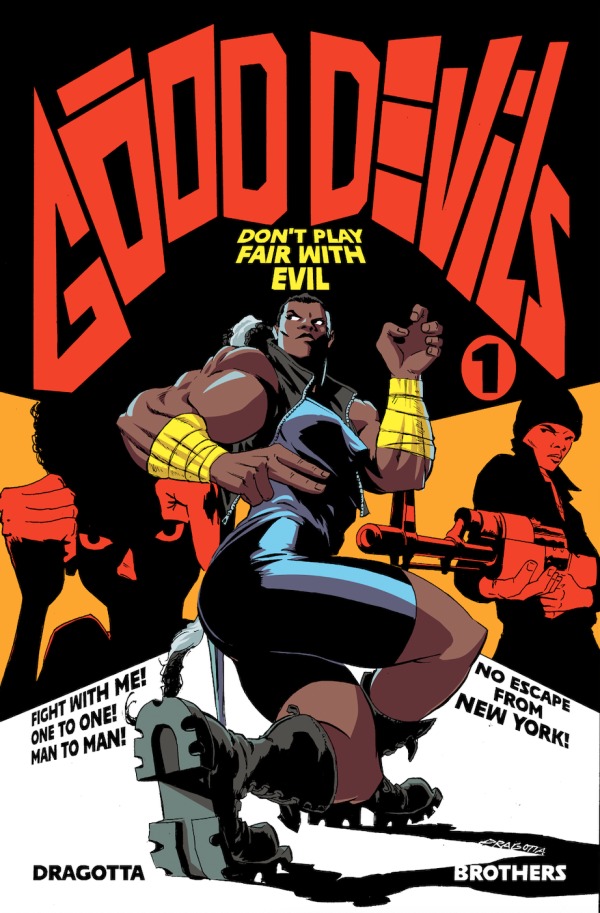
Why It Made the Cut: This pick has been years in the making. I read all three of the comics that are found in Good Devils: Don’t Play Fair with Evil in previous forms, with the first Good Devils story hitting in the anthology release Cry Punch, its follow-up in Fight Like Hell arriving in the 2023 ShortBox Comics Fair, and its final story Go Back initially being published as a backup across multiple issues of Chip Zdarsky and Jacob Phillips’ Image series Newburn. While that would typically disqualify Good Devils from making the cut, there are two main reasons this Image Comics one-shot from Nick Dragotta and David Brothers is one of my Comics of 2025: 1) This is the first time all three stories have been widely and permanently available; and 2) I love it, so I cheated a little bit.
Why do I love it? Well, I could tell you a whole bunch of technical things I appreciate, like the zipatone effects Dragotta brings to two of the three stories, how both of its creators wear their influences on their sleeves, the cleverness and inventiveness you find throughout its pages, the decision to just drop readers into these situations, the energy within all three stories, or any number of other standout characteristics. I could even rave about the fact that this one-shot is a prestige format release, meaning it’s a single-issue comic that has a spine, something I have fully admitted is irresistible to me. I could say all those things, and I could a whole lot more.
But to be honest, that isn’t it. It’s something much simpler. I just feel this comic in a way I cannot explain. The work of Dragotta and Brothers speaks a language I never knew existed or that I was fluent in until I read these comics. It’s a particular blend of influences and different genres of story and energy and action that feels exactly right to me, as it taps into an energy that few comics ever do thanks to a boldness these creators bring to the comic book medium together.
Good Devils: Don’t Play Fair with Evil is a collection of short stories, vignettes that take us inside a post-apocalyptic world, the brief afterlife of the world’s greatest fighter, and the ongoing efforts to escape the New York City police by a young man in trouble. It’s those things, but it’s also everything I want out of a comic book, and the type of release that I hope is just a prelude to many, many more by the two.
The My Homie Award: Hero in the Serpent’s Skin
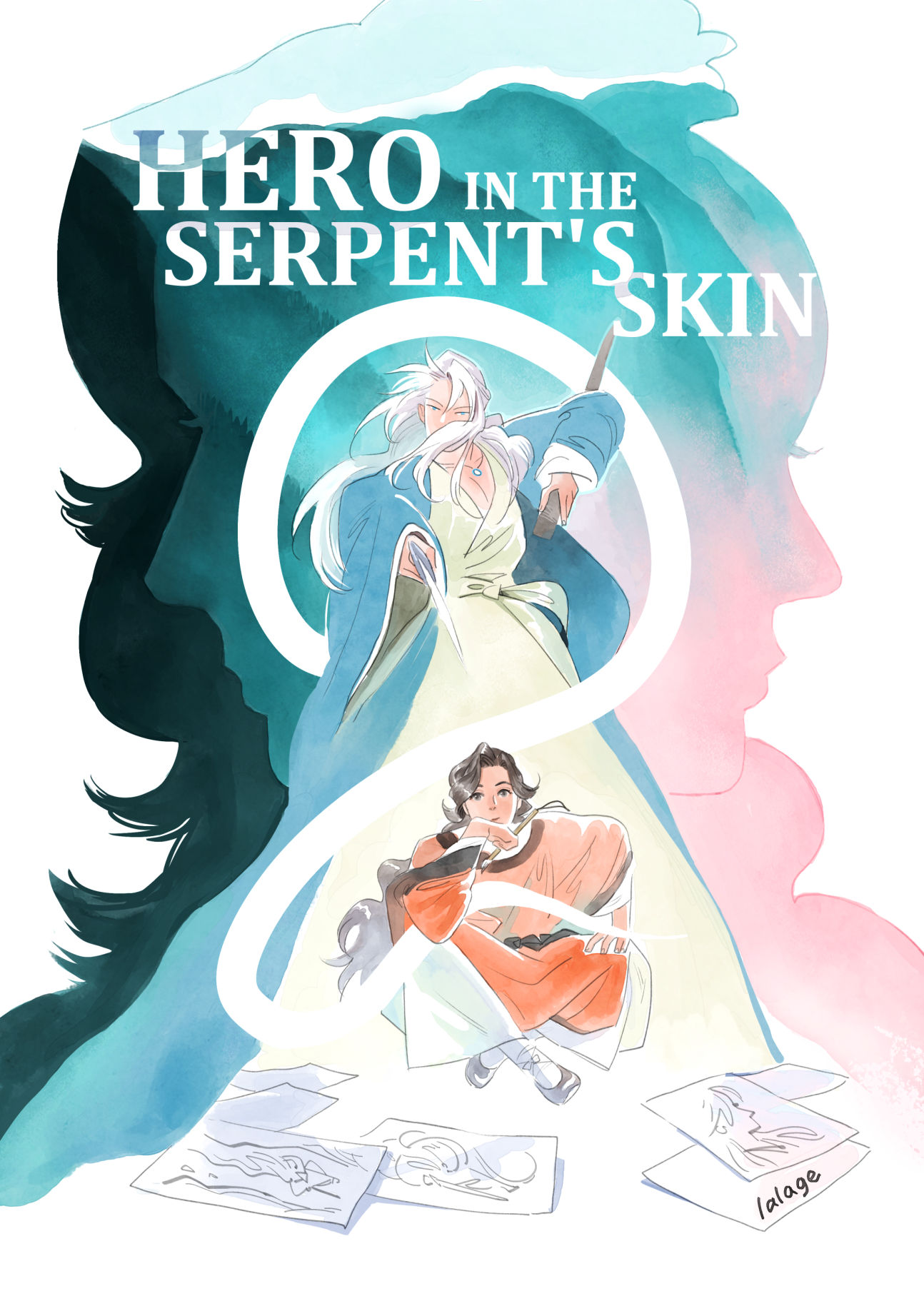
Why It Made the Cut: Hwei Lim, or Lalage, is no stranger to The SKTCHD AWRDS. This is either the second or third time she’s won an award, and it’s for good reason: She is an outrageous talent. I mean, just look at that cover to her ShortBox Comics Fair release Hero in the Serpent’s Skin. It’s almost preposterously gorgeous, with its character work impressing and its watercolors staggering. To see her art is to love her art.
But this might be my favorite of her comics yet. Hero in the Serpent’s Skin is about a god who fell in love with a mortal, and what happens after that mortal dies and is reborn anew. It’s at times beautiful and poetic and at other times completely ridiculous (complimentary). It’s the type of comic that can contemplate existence on one page and then have a wayward artist call a god “my homie” on the next one. That sounds wild, and yet it all fits together. It’s a puzzle made of a gorgeous, seemingly ill-fitting parts that perfectly snap together all the same, and it’s a comic I truly adored.
It’s a story of eternal love, but it’s also about how love can change as people themselves do. Oh, and it’s got jokes, which I dig too. It’s just wonderful, a comic filled with some of the most spellbinding art you’d find in comics from the entire year. There were entire parts in this standalone comic that kept my gaze far longer than any page or panel typically would, and it was simply because of how effectively its cartoonist brought something to life or an atypical choice she made on the page. While it’s a bummer that my recommendation can’t lead to you picking up Hero in the Serpent’s Skin if you didn’t during October’s ShortBox Comics Fair, that doesn’t take away from its greatness, or its fit as one of my Comics of 2025.
The Eternal Favorite Award: Hiraysumi
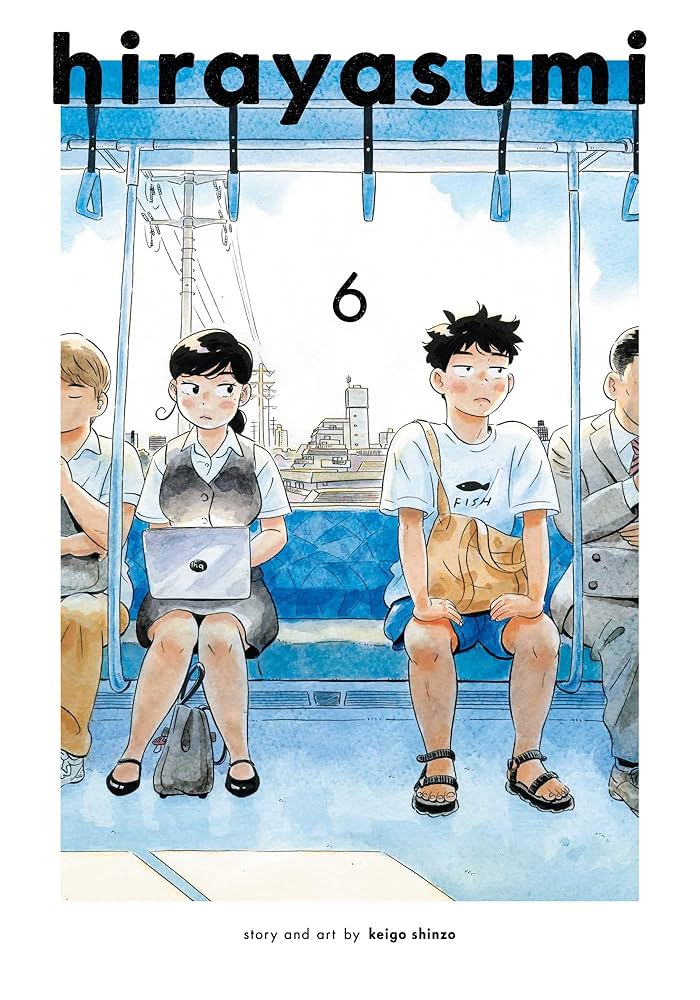
Why It Made the Cut: Everything I said last year about Hirayasumi, Keigo Shinzo’s ongoing manga series over at VIZ, still stands. It was my Comic of the Year in 2024 for a reason. It probably will be my actual favorite comic for as long as it exists, simply because its art is so exceptional, its characters are so lovable, its story is so gentle and welcoming, and its entire energy is so perfect. It’s life-affirming and inspiring and the type of comic that can remind you that the good times are always waiting for you, if you’re open to them. Those are rare, to the point Hirayasumi might be the only one.
I will say, its latest volume, the seventh, was the first release that showed cracks in its armor. There were some uncharacteristic gaffes in the translation and/or editing, which resulted in a small number of flubs that stood out if only because everything else was on point. But if the biggest things I can point to as a reason to downgrade it is, “It could have used slightly tighter editing,” then things are looking pretty good here. Hirayasumi is a magical comic about the mundane lives we all lead, and it’s a one comic recipe to curing whatever bad feelings you carry within. That may not have earned it the top spot in The SKTCHD AWRDS this year, but just know that it’s still #1 in my heart.
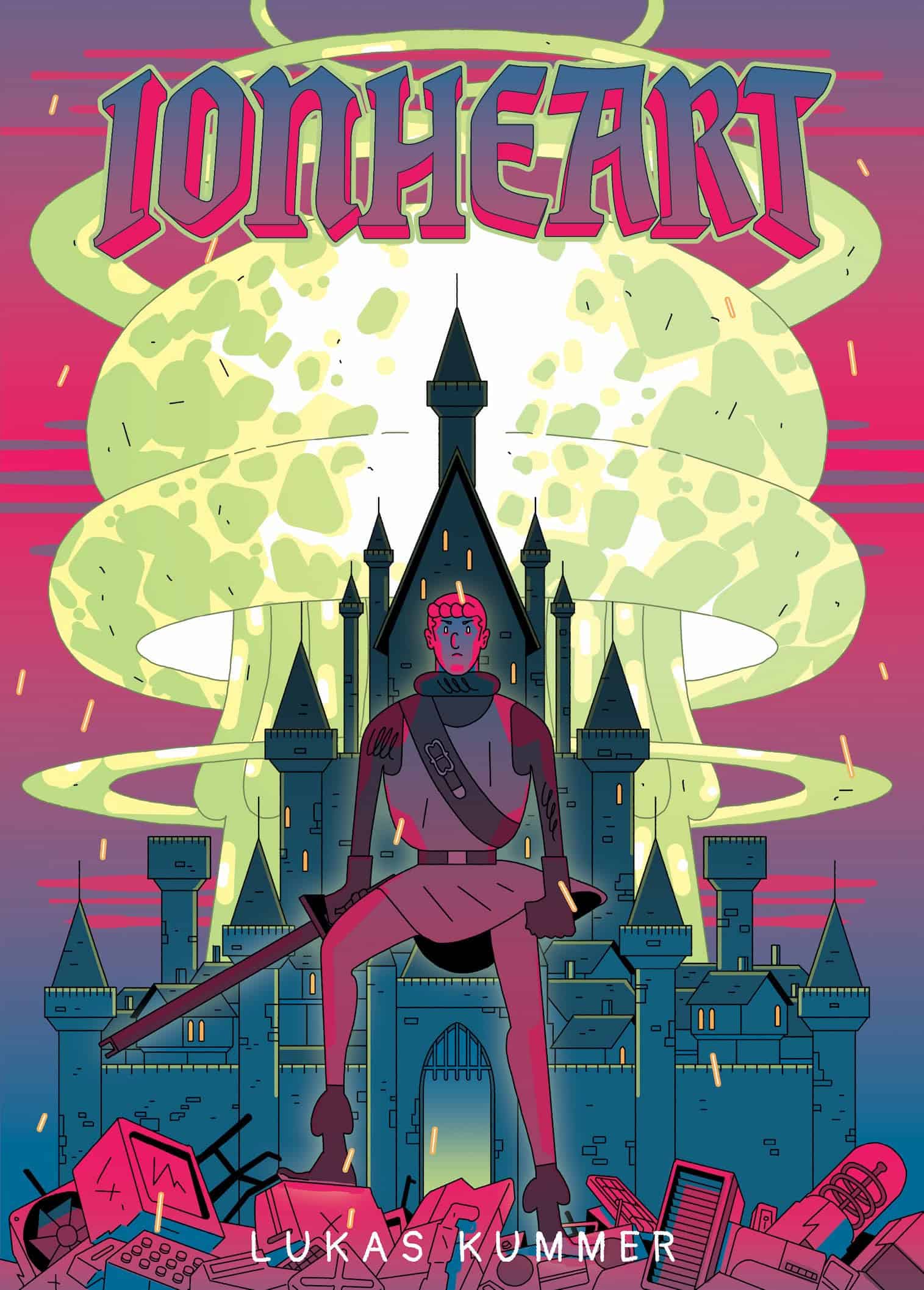
The Contender Award: Ionheart
Why It Made the Cut: One of the odd quirks of my process, if you can call it that, is that when I read an unexpected book that I realize is going to make my list — one that will likely finish at a higher spot — I always announce that fact by saying “contender” out loud, and in the way that Jeff Goldblum says the word when talking about Thor in Thor: Ragnarok. Why is that part of my process? I have no idea. But it is.
Ionheart was the big “contender” pick of the year. I read it on Hoopla, and as soon as I was done, that “contenderrrrr” line dropped immediately. It’s an unexpected read in all the ways it can be. Its cartoonist, Lukas Kummer, is someone I’d never read any work from before. It starts as one thing — it’s about a knight battling to save his kingdom, with some oddly video game like vibes to it — and becomes something much, much different as it moves along. It feels like an all-ages read early on, but by the end, it’s exploring very adult themes and story beats. Everything about it is unusual, and I mean that in the most positive way. It came from nowhere to hit me like a ton of bricks, and it entertained me throughout.
My recommendation for readers is to go in knowing as little as possible about this book, and to just lean into its unexpected journey. You’ll start by being surprised this is a Top Shelf release, but by the end, it all makes sense, as its steady evolution and the unending gifts of Kummer deliver something truly special.

The Right Notes Award: The Knives
Why It Made the Cut: Unsurprisingly, writer/director Shane Black nailed it with his pull quote for The Knives, the latest graphic novel from writer Ed Brubaker, artist Sean Phillips, and colorist Jacob Phillips. Brubaker and Phillips truly do not hit a wrong note in The Knives, even though there are more notes to play than usual because this is the longest graphic novel this creative team has ever tackled. The Knives is a sprawling, multi-layered read that pushes the world of Criminal forward, both in terms of timeline and in what we’d expect from the team behind it. To say it works is an understatement.
The thing that impressed me the most about this book, though, is how its end result felt like destiny being realized. I don’t want to get into spoilers, but this comic focuses on established Criminal characters in Jacob Kurtz, Angie, and Tracy Lawless, as their individual journeys orbit each other and then connect in a story that spans a great distance and span of time. It’s a tremendous read, but by the end, you cannot help but feel as if it’s a place that Brubaker and Phillips have been building to since the first issue of Criminal arrived back in 2006. Now, that’s the nature of serialized storytelling, as clever decisions feel more like a magic trick than a planned event at times. It might not have been what they had in mind originally, but it’s so carefully orchestrated and the notes are played so correctly that it all just feels right by the time you close the book.
That’s tough to do. The fact that Sean Phillips arguably delivers his strongest visuals ever and Brubaker hits us with his most cleverly plotted story in the same tome makes it even more impressive. But that’s what Brubaker and Phillips do. Sure, they don’t hit a wrong note in The Knives. But they never hit a wrong note, do they? And The Knives might be their finest work yet.
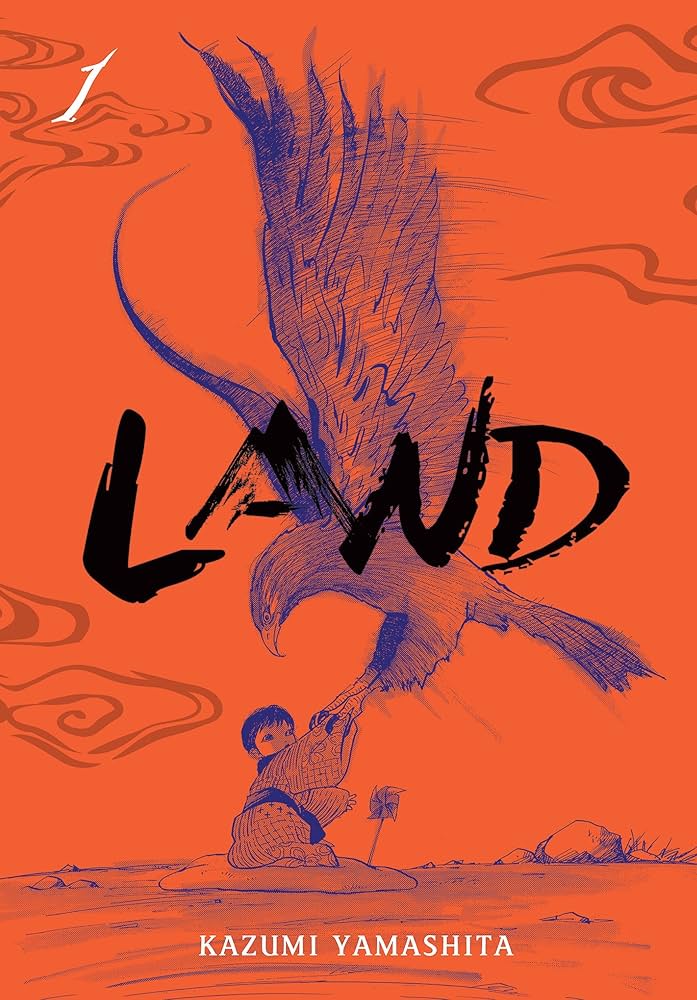
The Picture is Worth a Thousand Pages Award: Land
Why It Made the Cut: The only reason I bought this Yen Press release was because of its cover. Kazumi Yamashita’s gorgeous art, the beautiful brushwork on its tilting, and its striking color resonated immediately, convincing me that I had to read Land’s first volume if only to see it what was inside in its monstrous page count (658 pages!) could live up to the promise its cover offered.
It did, and then some.
Land is one of many comics on this list that would benefit from as little explanation as possible. My recent review of it with comics critic Oliver Sava gets into some spoiler territory if you want a bit more detail, but the simplest explanation is it’s about a family torn apart by the customs of the society they live in — a feudal-like setting where a clear hierarchy is in place as are other unexpected rules, like the fact that no one lives past 50 (they’re sent off to the beyond at that point) and there are routine sacrifices of children to four gods that overlook their valley — the two tracks of twin sisters named An who are raised in wildly different situations, and the mysteries that surround everything they do. Every time you think you have it figured out, it takes a turn in a direction you could never expect, and that results in a wild — and wildly entertaining — read.
And my god, Kazumi Yamashita’s art is incredible. She’s a gifted storyteller, someone who brings clarity and potency to the page while making you feel every beat to the absolute max. I kid you not when I say that there is at least one image in this book that might be amongst my single favorite drawings in the history of comics. She’s a transcendent talent, and someone whose art elevates everything she does. Land is a fascinating read with a different artist; it’s a top five comic of 2025 for me with Kazumi Yamashita doing everything.
While my interest may have started with its cover, it only opened the door to one of the deepest, most engaging comic reads of 2025 for me. This is a comic I’d recommend wholeheartedly to anyone, whether you’re typically a manga reader, a superhero fan, or anything else. Land Vol. 1 has something for everyone, and some of the best art you’ll ever find in comics.
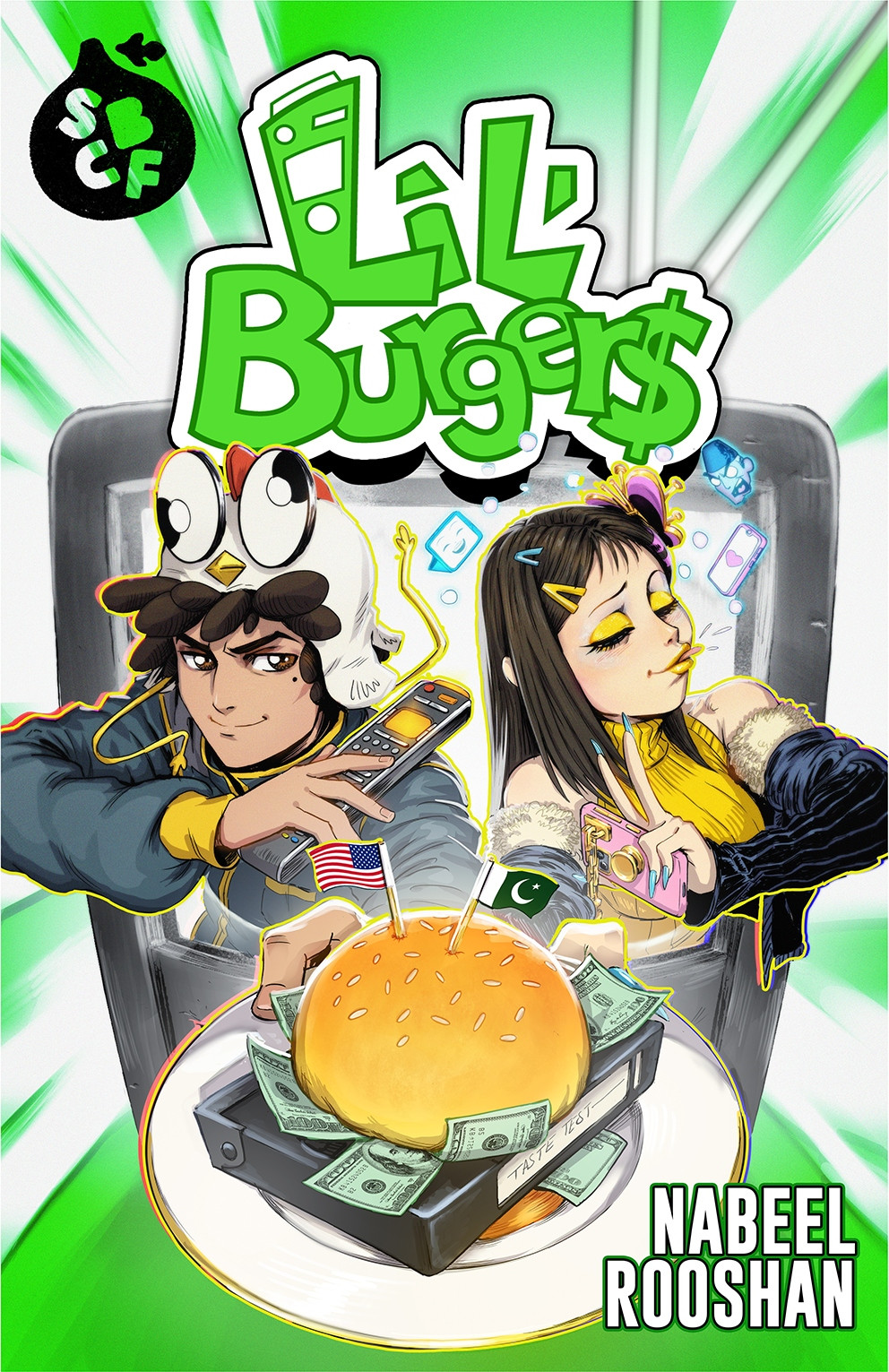
The Next Big Thing Award: Lil’ Burgers
Why It Made the Cut: ShortBox Comics Fair is my favorite event of the year in comics. There’s a reason for that. While you largely have some idea of what you can expect from an average direct or book market comic, if only because those works are typically put through the filter of the publisher who released them, ShortBox Comics Fair are very much a “come as you are” affair. Zainab Akhtar curates the whole event and works with creators on the projects, but there isn’t a “we’re looking to connect with readers in this quadrant” energy to it. These are just comics made by creators who have a story to tell. That results in significant variance. Some work better than others. But it also means there’s a fierce sense of individuality to each work, something I appreciate.
Even with that in mind, though, Lil’ Burgers is unique. It’s a short comic from Pakistani creator Nabeel Rooshan, and it’s quite literally about the following: “In the sleepy city of Islamabad, two young adults navigate their unique identity crises while fighting the very Idea of Pakistan for content.” Sounds insane, right? It is, and gloriously so. The easiest comp for Lil’ Burgers is Bryan Lee O’Malley’s Scott Pilgrim, as it’s almost a 2025 take on how that title married the cultural sensibilities of the time with video game elements, albeit with a hefty dose of influencer culture in Rooshan’s story. The result is an incredibly entertaining, wildly original comic about a rich influencer girl and her poor, put upon assistant battling across Islamabad for likes. It is an absolute blast, an electric read that I finished and then immediately wrote it into this list in pen.
While this comic is great, this is where I want to underline an underlying element of this pick: Nabeel Rooshan is the truth. Like last year with Nights’ Luigi Formisano, Rooshan is the type of talent that I’d be backing up the Brinks truck to if I were a publisher or a creator looking for a creator-owned partner who has the juice. Lil’ Burgers is a great comic, but it’s only the beginning for Rooshan, someone with prodigious talent and a rare vision for blending Western comic sensibilities with manga energies. His work is a unique flavor, but like my favorite burgers, both big and little, it goes down oh so nicely.
If you missed Lil’ Burgers during the 2025 ShortBox Comics Fair, it’s available on Rooshan’s Gumroad.
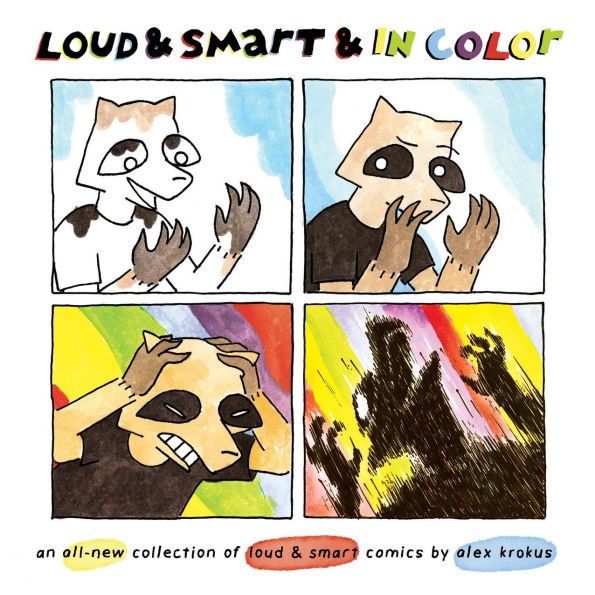
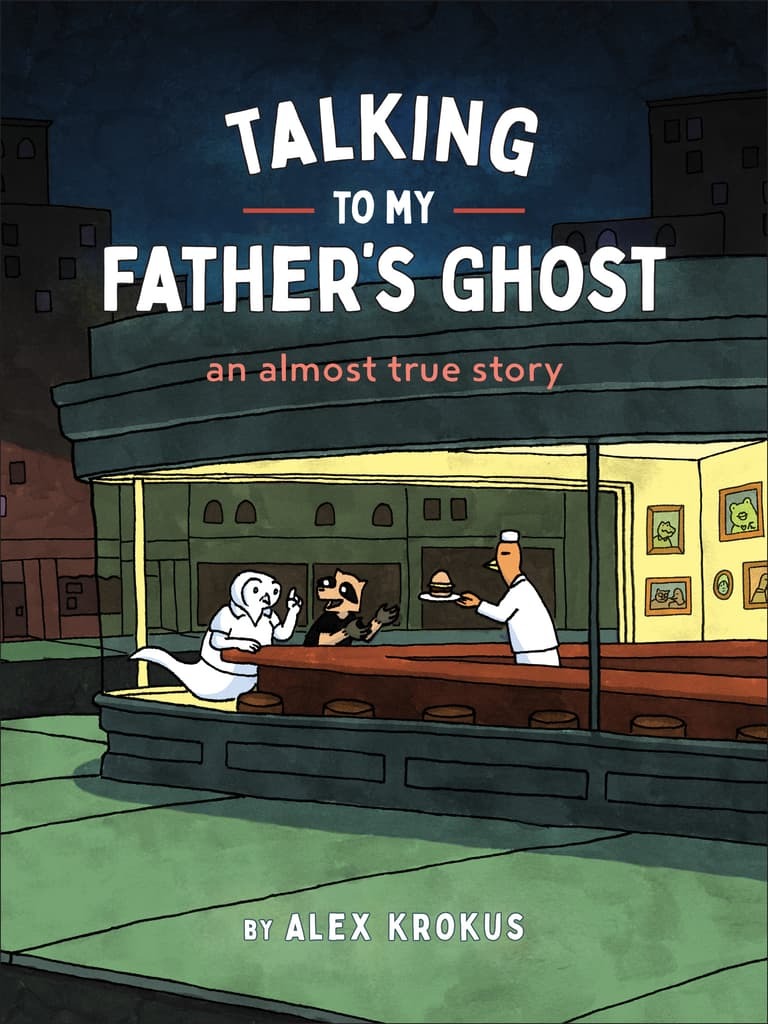
The Double Up Award: Loud & Smart & In Color AND Talking to My Father’s Ghost
Why It Made the Cut: When faced with a situation where you’re trying to decide between two different releases from cartoonist Alex Krokus in a year, sometimes the best answer is to go with the age old solution of, “Why not both?” That’s what I decided, and it was a necessary decision because I loved each of Krokus’ print releases this year. There’s just something about Krokus’ work that speaks to me, and does so in a variety of ways.
His two projects from 2025 nicely exemplify the varied ways his work resonates. In a weird way, they exist as mirror images, at least in my interpretation. We’ll start with the one I read first, which was Loud & Smart & In Color, a collection of Krokus’ Loud & Smart comic strips that was published by Silver Sprocket but, you know, in color. As an enthusiast of Krokus’ strip already, I had read a fair few of these. but to dig into them all in one place really underlined just how consistently brilliant the cartoonist is. For those that don’t know, Loud & Smart is basically a tour of Krokus’ life and mind, and he portrays himself as an anthropomorphic raccoon and others in his life as other animals, with the occasional real human entering in as a jump scare/pointed comment. And it is funny as hell.
Krokus’ gifts of observation about life and culture and the world are rare, and his sense of humor has an ideal home in comic strips. He understands those rhythms perfectly, and his art is the ideal mechanic for making the punchline hit each time. It isn’t just laugh out loud funny, though, but the type of humor that can be insightful and even soulful at times. Take this strip about his ten year old laptop, which appears in the book, as an example. It’s funny, but there’s also something emotional about it that makes it something more than just a gag. Don’t get me wrong. The bulk of the strips within this book are just going to make you laugh. But Loud & Smart & In Color’s secret superpower is how it makes you feel other emotions alongside the laughter.
Krokus’ Chronicle Books graphic novel Talking to My Father’s Ghost exists as an inversion of that to some degree, even if it isn’t as extreme as that sounds. It’s about the death of Krokus’ father, and the impact it has on his family’s lives after it happens. As it says on the cover, it’s “an almost true story,” one that gets into the genuine pain and emotion and reflection that comes with losing someone you love. But it’s also quite often a comedic two-hander featuring Krokus and different family members, particularly his father’s ghost, as father and son learn more about each other as the latter goes on living his life. It wears its heart on its sleeve, but for as serious as the title is, it’s also extremely funny, which is a line Krokus walks extremely well.
It helps that he expanded how he works in this book. Krokus gets into longer form strips here, jumping from the four panels you get in Loud & Smart typically to 11 here. That space allows for a deeper experience, one that is never done without purpose. Krokus’ strip brain seems to allow him to maximize space without ever overdoing it, and his cartooning is the perfect tool for making this all work. It delivers the exact emotions and impacts necessary to make every beat hit, whether it’s a hearty laugh or a hefty hit to your heart. While I love the whole book, I particularly enjoyed the sections where Krokus hangs out with his brother Gerard, someone who seems completely different than him but in a way that completes him even as they contrast each other. Those sections stand out even amidst a fleet of stand outs.
It takes an unusual talent and a gifted storyteller to deliver two books like these across an entire career. The fact that Krokus was able to release both in a single year is incredible, even if I know both were the result of years of effort. Choosing one over the other would have been a tough task, so I simply elected not to choose. More than that, though, picking one wouldn’t have told the whole story of Krokus’ big year, one that underlined just how remarkable and varied his work really is.
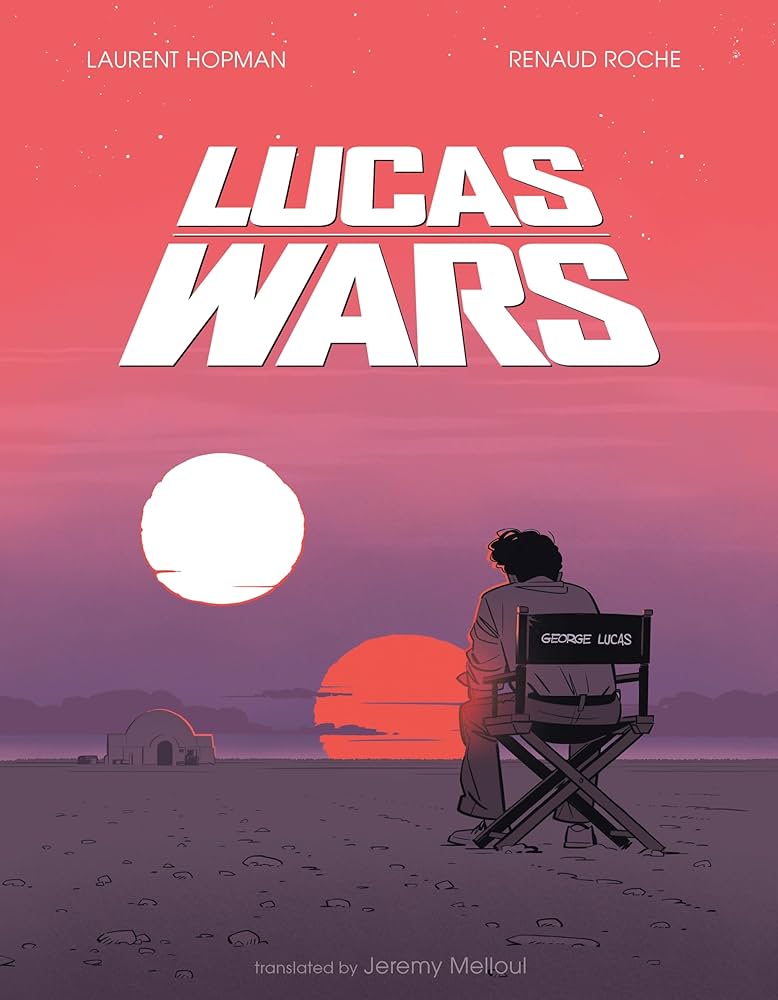
The Fulfilled Promise Award: Lucas Wars
Why It Made the Cut: If there was an obvious pick for this list, it was Lucas Wars. It’s everything I love. It’s a biocomic, a flavor I adore. It has wonderful cartooning, something I cannot resist. It’s about Star Wars, a franchise I have deep love for, even if I can admit its flaws. It even originates in France, a comic hotspot (and personal favorite country) that never ceases to deliver greatness for me. The bigger upset would have been Lucas Wars not making this list.
That’s a great starting point, but the execution needed to be there to properly deliver on all that promise. Lucas Wars had that and then some. Let’s start with writer Laurent Hopman. Lucas Wars is about the life of George Lucas and the making of Star Wars (of the A New Hope variety, if you prefer). It’s a sprawling history piece, one that needed significant research to do correctly and a deft hand to turn into an effectively entertaining read. Hopman did that, and did that well. And credit to translator Jeremy Melloul, whose efforts to turn this French graphic novel into its English language release at 23rd Street Books cannot go underrated. This could not have happened without him, and he nailed it.
But the real reason Lucas Wars makes this list in the end is artist Renaud Roche. I already wrote about his work in my Creators of 2025 piece, but my god, what a masterclass Roche put on as he brought this story to life. It’s truly exquisite cartooning, with a sense of motion that’s rare and a pervasive charm that makes each of these real-life characters feel alive. Roche was born to tell this tale, and he fulfilled that promise in a way maybe no other artist could. Lucas Wars is both a great graphic novel and an exceptional showcase for what happens when the right artist meets the right project. Either one of those would have made this book stand out. The fact it gave us both ensured Lucas Wars was one of my favorite comics of 2025.
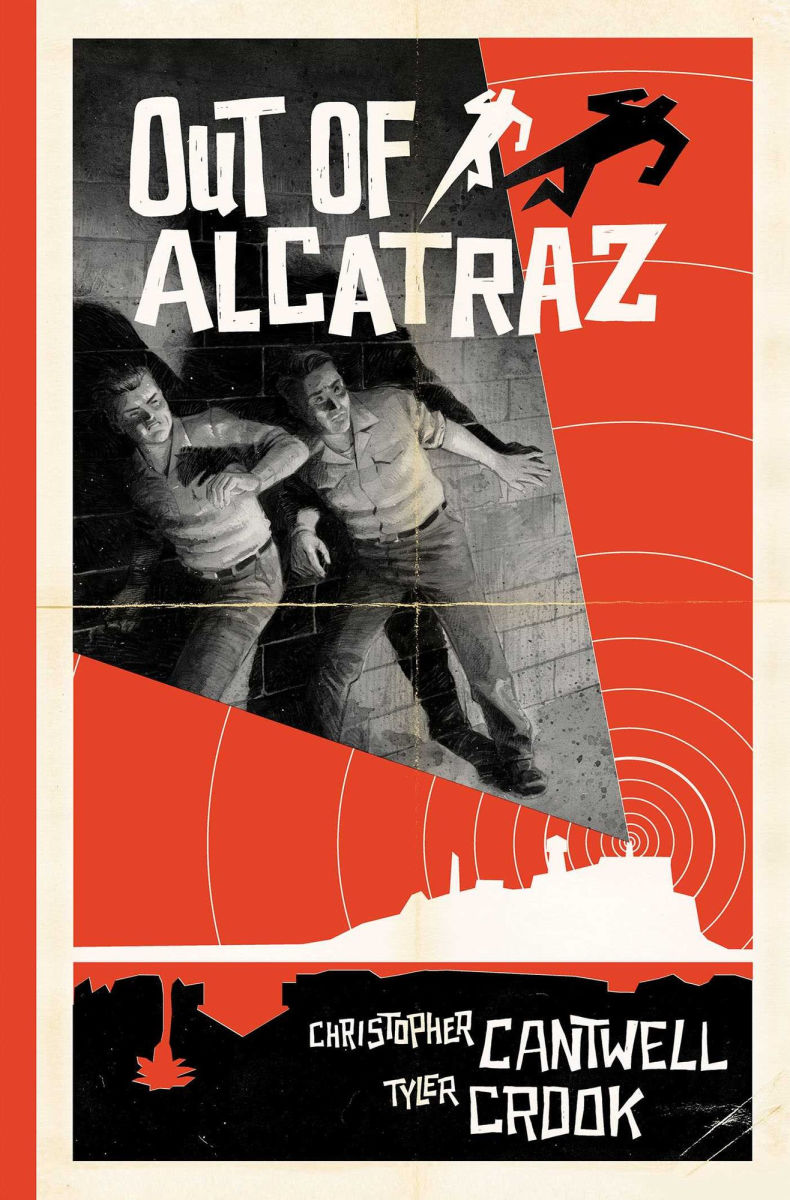
The Exactly Award: Out of Alcatraz
Why It Made the Cut: Comic book creative teams are funny, in that some that sound great together just do not fit, while others that seem incongruous perfectly jive with one another. It’s an odd curiosity of the comic form, and it speaks to the unexplainable alchemy that goes into comic making. So, when a team works, and works well, it stands out, regardless of expectations.
That’s what impressed the most to me about Out of Alcatraz. This Oni Press comic series is about a real life escape attempt from the infamous prison, one that resulted in the death of everyone involved. But what this book posits is, “What if they didn’t die?” The story goes on from there, and it becomes a sprawling saga of the escapees trying to find real freedom, their guide on that journey, the lawmen on their tail, and a wild card who is there to ruin everyone’s dreams. It’s a small story, but a big one too, and it needed a team that was in sync to make it pop. Its writer in Christopher Cantwell and artist in Tyler Crook were certainly that, but in an unusual way, as everything they did felt exactly right and exactly aligned, with Cantwell pulling back when Crook needed space and the artist always elevating every moment the writer needed him to deliver on.
Out of Alcatraz is a great idea, a concept that was destined to be a ripping, emotional yarn with even moderate levels of talent and synchronicity. But Cantwell and Crook are so perfectly aligned — at least to this outsider — that it became something much more, a work of two talents acting as one and delivering one of the best comics of 2025 in the process.
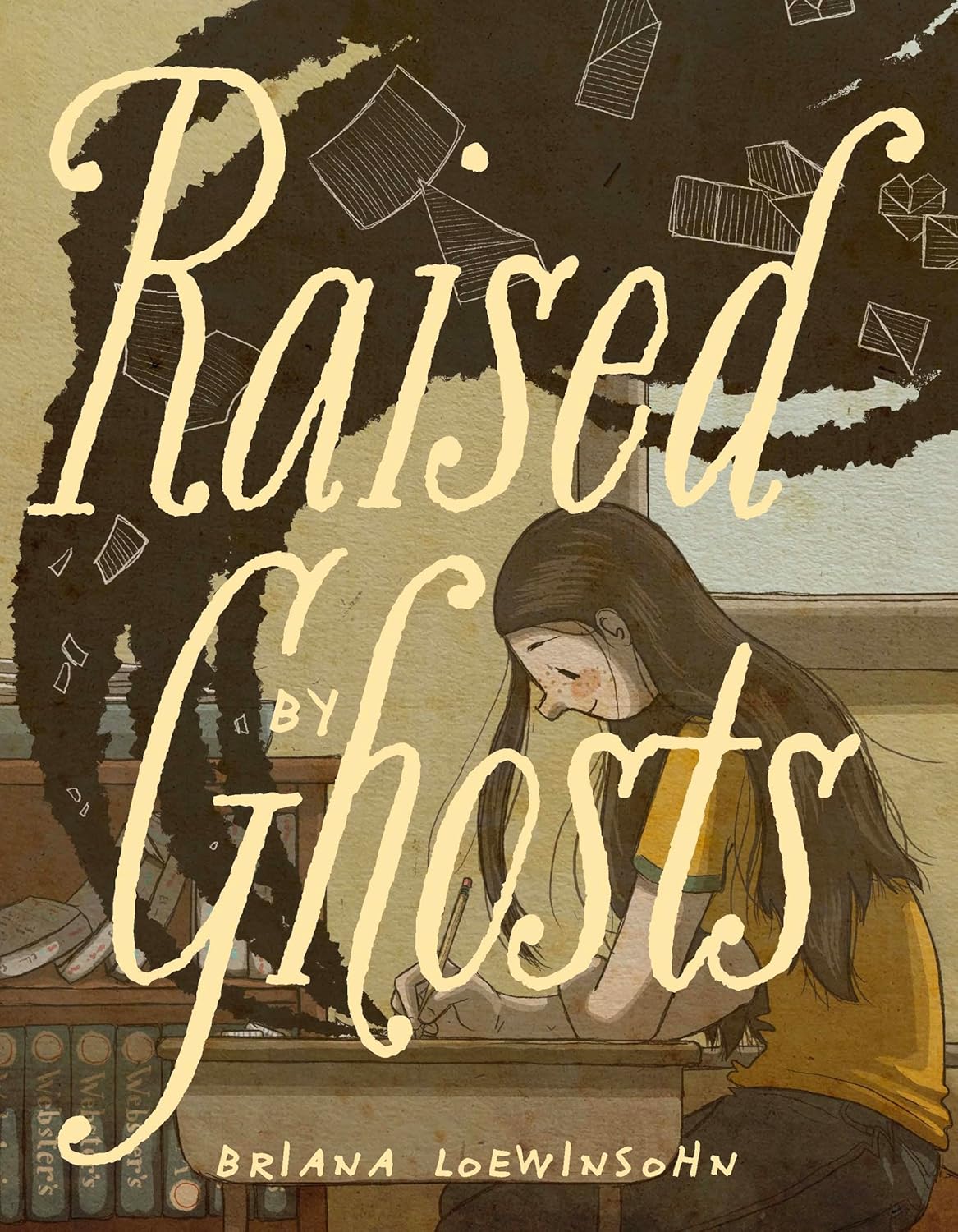
The New Approach Award: Raised by Ghosts
Why It Made the Cut: Even amidst a sea of great comics from the year, Briana Loewinsohn’s Fantagraphics graphic novel Raised by Ghosts was unusually clever in the way it told its story. It’s a comic. There’s no doubt about it. But it speaks the language in a different way, bringing a new approach that merges the currency of youth with almost picture book like delivery that feels fresh and potent and wildly effective at telling its tale of Loewinsohn’s own time as a teenager and how she made it through that period of effectively raising herself. And that’s an incredible thing.
Let’s talk about the latter note to start. The picture book element is fascinating, as plenty of the graphic novel itself is told with pictures but no words, with interstitial breaks being used to express feelings and story through prose like writings told from Loewinsohn’s perspective. That in of itself was a unique thing, and it put the focus on the cartoonist as an artist, something she delivered on and then some. She’s a brilliant visual storyteller, with an eye for detail and character that’s rare. But where she really stands out is her inventiveness, and that ties into the aforementioned line about “the currency of youth.”
Those interstitial prose sections are told in the form of hand-written notes, ones like those Loewinsohn and her friend group would pass to one another, with those messages meaning everything to them as individuals and as a collective. Giving and receiving those notes were affirmations for them, with each underlining their worth as a person and as a friend (or something more). That’s reinforced throughout the story, and in how Loewinsohn tells it, as much of our look inside the mind and heart of the younger version of the cartoonist is explored through notes shown on the page that she uses to take us inside where she was then. It’s a brilliant choice, and the kind of merging of formalistic approach and narrative reality that I’ve honestly never seen before. I loved it.
But I loved all of Raised by Ghosts. It was my first read of Loewinsohn’s work, and what I found within its pages was someone who finds her own answers in the best of ways. This graphic novel is the result of the exemplary talent behind it, but also someone who is not afraid to take an unconventional approach if that’s what is necessary. It’s all the better for it.
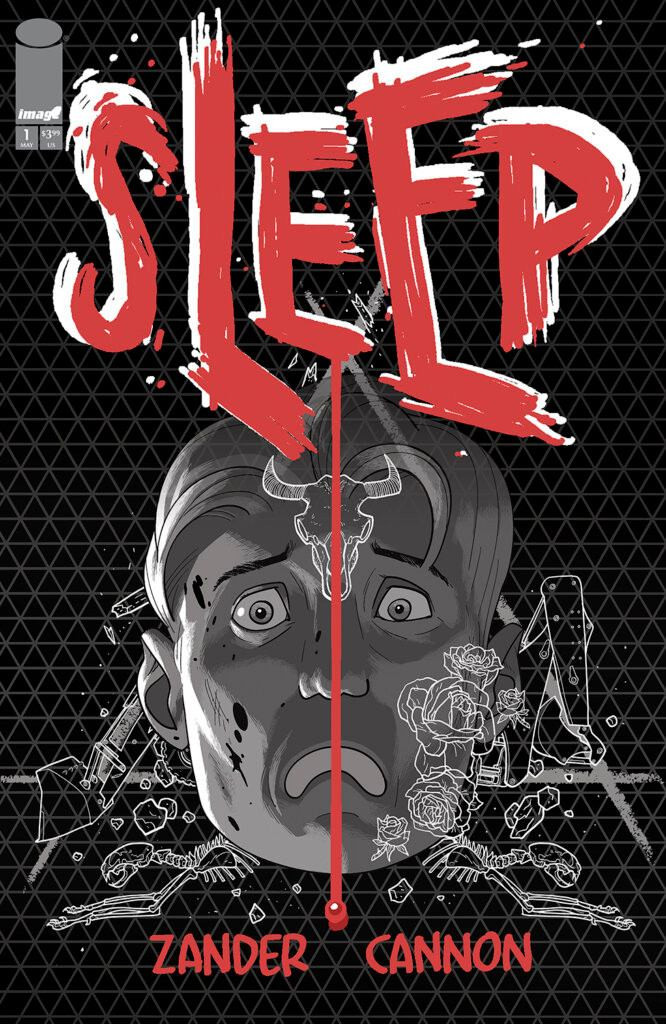
The Blue Note Award: Sleep
Why It Made the Cut: I love a good monster story.
Tales of fearsome beasts ravaging towns and cities as people desperately figure out how to stop them are like catnip to me, and that’s true of the biggest names like Godzilla and cult classics like Tremors alike. There’s just something about monsters that invite me in as a reader, and that’s been the case since I was a small child who eagerly rented movies like the original black and white Godzilla and nonsense machines like the varying releases from the Critters franchise. Along the way, I thought I’d experienced all the flavors of monster story I could experience, with surprises being few and far between after decades of enjoying that genre.
So, leave it to Zander Cannon to reinvent the game on me again after doing so before with Kaijumax.
Sleep, his Image Comics series, is a monster story minus the monster, in a sense. It explores the life of a Good Boy named Jonathan Reason, as he slowly descends into madness as he and his town deal with the fact that every night when he goes to sleep, he turns into a monster bent on destroying the town and its people. The trick, though, is Cannon only explores the part of the story when Jonathan is awake, so we only see the aftereffects and never the monster. It is a revolutionary approach, one that emphasizes the terror of the unknown and the tragedy of the situation in unexpected, fully original ways. It’s scary and sad and surprising and remarkably done, especially given the formalistic restrictions Cannon puts upon himself, with — amongst other things — the comic only being told in black, white, tones, and the occasional red.
That is until later in the series when Cannon introduces blues at a very unexpected time, with that hue searing through your brain as soon as you see it. Its color as storytelling, a mystery box story exanded upon through color choices. And that blue turns the whole series on its head, leading to endless internal speculation about what it means. Its magic is in that blue note, and the choice to make this series a blue note itself. For those that don’t know, a blue note in jazz is when you hit a minor when a major is expected, playing the listener’s expectations against them. That’s what Cannon does here, as he reinvents the monster story by only playing the minors when you’re expecting the major. The end result is a new Zander Cannon masterpiece, and a comic that will forever exist as one of the strongest examples of its genre — if Cannon can stick the landing.
No pressure, Zander!
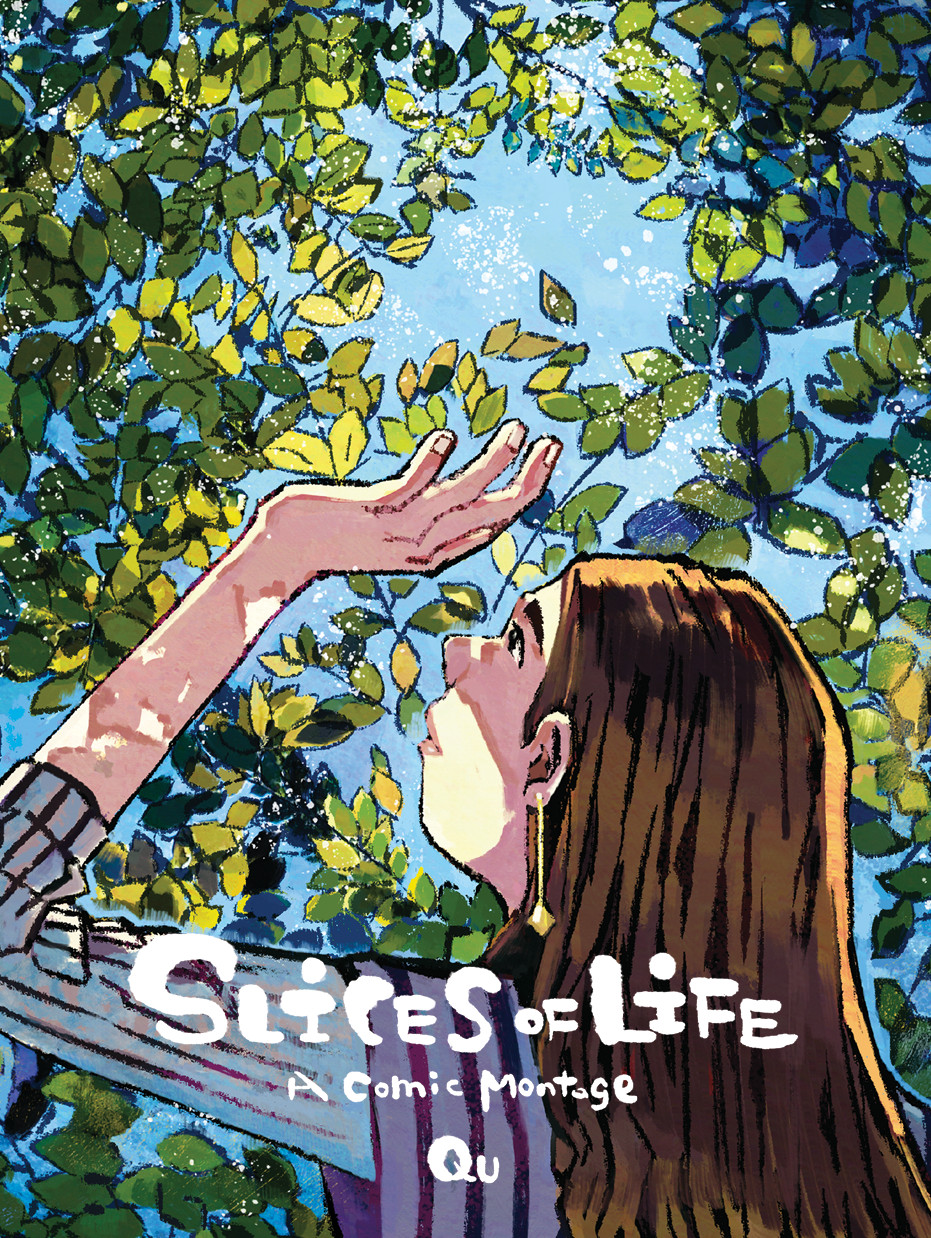
The Visionary Award: Slices of Life: A Comic Montage
Why It Made the Cut: Slices of Life is a fascinating comic, if only because some readers might not even consider it a comic in a traditional sense. It isn’t a single narrative, or really even a narrative at all at times. It’s more of a series of observations by its cartoonist in Qu, who turns the ordinary into the extraordinary throughout a book filled with wondrous strips about the wonders of life you can find if you just look. Its end result is a comic, of course, one that makes this list on the sheer talent of the cartoonist who crafted it, and the unusual vision and imagination she brings to this world.
You can see those gifts throughout each and every sequence. But some beats standout even amongst the rest. Whether it’s seeing the natural wonder in a skipping stone, the humor of an artist trying to bring a cat to life, the locked in connection to a master’s artwork, or any number of other examples, Qu’s ability to help us see the magic in the world the way she sees it every day is unparalleled. She finds the humor, the otherworldly, the unexpected, and so much more in things we all take for granted, and has the chops to turn those moments into comics that hit your heart and brain in a way you’ll never forget. It’s remarkable work, and work well represented in how Bulgilhan Press’ printed it, as its design and execution is as thoughtful as its cartoonist.
So, sure, Slices of Life might not be a traditional comic. It’s a comic montage, one that acts as a collection of the scenes that make up our lives far more than any single story. No matter what you want to call it, it’s an impressive achievement, and a read that practically begs you to regularly revisit it, if only to remind yourself of the wonders you might be missing in every day life.
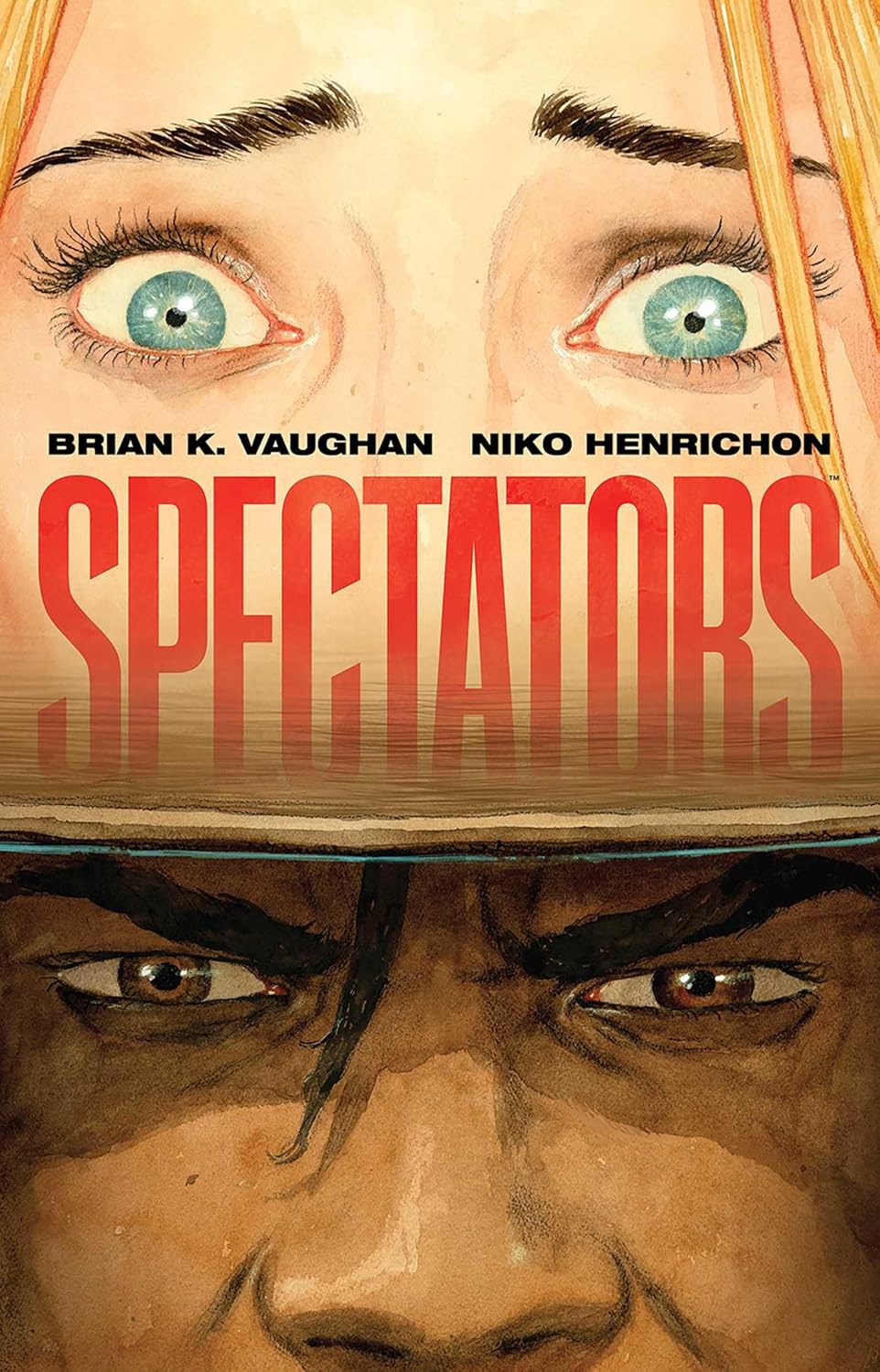
The Years in the Making Award: Spectators
Why It Made the Cut: Spectators is an oddity, in that I’ve been reading it long enough that it could have made this list three times before. In fact, its artist, Niko Henrichon, has made my creators list before for his work on this book. This Image Comics graphic novel from Henrichon, writer Brian K. Vaughan, and letterer Fonografiks was serialized between 2022 and 2024 on Henrichon and Vaughan’s Exploding Giraffe Substack, where anywhere between one and four pages dropped weekly as the team guided our way to the end of the story as they created it. But I made a decision long ago that I’d only include Spectators in my comics list once it was published — and only if it earned it.
Which, it obviously did. Let’s be real, though. Henrichon’s art alone is enough to earn it a spot. The Canadian artist did career-best work on this book, with each and every page being a staggering masterpiece that underlined his rare brilliance. The guy’s a gem, and this release proved just how great he was. Or, it did if you hadn’t read any of the comics that proved that before, because he’s been a true great for a long time now.
Spectators is about a woman who dies in brutal fashion, only to not move on to any true afterlife, instead sticking around to become a literal spectator on the ongoing existence of humanity. She’s not alone, as she makes friends, finds people she cannot stand, and might have even made an even deeper connection right as the world seems like it could end for everyone. It’s somehow both an entire graphic novel that features characters moving from scene to scene talking endlessly and a near constant showcase for sex and violence, both of which are the point of the book. Spectators is about our relationship with those things, and how one is treated as okay and the other isn’t, even if the former is destructive and the latter is creative, in its own way.
Its no-holds-barred approach to exploring those ideas is quintessential BKV in the very best of ways. Spectators will both entertain you and make you contemplate your own relationship with those things. Its leads in Val and Sam help us explore the unerring and supposedly unintentional acceptance of violence society has, all the while underlining the taboo nature of sex and nudity, and it’s all delivered in a way that resonates and feels frighteningly prescient, as is often the case with Vaughan books. It all hits, and hits hard, with Vaughan and Henrichon combining to do their best work together — at least so far. I hope they get another chance to have the kind of runway the Substack Pro Grant provided them, because that freedom helped deliver a stunning achievement in the comic form.
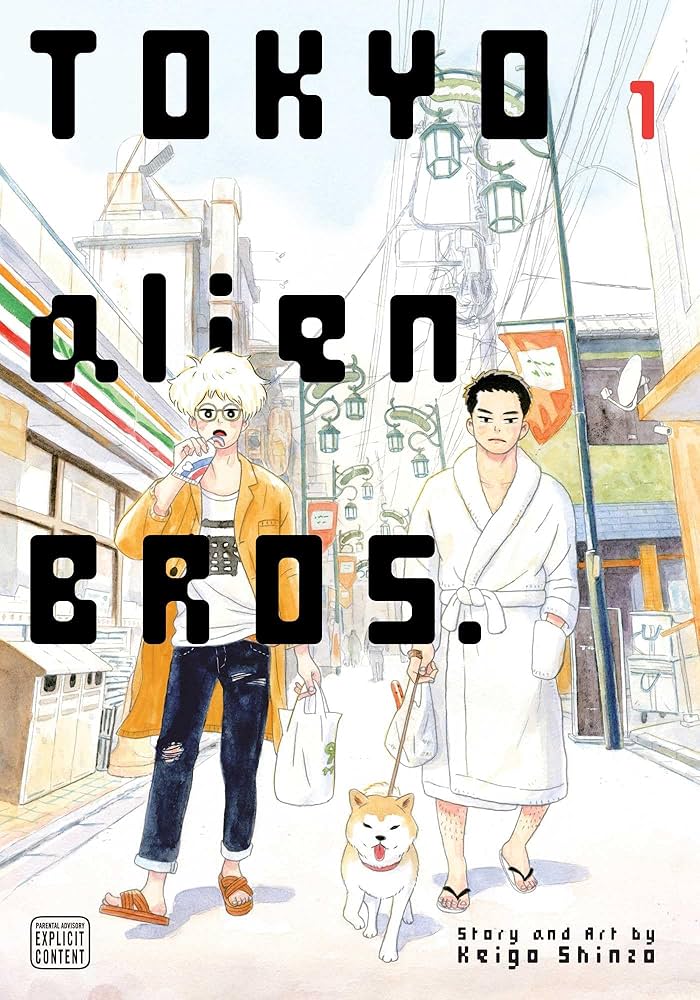
The Foundation Award: Tokyo Alien Bros.
Why It Made the Cut: Tokyo Alien Bros. is a funny comic. It’s the second work by Keigo Shinzo to be released in English, but its creation actually preceded the first one by nine years, with it being completed far before Hirayasumi was ever an apple of Keigo Shinzo’s eye. You can see that in the work. This is a different version of the cartoonist, one who hasn’t figured out who he is and what he wants to do quite yet. It’s a bit rougher around the edges, with unexpected bursts of intensity and thinner supporting casts that he might have ironed out if he published it today.
That doesn’t mean it’s bad. Quite the opposite, in fact. Tokyo Alien Bros. — which is about a pair of alien brothers (one a very cool guy, the other a total weirdo) living in Tokyo, as they act as scouts to see if the Earth would be a good fit if their species decided to move there — is tremendous, with its journey being a hilarious and emotional one that takes us inside what it means to be an individual and an individual that’s part of a larger group. The foundation of Hirayasumi and Keigo Shinzo is here, and that results in a read that’s beautifully drawn, entertaining as all get out, and often quite insightful about the human condition. And the fact that it’s told across three volumes, all of which were released this year, makes it all the better, means it’s a satisfying and complete read for those who are interested in such a thing.
While these beats didn’t bother me, I do have to warn readers that the alien nature of these brothers result in one (1) scene per book that will shock you. Each was potent enough that I know of a couple people who dropped the series because of those moments (particularly the one from the first volume), just because they were too much to handle. I didn’t have a problem with them personally, and they fit the larger story. But I figured I’d note that going in, as those moments can lead to a polarizing read.
Even with those, or because of the mind it takes to include those, Tokyo Alien Bros. is another triumph for Keigo Shinzo, one of my favorite creators of today. He’s a master craftsman of comics, someone whose art is enough by itself, but his otherworldly gifts at understanding humanity elevates each work all the more. And I cannot wait to read even more of his comics going forward.
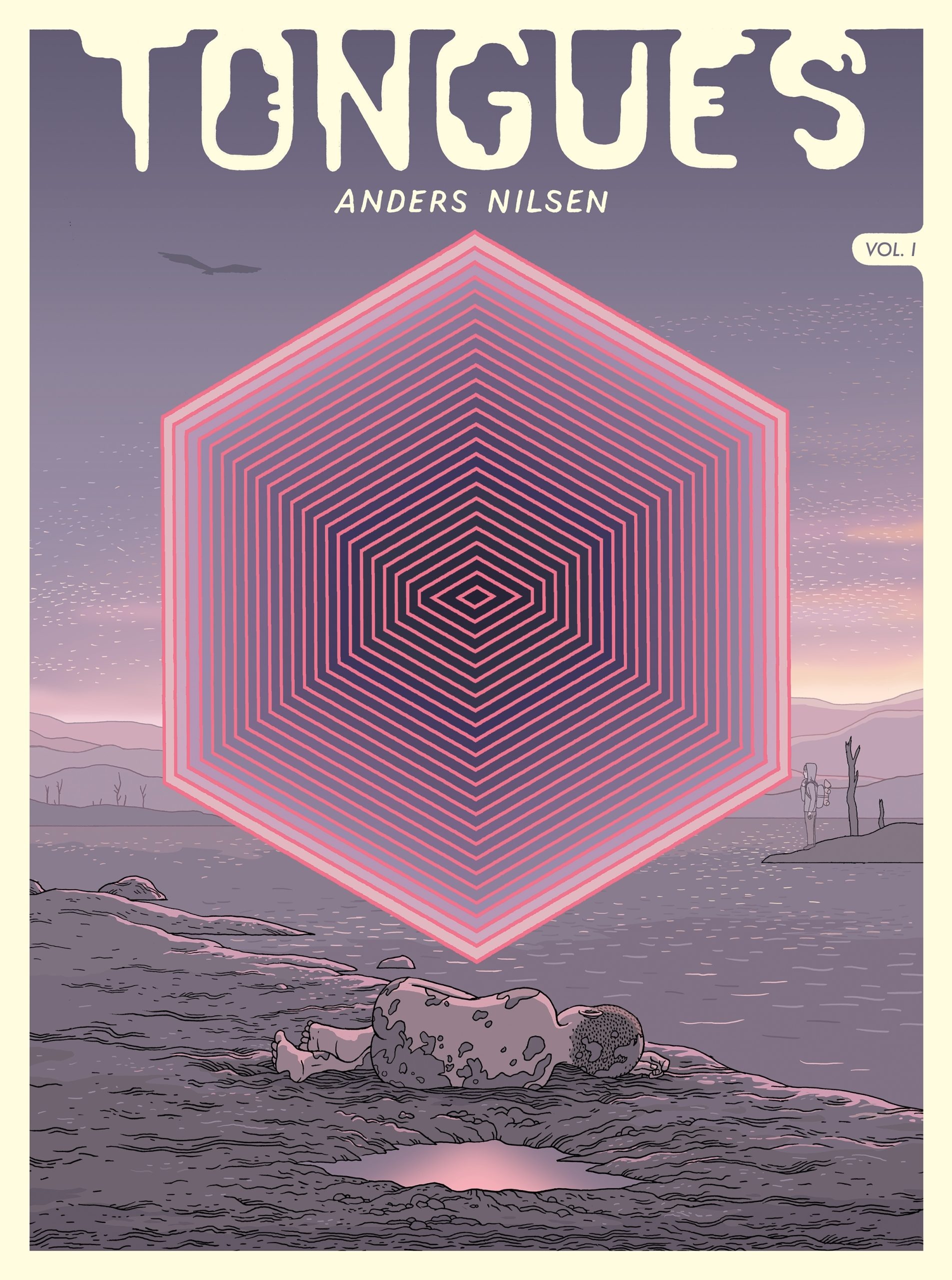
The Labor of Love Award: Tongues Vol. 1
Why It Made the Cut: As has already been pointed out by several people, selecting Anders Nilsen’s Pantheon graphic novel for my end of the year list is a cheat given my rules. It has been released before, which should mean it is ineligible for this list. That might typically be true, but given that the original, single-issue version of Tongues was self-published and very difficult to get for most, I’m going to give myself the leeway to include it. That might sound like a cop-out, and maybe it is. I don’t care. Tongues is just really, really good and I wanted to highlight it.
It makes sense that Tongues has been around for a long time. Evidently Nilsen started publishing this seven or eight years ago, which means he’s had a long time to work on it. You can see that in everything he does here. This is a true labor of love, as Nilsen delivers a retelling of the Promethean myth but with his own flavors added to it. It’s a sprawling story that exists across great amounts of time while staying rooted on a core conflict that’s developing in real time, and it’s one of the most imaginative and gorgeously drawn comics of the year. It looks like nothing else on the stands, with Nilsen’s inventive page layouts and enormously detailed line art inspiring lengthy stays on each page. It’s also just a good time, a comic I’ve described to others as a Fantagraphics release by way of Image, even if it’s published by someone else altogether.
I could go on and on, but Tongues is the type of graphic novel that is better to experience than talk about. While its foundation is in a well-known story, it quickly escapes those confines and becomes something different, a comic that reflects its creator’s passions and talents in a rare way. It’s a heck of a thing, and just the first part in a much larger story to come.
Thank you for reading this look at my Comics of 2025. If you enjoyed this piece and would like to read more like it, consider subscribing to SKTCHD and support the work I do at the same time.