
“There Was Something About Tommy”: An Oral History of Hitman
Let's celebrate one of DC's weirdest — and best — comics by telling its story.
Hitman was a surprise.
An anomaly.
A miracle.
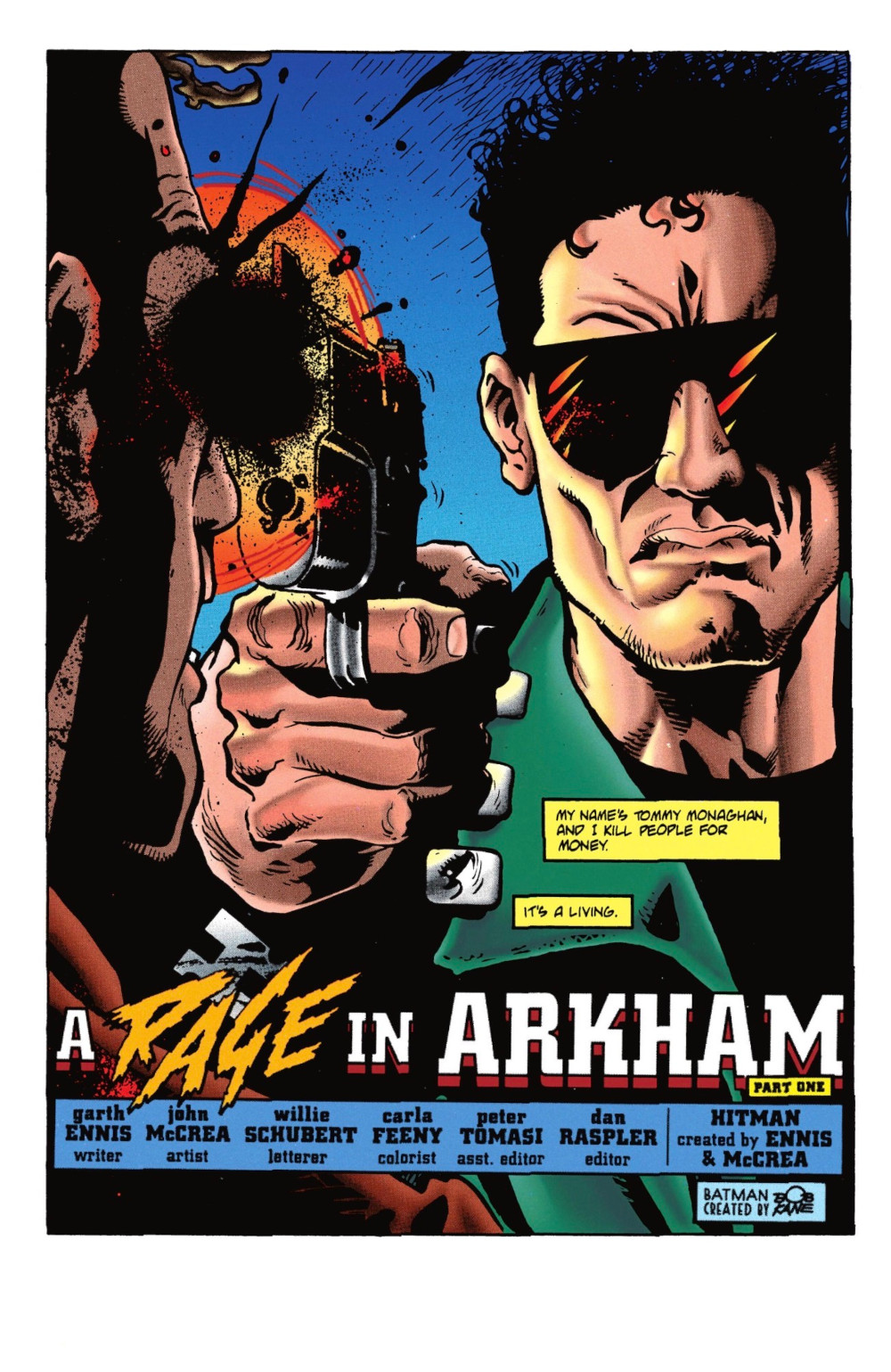
It was a lot of things, to be honest. But at its core, Hitman was a 60-issue series 22 from DC Comics about Tommy Monaghan, a lightly superpowered hitman who resides in Gotham City’s The Cauldron neighborhood, where he takes jobs, drinks beer in his local watering hole Noonan’s Sleazy Bar, and hangs out with other colorful figures. Written by Garth Ennis, drawn by John McCrea, inked by Garry Leach, McCrea, and Steve Pugh, colored by Carla Feeny, and lettered by Willie Schubert and Pat Prentice, Hitman ran from 1995 to 2001, and it was born from the humblest of beginnings: Bloodlines, a 1993 event built for the sole purpose of creating new characters.
And the only one that truly made a dent was Tommy.
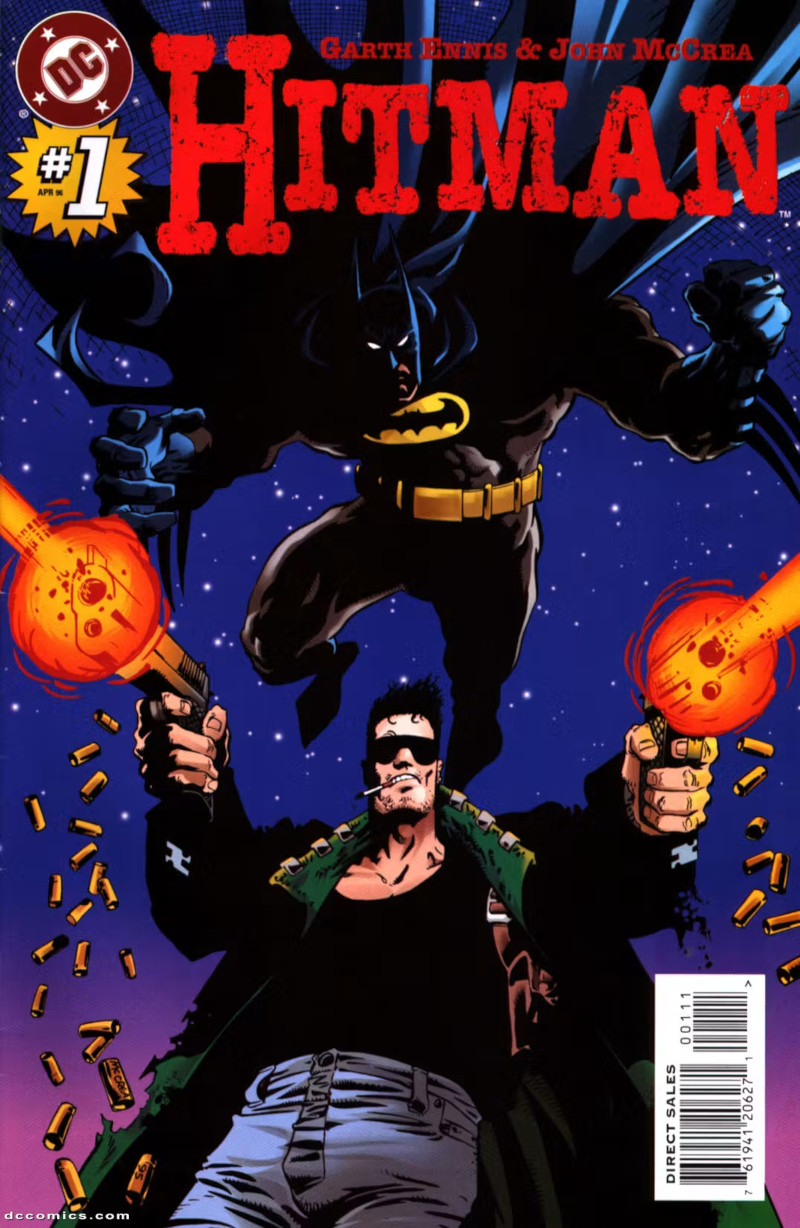
Hitman was unusual in ways that extend beyond its roots, though. It was a main line DC comic that had very little to do with superpowers. It was extremely violent, often disrespectful to superheroes, lewd, crude, and filled with attitude. Its first issue features Monaghan throwing up on Batman. Spoilers for the series, but almost no characters survive the comic they reside in. It’s strange in every way, but it’s especially odd when you view it through the prism of the DC universe.
It’s also one of the best DC comics ever made, and I’m not the only one who believes that.
“Hitman is the perfect blend of heart, humor, tragedy and absurdity,” writer Tom Taylor said. “This is a story that refuses to put characters on a pedestal or, if anyone is put on a pedestal, it’s only so they can be shown falling off and losing their pants on the way down.”
“This was Garth Ennis really firing on all cylinders,” Harley Quinn and Kite Man: Hell Yeah! executive producer Patrick Schumacker added. “I love comics in general, but I adore comics that have a humorous point of view at times, so Hitman scratched all the itches for me. And it’s stood the test of time by the quality alone, I’d say.”
“Every time I re-read it, I find something new to love about it,” writer Joshua Williamson said. “Hitman is a perfect example of a book that was built around a concept that could have gone on forever, not just a ‘story.’
“I wish we had more books like Hitman in the world today.”
Well, I have good news for Williamson. If you were paying attention to SKTCHD earlier, you’ll know that Tommy, Natt the Hat, Baytor, and the rest are coming back. Not literally. They’re mostly still dead. But a new one-shot from Ennis and McCrea called Hitman: It Was the Nineties Special #1 is arriving just in time for the 25th anniversary of the final issue of the series and the 30th of its first. That’s news worth celebrating, so today, we’re going to do just that by exploring how this one-of-a-kind series came to be.
That’s right.
This is the oral history of Hitman.
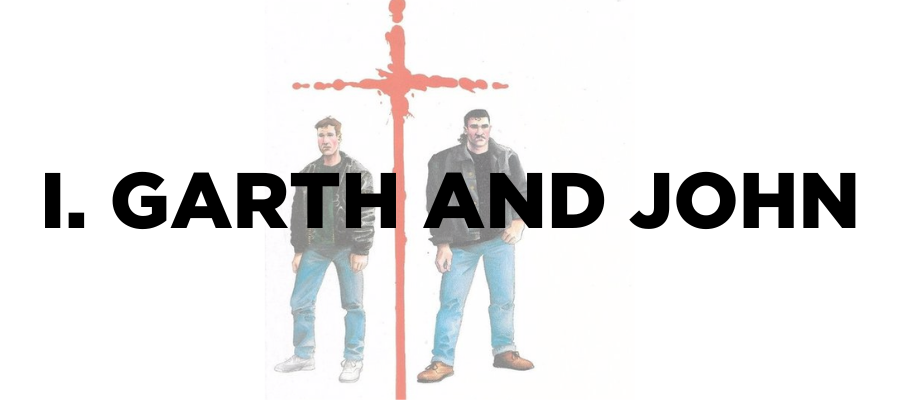
Garth Ennis and John McCrea were both born in Northern Ireland, and despite an age gap, the former was always on the latter’s radar as another comic fan in Belfast. McCrea later opened Northern Ireland’s first comic shop, Dark Horizons, and he did so while moonlighting as an artist for 2000 AD and British Marvel. That meant customers who aspired to write comics would regularly pitch McCrea on potential projects, and none of them stood out until Ennis came to him with an idea.
John McCrea (the artist of Hitman): There was a comic called Crisis that was being published by 2000 AD. It was a political comic. It was not doing so great. The guys at Fleetway, 23 Steve MacManus and Igor Goldkind, were looking for new blood, and Garth said, “Why don’t we pitch a story about The Troubles in Northern Ireland?”
Their comic, Troubled Souls, was published in Crisis in 1989. Its success led to a sequel in For a Few Troubles More, and it was around then that the pair figured out their collective voice.
McCrea: Troubled Souls was very serious. But our follow-up, For a Few Troubles More, was sort of a comedy featuring two of the shite wannabe idiots in the background.
Garth Ennis (the writer of Hitman): Having started out doing terribly sincere political material, we’d realized our future lay more in humor. We share the same sense of humor, having grown up on much of the same comedy material.
This resulted in more projects for the pair, including Ennis writing Judge Dredd and McCrea drawing Middenface McNulty in Judge Dredd Magazine. In 1991, though, Ennis took over Hellblazer over at DC/Vertigo, something that put him on the radar of DC’s main superhero line. That’s when a key project started coming together.
Peter Tomasi (assistant editor on The Demon and Hitman, eventual editor of Hitman): At that point The Demon was just wrapping up with Alan Grant and Val Semeiks.
Ennis: Editor Dan Raspler asked me to submit a pitch to take over writing The Demon.
McCrea: They needed somebody. It was selling poorly.
Ennis: John was visiting, and we visited DC because John had submitted some art samples for Hellblazer. That didn’t work out, but I had a sudden thought and went to visit Dan in his office, where I suggested John as artist for The Demon.
McCrea: DC thought, “Well, let’s give these two idiots a shot.”
Ennis: I suppose it worked because we mixed our shared penchant for weird humor with the book’s innate horror elements.
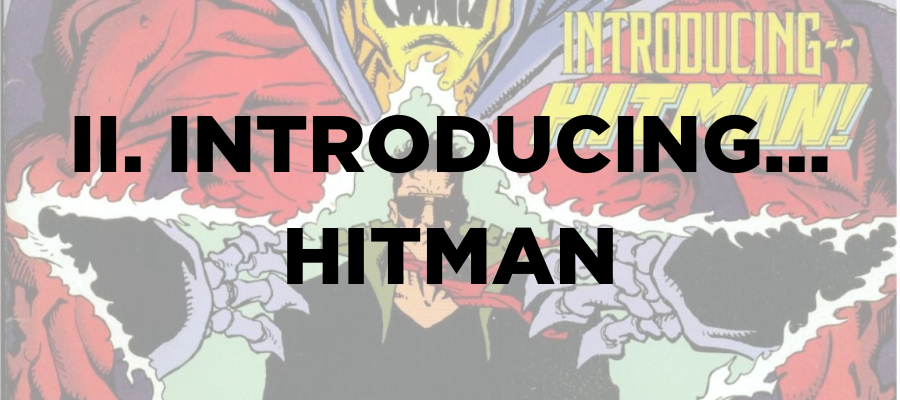
Their takeover of The Demon coincided with the coming of Bloodlines, a DC crossover from 1993. If you don’t remember it, don’t worry. You’re not the only one. Bloodlines was about alien monsters who killed humans for their spinal fluid, but on occasion, someone would survive and gain superpowers. It was pretty weird, as these things tend to be.
Dan Raspler (senior editor on The Demon and Hitman’s first 25 issues): Archie Goodwin and I were the editors of Bloodlines. We were assigned to create a storyline that would provide writers the space to create their own characters in the hopes that DC would then get this fresh batch for subsequent series.
Ennis: The idea of the Bloodlines event was that aliens from outer space would attack people and give them superpowers, thus cleverly giving DC thirty, or however many annuals were published, brand new characters.
Raspler: It gave writers a chance to create somebody new, and it was a relatively generous contract. It wasn’t just straight work for hire. The creator of the new Bloodlines character would retain some rights and get royalties if the character was used elsewhere.
Ennis: The trouble was that not only was the idea fairly feeble, so were the characters that resulted. You were talking about a generation of writers who didn’t know how to create compelling characters. They’d been writing superheroes created by other people between 1930 to 1970, and that particular creative muscle had atrophied in the industry.
Raspler: For whatever reason, it didn’t work as well as people hoped, with the single exception of Hitman, who was created in The Demon’s annual.
While this issue, The Demon Annual #2, wasn’t technically their debut on the series — that would be The Demon #40 — Ennis and McCrea immediately worked on it because it, and Tommy Monaghan himself, tied into other things. Like trading cards.
McCrea: I still have a letter from Dan Raspler about Bloodlines trading cards and how there was some crazy shit going down at DC and they needed these cards with Tommy on them fast.
Ennis: DC had just made us the regular team on The Demon and the annual was one of our first tasks.
McCrea: Tommy was created specifically for Bloodlines. In the time honored creative tradition, they were just throwing a whole load of shit against the wall and seeing what sticks (laughs).
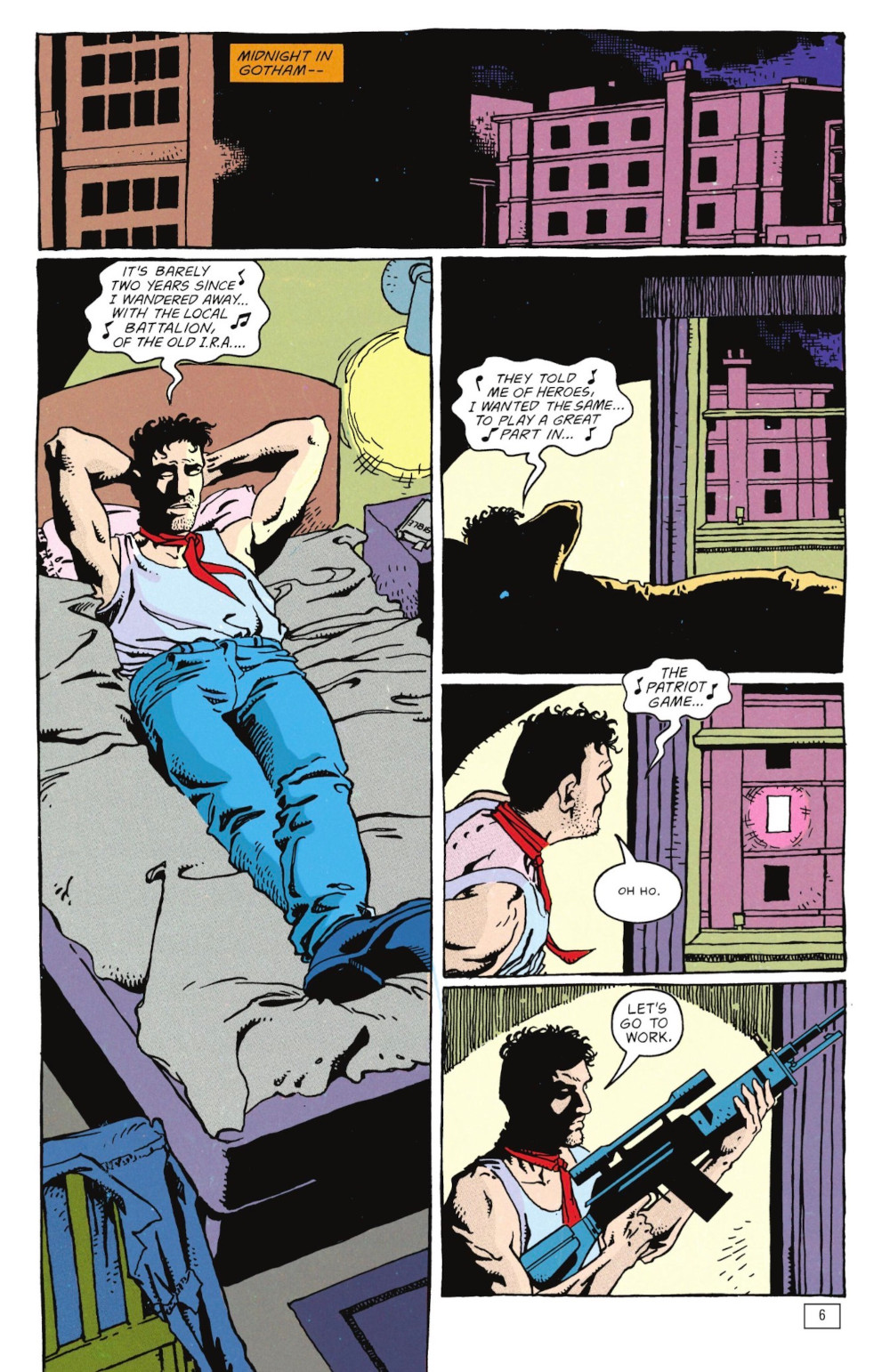
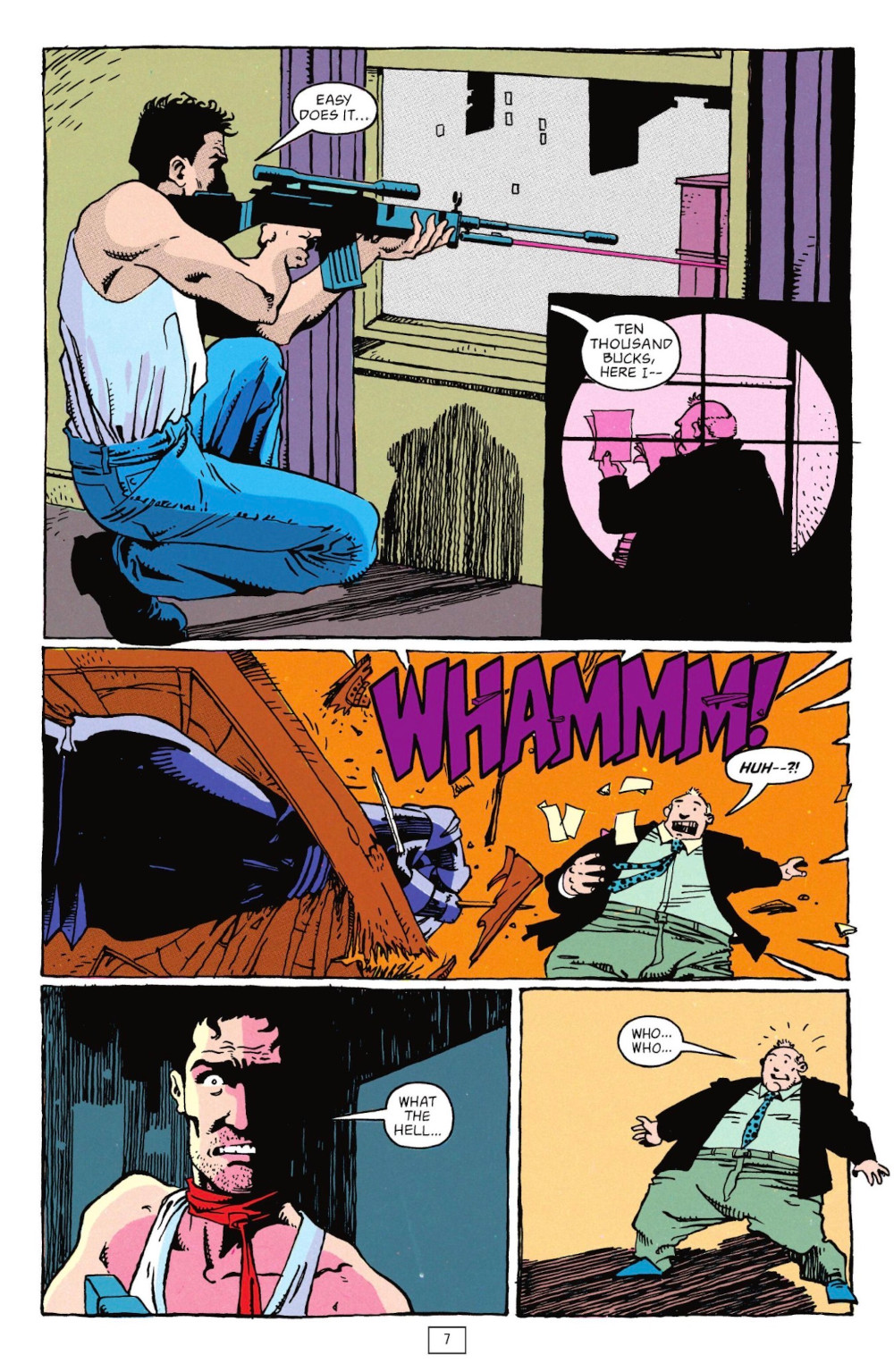
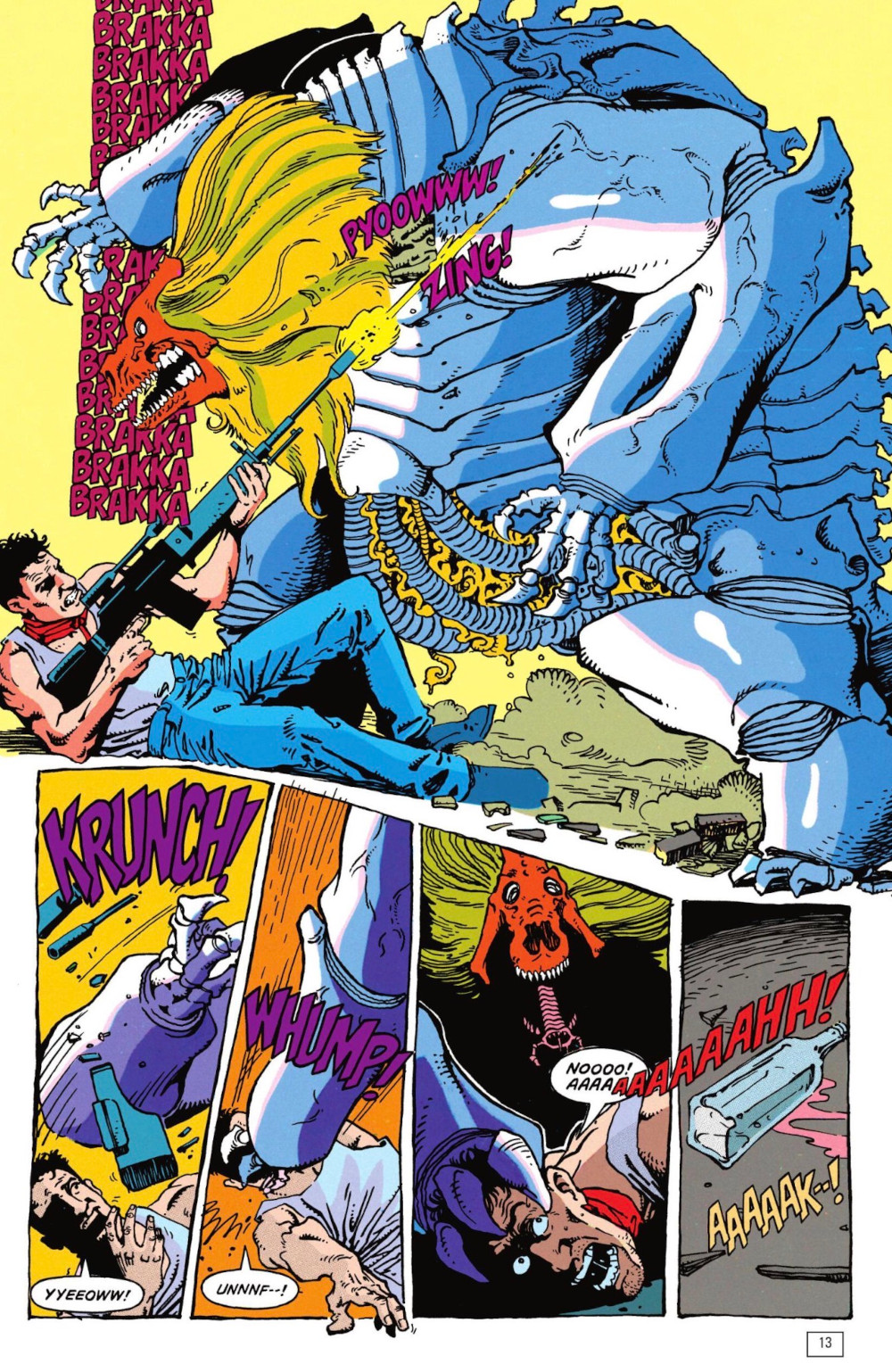
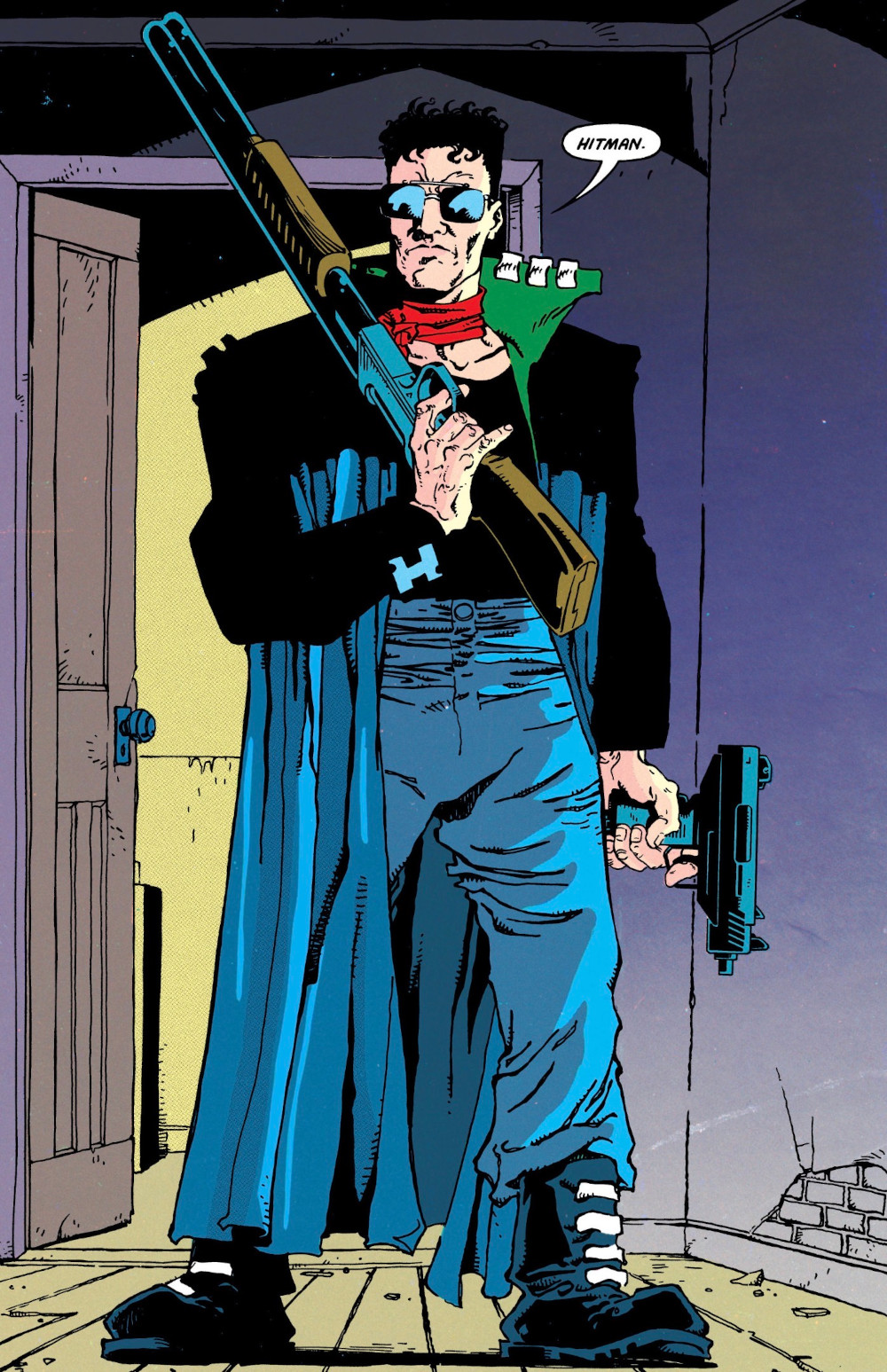
If you look at the new characters from Bloodlines, it might surprise you that Tommy Monaghan was the one that lasted. On the surface, he was kind of just a dude, albeit one with telepathy and x-ray vision thanks to his accidental alien benefactor. But he was built from a unique set of influences, ones that immediately differentiated him.
McCrea: When we were working on Troubled Souls and For a Few Troubles More, there was an artist down in Glenarm 24 called Will Simpson who Garth worked with on Hellblazer. We would travel down to Will’s house and hang out while he was working. That’s where Garth and I first saw a John Woo film.
Ennis: Tommy came from the movies we were into at the time, most obviously the two-gun gangster flicks of Hong Kong directors like John Woo and Ringo Lam. The sheer kinetic impact of those films had gotten a real grip on us, and pretty much gave Hitman its visual aesthetic.
McCrea: We were blown away by it. We watched a lot of Hong Kong action movies at Will’s place. That was foundational in the creation of Hitman.
Ennis: A Gotham slum instead of Hong Kong, yes, but the sudden eruptions of all-out bullet-riddled mayhem should make the book’s cinematic roots pretty obvious.
McCrea: We were big fans of Miller’s Crossing and Tommy’s look was kind of based on Gabriel Byrne from that.
Ennis: I should also point out the Irish American crime influence from the movies Miller’s Crossing and State Of Grace. The line about saving twenty blocks for the Irish 25 also comes from State Of Grace. I used it when first establishing the Cauldron neighborhood as an Irish one.
McCrea: The character was originally going to be called Killer, but DC were like, “It’s a bit on the nose.” (Ennis) basically said to me, “I want him to be a guy in a trench coat. He carries guns and wears cool glasses. We have to give him powers.” Garth never wanted powers and fought against them as much as he possibly could in all the ways he devised throughout it, like migraines because of the telepathy. I tried to put these little bits on him, like the cuffs and the stud things on his collars because I felt he needed something visually that went, “This isn’t just a bloke standing about in a trench coat. He’s got something more.” 26
Raspler: Every British contribution seemed to be a guy in a trench coat, and now here’s Hitman, yet another guy in a trench coat. Once DC realized this is what they’re offering, you sort of just trusted the creators.
Tomasi: They would have put him in his pajamas if they were allowed to. It was down to basics. There were no uniforms of any kind. He didn’t have any pouches underneath his jacket (laughs) or any of that stuff. He was a very down and dirty type of character.
Raspler: He was not a mainstream superhero character, which comes as no surprise knowing Ennis and McCrea.
McCrea: I had no clue that he was going to get spun into his own book.
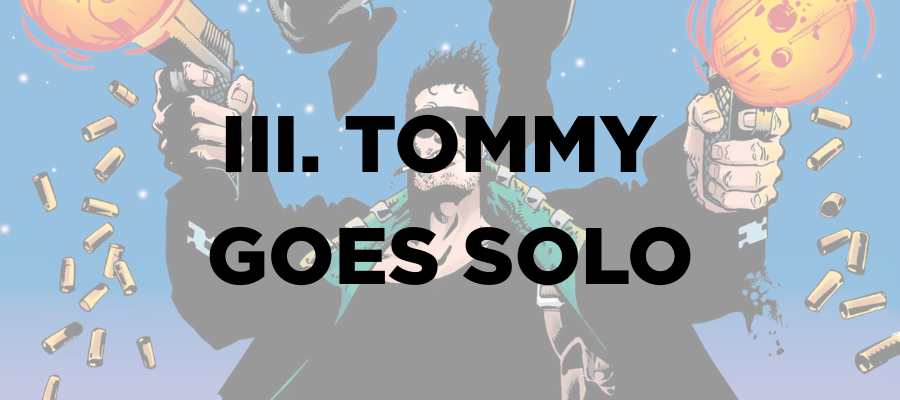
Early on, Tommy Monaghan was just an occasional guest star in The Demon, appearing in six issues from Ennis and McCrea’s run. During that time, the duo developed an affinity for the character, which motivated the writer to pitch Tommy for something more.
Ennis: I wrote up an outline sometime during the last few issues of The Demon and DC okayed it on the basis of being prepared to try anything once, which is the impetus that lies behind most new character launches.
Raspler: I loved it and forwarded it to the executives for approval.
Ennis: Perhaps they just found Tommy too charming not to do more with. That was certainly the motivation for John and myself. He is, after all, a very charming chap.
McCrea: The first I heard about it was after The Demon got canned. But it was like, “It’s canned, here’s Hitman. You’ve got however many months to get going on this book.”
Tomasi: DC wanted something new, and this Hitman character was a bit different within the confines of the DC universe. And it was Garth. He was doing Hellblazer. I think they just wanted to have him bring his specific worldview (laughs) into the DCU and run with the character and see what happened.
This was at an important moment in Ennis’ career. He was writing an acclaimed run on Hellblazer, and his Vertigo series Preacher had recently launched. Belief in his talents was growing at DC, something that certainly helped Hitman earn a greenlight for its launch in 1996.
Raspler: It was at least in part Garth’s name. He was a rising star.
Tomasi: They saw someone who really knew how to kick ass and give life to characters. They just saw a different skew from a guy like Garth. Luckily the powers that be wanted that and embraced it.
Raspler: I’m sure when they got the pitch, the executives at DC said, “Well, we wish he would do a superhero in tights because it would get better sales. But since that’s not what he wants to do, we’ll take this.” (laughs)
Incredibly, Hitman was not the only character from Bloodlines that earned a series. There were seven titles starring the “New Bloods” from the crossover, including luminaries like Anima, Psyba-Rats, and the legend that is Gunfire. The latter was a measuring stick for McCrea, as the artist was, for a lack of better words, gunning to top that character.
McCrea: When Hitman did finally get his own series, I said to Garth, ‘If we don’t do better than Gunfire, I’m going to quit comics forever.’ Gunfire had been coming out, and I just thought it was just one of the worst comics I’d ever read. 27
Raspler: I know there were a few series of those heroes that were created for Bloodlines. None of them really survived.
McCrea: I was pleased to see that we did outlast good old Gunfire. My career continues unabated.
subscribers only.
Learn more about what you get with a subscription
Or even more if you include the One Million issue, the annual, its crossover issue with Lobo, and JLA/Hitman, which I do, and many, many more once you factor in other associated appearances, minis, and spin-offs.↩
Fleetway was an earlier publisher of 2000 AD.↩
A village in Northern Ireland.↩
From Hitman #9.↩
Early on, Tommy also wore a distinctive red scarf. The team quickly grew to hate it, which is why it disappeared by Hitman #1.↩
The artist also noted, “I think it was that sort of statement that led to the creation of Gunfire One Million” in the Hitman One Million issue.↩
Which is why there were dinosaurs in Hitman.↩
I asked McCrea if he ever suggested to Ennis that Natt go hat shopping to replace it. He said that it’s the thing that distinguishes the character, and he knew as soon as he took it off or gave him a different hat, readers would get confused. So, the hat stayed.↩
A hitman and Tommy’s friend/rival.↩
Tommy’s love interest and a Gotham detective.↩
The easiest way to explain it is there is always a Dogwelder in the world, and the power they carry comes from a curse by Anubis. He eventually saves the world from a soon to explode Sirius A and B by welding the Dog Stars together. It’s wild and happens in Sixpack and Dogwelder: Hard-Travelin’ Heroz.↩
From Ennis: “The whole point of Baytor was to have him crowned king of hell in the last issue of The Demon, and the entire demonic host roaring ‘All hail the Master Baytor.’ Unfortunately, such things were simply verboten, and ‘master’ was changed to ‘king’ at the last minute.” It was changed back in a later collection, though!↩
The Group Editor of the Batman line at the time.↩
That typically involved erasing more than redrawing, though.↩
A scene from Hitman #15 where Tommy tries to get Catwoman’s attention by putting a dead cat on a spotlight, à la The Bat Signal.↩
McCrea recounted sitting next to then-Catwoman artist Jim Balent at San Diego Comic Con during Hitman’s run. At one point, Balent — somewhat facetiously — asked McCrea, “John, what are you doing to my girl?” to which the artist replied, “Just fucking around, I guess.”↩
Raspler departed the book before the No Man’s Land tie-in.↩
A quick aside, but rereading it, McCrea’s not giving himself enough credit. That final issue is beautifully drawn, and he delivers on every moment throughout. It’s an incredible effort.↩
The artist realized after Hitman wrapped that he “probably would never do another book of such length again.” That’s why when Ennis offered him another long series afterwards, McCrea declined. That series? The Boys.↩
Raspler said the quality of the fill-ins came down to Ennis having some rather talented friends in the field. Also, Doug Manhke was the artist on the Lobo/Hitman special, but that’s not really a main thread release so I didn’t count it here.↩
Unless you count Sixpack.↩
Or even more if you include the One Million issue, the annual, its crossover issue with Lobo, and JLA/Hitman, which I do, and many, many more once you factor in other associated appearances, minis, and spin-offs.↩
Fleetway was an earlier publisher of 2000 AD.↩
A village in Northern Ireland.↩
From Hitman #9.↩
Early on, Tommy also wore a distinctive red scarf. The team quickly grew to hate it, which is why it disappeared by Hitman #1.↩
The artist also noted, “I think it was that sort of statement that led to the creation of Gunfire One Million” in the Hitman One Million issue.↩