
“It’s Too Integral of a Part of Me”: Artist LeUyen Pham on Her Relationship with Art and Her Graphic Novel, As I Dream of You
I am very much on the record as being a big fan of artist LeUyen 3 Pham. She was one of my Creators of 2024 for a reason, and she’s someone who has done a ton of tremendous work in her long and incredibly productive career. If you’ve seen her work in Lunar New Year Love Story with writer Gene Luen Yang, you know what I’m talking about, as that graphic novel showcased someone with a rare gift for inking and character acting — amongst a great many other things.
So, needless to say, I was thrilled when I was offered the opportunity to talk with the artist about her work on the recent First Second graphic novel, As I Dream of You, which she did with writer Jennifer Lee (of Frozen and Frozen 2 fame).
We recently had the chance to sit down and talk about art, her lifelong relationship with it, her unpredictable journey to becoming an artist, how she figures out which projects to take on, and a whole lot more, before we discussed and dissected four pages from As I Dream of You — no spoilers! — and the cover of the book. It was a great way to get to know the talented and charming Pham, and to gain insight into how she makes the magic happen in each and every project she takes on…but particularly As I Dream of You.
You can read our conversation, which has been edited for length and clarity, below. I hope you enjoy it, and hey, make sure to pick up As I Dream of You. I suspect this will not be the last time I highlight it and Pham’s work within its pages this year.
I wanted to start by asking about your relationship with art. I came across an interview with you where you said, “Drawing is like breathing for me.” That was in response to a question about how you apparently have drawn or painted every day of your life. I’m curious, when did your relationship with art start? And what is it about creating art that speaks that speaks so strongly to you?
LeUyen Pham: You know how you have your earliest memories of life? My earliest memory is actually drawing, and I’m not being silly. I genuinely mean it. My mom had five kids and we were immigrants, so the first year she spent at home. I was about three at this time, and she would talk on the phone trying to figure out her day. I would sit next to her, and in the telephone book, which I’d never seen before — I thought it was just paper — I would draw pictures of the seaside. (laughs)
I remember at that age even thinking, if I keep turning these pages, I can make this the longest drawing in the world. That is my earliest memory of drawing, which means I have no idea where that came from. I just know we didn’t have a lot of toys. (laughs) We were kind of poor. But paper, pencil, we always seem to have those around. I drew a lot in books. But I think it wasn’t until I got into elementary school…I was shy and didn’t understand the culture very well, and I was trying to like trying to make friends. That’s one of the easiest ways to make friends, right? Doing drawings of people. I just remember impressing a lot of kids when I was young. (laughs)
I think I was eight when I drew this picture of the most popular girl in school. Her name was Kami Munroe. She was super cute. She had been in a Coca-Cola commercial. She was way out of my league in terms of making a friend. But I sat in class and I was so enthralled by her profile that I started to sketch the side of her face, and she caught me doing drawing this and she looked over and she’s like, “What are doing?” I’m embarrassed, so I show her the drawing. “I’m sorry, I was just drawing you.” And she said, “Oh my God, can I have that drawing?” I was thrilled, right? Like, my gosh, of course. I was just about to hand it to her, and she took a dollar bill out of her pocket.
I didn’t know kids carried cash! (laughs) That was not something we had at the age of eight in the Vietnamese household. She slapped it on the table and was like, “I’ll buy it from you.” Then I realized I could make a little business out of this. So, for the next four or five years I would charge for drawings of whatever was popular — The Ewoks, Calvin and Hobbes, Garfield, Little Twin Stars — and I made a killing. (laughs) That was probably my entry into realizing that drawing can be an exchange thing. You can do it not just in terms of communicating an idea, but getting money.
As far as becoming serious about it, it was not untilI was at UCLA. Like any good Vietnamese parent, my parents had made each of their kids go after a very serious career because they never wanted to pay for professional services, right? So, there was going to be a doctor, a dentist, and I was supposed to be the lawyer. So, I was at UCLA studying political science, and I took a drawing class there for fun because I’d always loved to draw.
I’d always done it on the side, and the drawing teacher there asked us to do what we thought was a good drawing. I drew a picture of two nudes because I had no concept of what fine art actually was. I just thought Michelangelo, Sistine Chapel…I’ll just make up these two people dancing, and I turned it in. I think he was impressed by it, but he didn’t say it that way. What he said was, “Where did you copy this from?” I think he was referencing, like, when you do a master copy, you go to the museum and you sketch. I think that’s what he was referencing, but I didn’t know.
I thought he believed I copied it, and I got very upset. I took my drawing to the head of the art department at UCLA and said, “This guy accused me of copying,” and the head of the art department looked at it and said, “Well, do you have more evidence of your drawings?” And again, I was like, “He doesn’t believe me either. Oh my God.” I was so upset, and I went home and found all these paintings I had done in high school and sort of just dumped it on the counselor’s desk.
The next day I get a phone call. (The head of the art department) called me to say, “I have made an appointment for you to go to Art Center College of Design. You’re going to meet with a counselor there. You’re in the wrong school.” And it was just like that. It was amazing. I didn’t think I could go because I was on financial aid at UCLA. If you’re from California and you go to a UC school, the tuition is very low. I was on all types of Pell Grants and Cal grants, so I was paying nothing for UCLA.
Art Center was like $30,000 to $40,000 a year at the time. That was already $10,000 more than my father was making at the peak of his earning potential, so there was no way I could go. But the counselor was great. She looked at my work and she said, “If you can put this into a portfolio case, I can probably get you the entry scholarship.” (laughs)
I’m going to admit this here…I stole a portfolio case. (laughs) Those suckers are expensive! They’re like $42. There’s no way I was going to buy one on the chance that I couldn’t go, so I stole it. It was at Aaron Brothers — sorry, Aaron Brothers — and I have since purchased so much artwork that I think I have overcome anything that I might have possibly stolen from them at the age of 19.
But I got the entry scholarship, and that’s when I started to take art very seriously.
Are you the type of person who carries a sketchbook with you everywhere?
Pham: Yeah. I’ll carry a sketchbook. Lately I just carry my iPad because it’s more convenient. It does everything for you. But I’ve always got something that I’m drawing on. And if not, I’m one of those nervous drawers where if you’re sitting talking with me, I’ll have something in front of me that I’m kind of doodling on.
But beyond all this stuff, it’s too integral of a part of me, you know? It’s not something I’ve ever even questioned or wondered, “Why did I do it?” It’s just something I do. I’ve been doing this now for 30 years. I have like 140 books out there. I’ve reached that curve around my career where I’m no longer trying to figure out, “How does my career work?” and which projects to take. I’ve reached the point now where I’ve returned to that child self of what pleases me to draw, what makes me excited, what’s the next challenge? What’s the next phone book with the endless beach drawing that I can do, you know?
It’s a really nice place to return to because it goes back to the essence of your question, which is, “Why do this to begin with?” I think it has something to do with feeling fulfilled in your own brain space. It’s not external anymore. I’m not looking for people’s approval. I’m not looking for an editor to say they like it. I’m looking to really like it myself. I’m finding that the more I throw myself into the art in that way, the more people respond to it.
We’re going to be talking about As I Dream of You, which was written by Jennifer Lee. It’s a First Second release. Given the fact that you’ve kind of entered this flow state where you’re back in the phone book days (Pham laughs) and you’re able to just draw for the love of the game, how does that shape what projects you take on? Because you do a lot. What is your guiding light when you decide, “I want to do something like As I Dream of You?“
Pham: Well, it’s not like I sit there and say, “That’s what I want to do, now give it to me.” It’s a whole bunch of machine parts working in the right way and things falling unexpectedly into your lap. I think for this particular project, it was like a manna from heaven situation. I didn’t expect it to happen. In fact, I was this close to not being able to do it because I had just finished Lunar New Year Love Story with Gene (Luen) Yang.
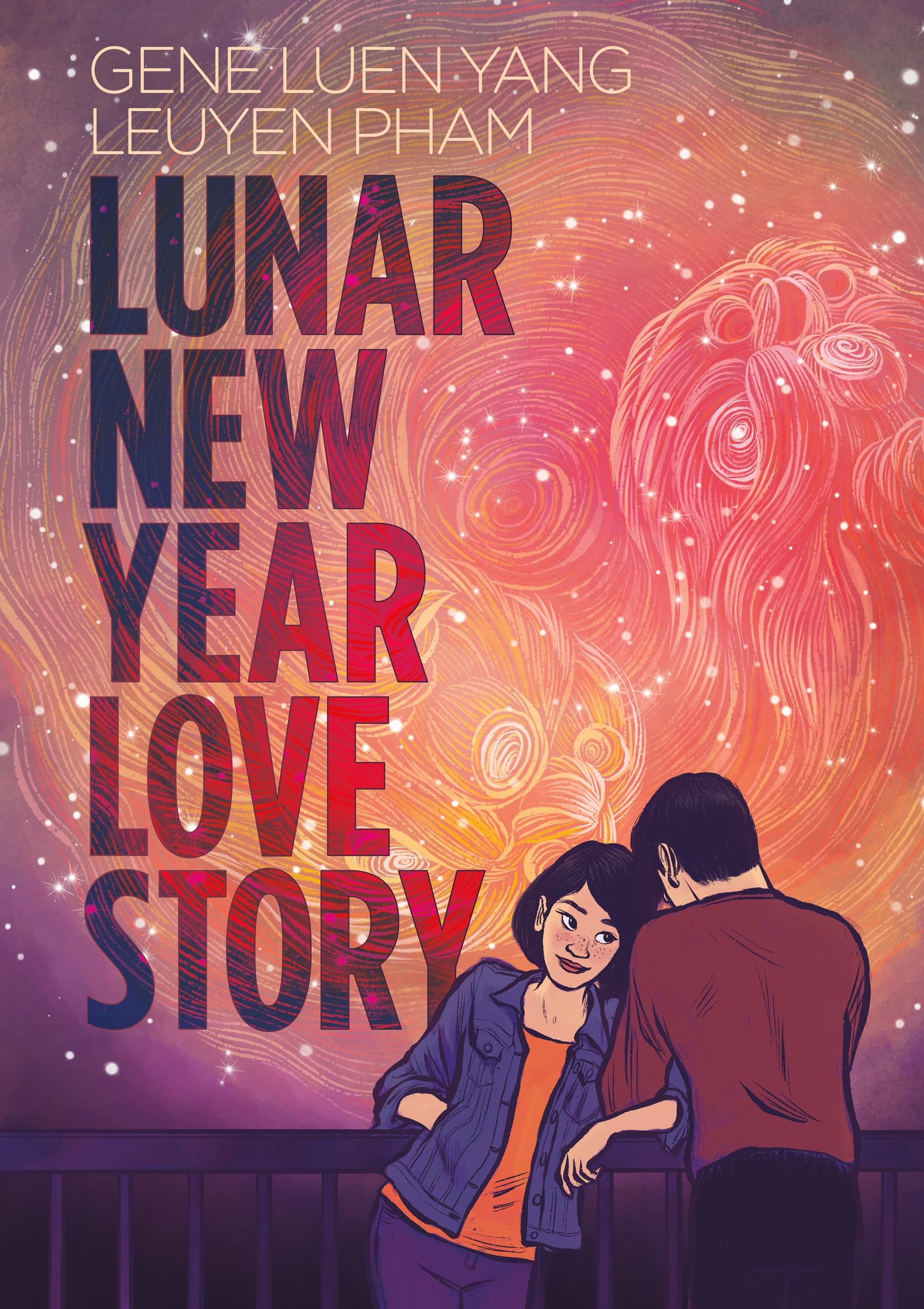
Lunar New Year was my first entry into young adult graphic novels. Previously I’d done middle grade, and stuff with a lot more of a commercial bent. But Lunar New Year was my first attempt at trying to make a real love story with personality. Gene was the best person to train me up on all of that. Gene’s a very good friend of mine, and we talked about wanting to do a book together for a long time.
That was one where I think I got to really see how a graphic novel works from an incredible brain, right? Gene can take the nugget of an idea and form it into something very clever, something where the timing is impeccable. All of Gene’s work is about the turn of the page and where does that punchline land and what happens when you turn the page, where does it go? Working with him was just fun because I think I could pick his brain.
It was one of the first times I understood that collaborating with someone, especially for graphic novels, is sort of reaching outside of what both your comfort zones are and trying to service a story that exists outside the both of you. It’s in the ether somewhere. It exists somewhere, and we’re just trying to reach the level of the story. We’re not trying to pull the story down to what we’re good at. We’re trying to pull what we’re good at up to the level of the story.
That takes a lot of removal of ego. (laughs) I have to be totally fine with Gene saying, “That drawing doesn’t work,” and Gene has to be fine with me saying, “That line just isn’t hitting right.” There’s a lovely collaboration there that I think happens very well with friends. We already understand each other’s personalities a little better.
The story with Jen was that it came up when I was in the middle of trying to finish Lunar New Year. When I get into these flow states, as you’re talking about, it’s a little bit like a submarine. You go under and nobody sees me. (laughs) I don’t remove myself from the table. I will sit for 12 hours straight and later realize I’ve been cramping this whole time. I’m in one of these flow states and it’s two o’clock in the morning, so I’m going to bed, but then I get an email from Mark Siegel, the editor of As I Dream of You.
In it, he says, “I know you’re in the middle of doing Gene’s book, but this script just came across my desk, and I can’t picture anyone else for it except you.” I was this close to saying, “Damn it, Mark, I’m giving birth to your other child. (laughs) Leave me alone. I’ve got to finish this other one.” But I couldn’t sleep, and so I thought, why not? I’ll just take a look.
When I saw the cover, it said Jennifer Lee. I had no idea who she was. I swear to God, I thought she was some young Asian girl straight out of school. (laughs) What is he sending me? And it was such a slender script. I wasn’t expecting too much out of it and found myself just enraptured by the story. It hit me hard. Maybe it was because it was two in the morning and I was just very vulnerable, but it just hit me in all the right places, and I could clearly see the movie running in my head.
The next day when I called Mark, I’m like, “Yeah, I can completely picture this.” And he said, “That’s good, because we can’t picture it at all. We’re having a hard time placing it. Nobody can picture how the story is going to work.” Which, if we talk about what the book is actually about, it makes a lot of sense that that is a difficult thing for some people to picture from the beginning without any visual assistance.
You were talking about being at the desk for 12 hours to the point you were cramping up without realizing it. When I had Gene on the podcast last year, I remember him telling me how you were incredibly fast at drawing. You are fast, I’m sure. But a lot of times, the secret sauce for an artist isn’t being fast, it’s being dedicated to bringing a book to life. Like, As I Dream of You is 352 pages. That’s a lot of work. And I’m sure Lunar New Year Love Story was a ton of work too.
Pham: Absolutely. I’m a huge fan of Indiana Jones, and I steal his line all the time. “It’s not the years, it’s the mileage.”
I feel like I’m probably fast compared to a lot of people is simply because I do this so much that I try my best to never erase or undo. (laughs) Not because the line is perfect, but to let go when the line isn’t perfect. Especially with digital work these days. A lot of artwork is so perfect, it’s slick. It’s almost unreal and a little too cold. It just starts to look like a machine kind of made it.
I really like it when I put a line down and it doesn’t quite look right or it’s a little wonky. In the beginning, it’s hard to let that go because you feel like, no, it’s not right. But the more I’ve practiced just making myself go quickly through a page, the more I’m able to let go a lot of those “ugly lines.” And it turns out they’re actually quite beautiful. So, for me, that’s part of the process. Just letting go of perfection and allowing those lines to just dominate the page. Not being afraid of putting down something that doesn’t feel right.
And I think as an artist, that’s something I do a lot. I like to put myself in positions of discomfort, because I feel like if you’re comfortable doing what you’re doing, then you’ve already done it, so what’s the point of doing it? (laughs) And if you’re slightly uncomfortable, you don’t quite know what you’re doing…it’s a little more exciting. It’s way harder, but it’s a little more exciting and it keeps you fresher. It keeps you more apt to be able to accept change.
There’s this whole philosophy of drawing that helps a lot, and it results in me drawing a lot faster.
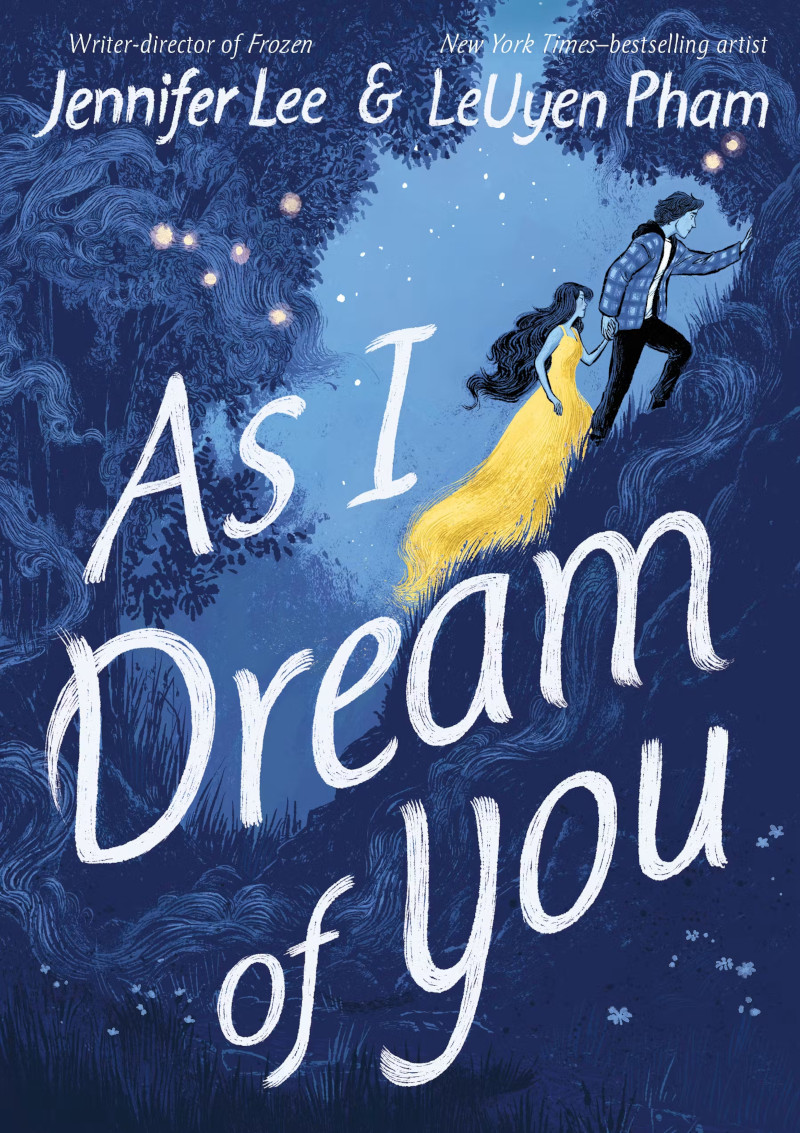
Let’s talk about the cover to As I Dream of You. I talk a lot of people in direct market comics. There are a lot more covers there then the book market. The book market feels different. I love what you did with this. It’s beautifully done with a lot of nods to the story itself. But when it comes to a cover like this, how does that happen in the book market? Is this something you come up with the idea of and then execute completely? Does First Second bring ideas to this? Does Jennifer ideas to this? How does something like that work with a book market cover?
Pham: The book market cover (world) sucks. (laughs) Sorry, but it’s absolutely true. I hate designing book covers. The reason why is there are 25 cooks in the kitchen and none of them are really artists. They’re all people with different expertise about things like, you know, “The color orange doesn’t sell. Never put it on a cover.” Just weird rules that I’m sure are based on something, I just don’t understand what they have to do with creation of the art.
Also, I know that the cover that I love isn’t necessarily the cover that is going to sell, and that’s unfortunate. Maybe one out of every 20 covers that I do is going to be the one that actually does sell. But I don’t think I’m very well equipped to understand what sells on a cover. (laughs) So, I generally like to hand over the reins for the cover just to say, “Let me know what ideas you guys want.” The book is mine, but the cover is a group project, and I’m very good about being a team player and saying, “You guys just let me know everything that you want to put on that cover. Let’s see what I can do with all the information that you’re giving me. Hopefully something will work.” It generally seems to work for the most part. I’m not necessarily happy with it all the time, but it does seem to work.
In the case of this cover though, I was so into the flow of this book. I couldn’t give a sketch for anything. Anything they asked me to do, I would give them a fully developed drawing because I just knew what I wanted each time. So, for this cover, I’d come up with like 20 fully rendered covers. I sent them and said, “Whichever one you guys want.” (laughs) They went through and picked the ones that they liked, and this was the one. It didn’t look exactly like this, but they took this and showed me a painting of a classical image of Orpheus and Eurydice which is what the story is sort of based on.
I can’t remember who the painter of the Orpheus and Eurydice painting was, but they said, “Can we get this like mythological feel with these characters that you placed here and put it in some sort of forest environment like in the story?” And the minute they said that I was like, “Yeah, I know exactly what you want,” and I sketched this one up. I don’t ever do this, but I had such confidence that I knew this was the cover that I pretty much took it to finish and sent it to them and said, “What do you think?” And they were like, “Is this the sketch or is this the finish?” I’m like, “It’s the finish if you want it,” (laughs) so it became the finish.
It was a weird experience. I was just on the groove of it and it was it felt really good to do this particular cover. It felt good to place all those elements in there and to know like, okay, this part of the story is going to make it in. I’m glad that they liked this dreamy sort of look. I think the only thing I wasn’t keen on was the type only because it doesn’t match what’s in the book. But everyone else I know really likes the type, so I’m going to assume that I’m just off on that one.
It’s funny, I was going to ask whether you do the titling and even the creator names on the cover.
Pham: I do, yeah.
But I know what you’re saying. The lettering that appears in the book itself is different than this. But the thing that I think is amazing about your work, and I think you can see this when artists write (editor’s note: as in literally writing by hand, not writing their own comics) in general…I can see your line on the type in the cover. It feels like your hand. It’s interesting how that works. Do you like handling all the visual elements of your work if you can?
Pham: I do, yeah. I like to design every element of a book. I do mostly picture books, and in picture books I always feel sorry for my designer because I leave them nothing to do other than to put the typeset in. (laughs) I’ll design the wraparound end pages, I’ll design where the ISBN goes, and I’ll design the dedication page. Every element of a book I feel is part and parcel to telling of the story, I’ll design.
There’s a picture book that I recently did called The Man Who Didn’t Like Animals. The story starts with this man who doesn’t like animals. That’s in the first sentence, and I’m supposed to establish that this man doesn’t like animals on the first page. Other than having him kick a dog, I don’t know how you do that. (laughs) So, from the very beginning with the end pages and then all the way through the dedication and half title page, I start the story the minute the book is opened. And knowing that you have all that real estate to convey a visual narrative, just why would you give it up? Why would you not design those end pages? Why would you not take that moment to have a little spot art that helps propel the story forward in some way?
So, yeah, I’m really keen on designing everything.
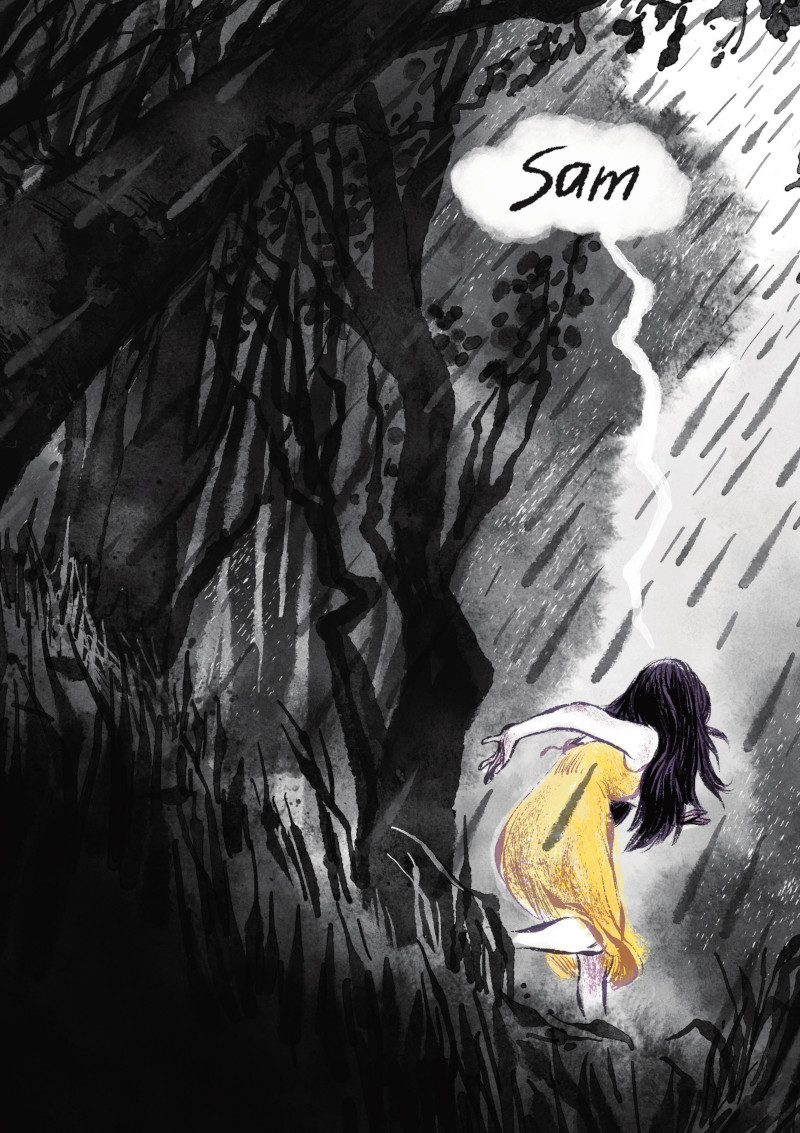
This page finds someone who is at this point a mysterious figure running into the distance saying Sam, as everyone can see. But it’s not a regular page, it’s actually an interstitial, chapter break type page, something that recurs throughout the entire book. I’m curious, were those interstitials something that Jennifer scripted or was that something you brought to the book?
Pham: It was definitely me.
I’m going to say this about Jen: her script was perfect. In my opinion, it was perfect. It was 95 pages. It was a very slender script. It had just the amount of information that was needed for the artist to take it across the finish line. She was incredibly generous and trusting that whoever took this on was going to be able to fill in the blanks that she left in the script.
I can imagine that’s an incredibly hard thing for most writers to give up, because you’re relinquishing control of the story to somebody else and trusting that they can do it, and in that way, as I’m reading this script that is not full of description…it’s not telling me what to do. She didn’t describe even what any of the characters look like, with the exception of Franny’s yellow dress and her red sneakers. Those were the only two elements that she really described. Otherwise, everything else was left up to interpretation.
Because of that, while I was reading it, no one’s painting the picture for me. I’m painting the picture, and I could immediately feel these scenes where the look of it, the style of it had to change. Where they needed to be inserted, because this is not a typical part of the story. This is another world in the story.
The very first thing I did when I started the story was, I went through with a highlighter and just highlighted all the different sort of planes that she’s addressing. There’s the world of the living, there’s the world of dreams, there’s the world of the dead, and then there’s the worlds that Sam is living in and the world that Franny is living in. Those are five worlds that had to look distinctly different from each other.
And this is the way I interpreted the dreams, because most people dream in black and white, but with punches of color because it’s Franny and Sam coming together. If you look at Sam’s world, everything is black, white, gray, and blue. If you look at Franny’s world, there’s no black lines, there’s no contour lines, it’s pure color. If you look at the world of the dead, it’s black and white, with red being the afterworld. And then the real world, everything is colored in real colors.
If you look to the way the borders of the boxes are designed, the way I use the ink line will actually fit the world. I had a set of brushes that I would use specifically for each set of worlds and a set of colors that I would use specifically for each set of worlds, and I didn’t vary from it. It was one way to make sure that the world would stay consistent throughout the book. It was a complicated book to portion out in that way, but so much fun to be able to tap into those things.
subscribers only.
Learn more about what you get with a subscription