
“It’s Ambitious, To Say the Least”: Ram V on Building Something New in Deicidium
While there’s a whole lot to choose from, Deicidium, the new series from writer Ram V, artists Evan Cagle and Anand RK, letterer Aditya Bidikar, designer Tom Muller, and editor Eric Harburn, might just top my “2026 comic project I’m most interested in” power rankings. That creative team speaks for itself, so I’m not sure I need to say much to convince you of its ceiling as a comic, but the fact that this series is going rogue in so many ways appeals even more.
How’s it doing that? Well, instead of focusing on single issues, each release will be a 96-ish page graphic novel, with Cagle handling the first three. And instead of initially just being published in America like so many seemingly direct market oriented releases, Deicidium will simultaneously debut in both the United States (through Image Comics) and France (through Morgen) on October 20th — and possibly other places as well. 1 Throw those two in with its other unique characteristics (like that it’s going to be in black and white, for one) and its obvious potential, and you have quite the starting point. But then, there’s what it’s about, and that’s quite the hook unto itself. Here’s the solicit for those that are unfamiliar with it.
“Humanity has entered a hard-won age of stability, governed by an unholy alliance between global corporations and newly engineered religions. Worship fuels the economy. Faith is power. Salvation is a product. Welcome to the industry of belief. That fragile balance shatters when the old gods return. Ancient deities of fire, wind, jaguars, love, war, and mischief awaken inside ordinary people, transforming neighbors and strangers into living gods. To the powers that be, they aren’t miracles—they’re threats.
The great faiths of the new world knew the old gods could one day return, and they planned for such an eventuality. 12 orphans were chosen, bestowed with gifts and taught to be faithless, loveless instruments without reward or remorse. The old gods have returned—and the 12 will be unleashed.”
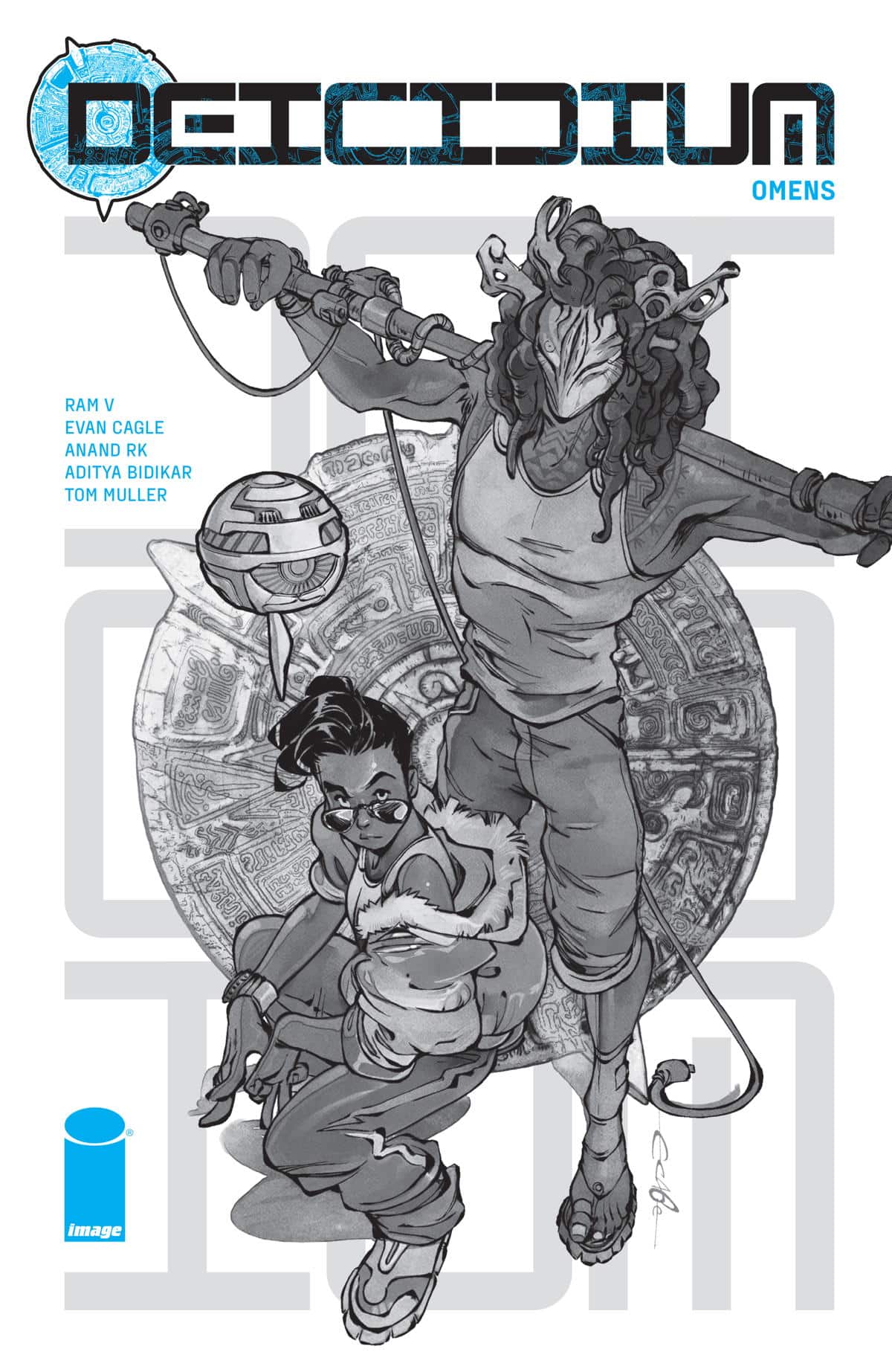
Yeah, I’ll buy that. The good news for those who are on the fence (or pumped like me, even), though, is you don’t have to wait until October to get onboard. Deicidium debuts on Free Comic Book Day with Deicidium: Omens, a little taster release from Image that will reveal to the world what the team is trying to build here.
And with that release on the horizon and my interest at an all-time high, I thought it was time to learn a little more about this series, so that’s what I set out to do recently, as Ram and I sat down for a conversation about Deicidium, its unique publishing strategies, what that allows the team to do, how it’s all going to work, what it’s really about, the team behind it, and so much more. It’s a lovely conversation, and one you can read below. It’s open to non-subscribers, but if you enjoy what you read, consider subscribing to SKTCHD for more like it. It’s also been edited for length and clarity.
I wanted to start with the Morgen/France side of this. I’m someone who really loves comics from other markets. The Franco-Belgian market, manga, etc., and I think that that is an underrated part of the comics world. Also, I know that you are very popular in France. I know that some of your books have done well there. We even ran into each other at a signing at Paris Fan Festival one time. Deicidium is being published simultaneously at Morgen, a new company, and Image, who is publishing it in America. Why was that something you wanted to do?
Ram V: Well, you’ve seen this with my work. There’s always an element of trying something new with everything I’ve done, and one of the things I kept bumping into with all my previous work, whether that’s at one of the big IP publishers or creator-owned stuff is that the monthly cadence really takes its toll on artists, on writers, on everyone involved, right? You’re always left with this feeling at the end, which is, “I wish I had had a week longer to write this part.” “I wish I’d had a few days longer to do this page.”
And honestly, that’s part of the energy of making comics, so I’m not particularly denigrating that. But I felt like I had grown out of it to a point where I’m like, “Why am I doing it this way? Why can’t I do it this other way?” So, that’s kind of where the intention of doing this in a place that was outside the monthly cycle came from.
I think one of our previous chats as well, you can see my progression of trying to move away from the monthly stuff, right? As you said, my work has previously been published in France, and I was talking to publishers over there. Sullivan Rouaud, who used to be at HiComics slash Hachette in France, is one of the people who had published me first. He had picked up Blue in Green and he picked up…I believe it’s These Savage Shores later on, both in France. And when we did Dawn Runner, he had jumped in and shown a lot of support. I think he had an offer in before the book was even announced. And so when it came to Deicidium, I took the project to him and I said, listen, we’re going to do this, it’s going to involve a lot of trust and a lot of upfront advances.
That’s the real reason the monthly format exists, right? It’s you wanting to monetize it quickly so that everyone involved can get paid. But I feel like my work has earned enough trust to where I can go to a publisher and say, “Hey, listen, I’m going to make this book, pay me upfront. This is the amount of time we’re going to take, but when you get this book, it is going to be unlike anything you’ve seen.” And I feel like that’s a pitch I can make now, which I couldn’t have done five or 10 years ago. That’s how the Morgen deal came about.
I also knew it was going to be a long-term project. I wanted to do something that had the runway of being three years or longer., and I wanted to play around with the narrative format in a technical sense, right? When you’re doing 20-page issues, there’s always this sense of something has to happen, which is okay when you’re reading them month to month, but I’m not a regular month to month reader. And so, I keep writing for audiences that are regular month to month readers, but my heart is in, I read a book and could see entire narrative arc and felt happy at the end of it.
I want that, so every volume of this is intended to be 100 pages, which means it gives me the possibility of doing something that involves a little bit of patience but also has a beginning middle and end every 100 pages or so, and not necessarily every 20 pages or so.
So, that’s how the Morgen stuff came about, and then in my discussions with them, I said, “Listen, I want you to take and negotiate all the foreign rights but leave the English language stuff with me because I understand the direct market in a way that you as a French publisher don’t.” So, I have a deal with them where essentially the English language rights are still with me, and I took them to Image and said, “Listen Eric (Stephenson, the Publisher of Image), this is what we’re trying to do. It’s a weird format. It’s going to come out three times a year and not 12 times a year. It’s going to go out to book markets and retailers almost at the same time. There’s a one-month gap or something.” That was the mechanisms of how it came about.
The last point to that is I think there’s a thing that’s missing in the contemporary pop culture art circles, which is this discussion of something that is coming out right at this very moment that everyone’s talking about. The only place I still see that happening is with anime and manga, because they release at the same time everywhere in the world and you start seeing people talking about these things.
I feel like when you’re releasing a book or something that’s eventually intended to be a book, it’s a little weird that you release it in a way where the first time people read it, it’s this very niche group of people who have a hobby where they go every Wednesday and pick up a comic book. But those are the only people who are allowed to talk about the book when it first comes out because nobody else has any clue. And then eight, nine, 10 months later, the rest of the people find out, but the energy is already gone. I want it to be a book that people can talk about as it’s coming out and talk about when it releases each time.
Then there’s bits in the story that we can go to that actually play with that idea. There are characters and gods and locations and ideas that people from different cultures around the world will recognize, so there’s a reason for everyone to be involved and potentially for everyone to pick sides.
So, basically it seems like the deal with Morgen allows you to have the financial runway for Anand and Evan to draw these books in a way where they’re not being crushed by monthly deadlines and in a way that allows you to unleash these in the formats that you see fit. It also gives you the flexibility to have a more global release. But you’re trying to have this simultaneous release so these books can be more of a conversation. You said that there’s the other licensing rights that Morgen has. Is there going to be any effort to expand the simultaneous launch beyond France and America?
Ram: Yeah, we’re going to try and launch at least in the “major territories” for comics, like Spain, Italy, potentially Brazil, and we might have a lead in Germany and Poland, as well.
I’ve been doing this for so long and I’ve been published in all these places before, so it makes it little bit easier to start conversations. But that’s the publishing challenge of doing this, and one that we will try to take on. So, I will say at the very least, it will be maybe four or five territories that the book comes out in simultaneously.
I’m curious whether not having to tailor the process to the mechanics of the American direct market…does that shift how you approach the story and the kind of genres it features and the way that you do that, if only because it’s not so beholden to the genres that comic shops accept and comic shop readers accept? Does that global release expand your storytelling possibilities too?
Ram: It does. There’s always this anecdotal evidence of…anytime you talk about Gotham Central in the DC office, everyone’s like, “Yeah, everyone loves that book.” And then the immediate next line is it didn’t sell. But what they mean is it didn’t sell when it came out in the direct market. There are lots of books like that. I mean, Sandman famously didn’t really do big numbers when it came out, but Sandman’s certainly been a big book for DC/Vertigo.
So, I think there’s very much this distinction between what sells in the direct market versus what sells overall and how much it sells. We’ve had this discussion before, but I’ve never been one to be enamored by, “Yeah, these are the numbers I’m trying to hit. I want to hit the biggest number.” No, I just want enough people to read a book to the point it’s comfortably successful in terms of its printing and publishing. More importantly, I want the kind of readers that I’m writing for and the kind of readers who enjoy the kind of work that I do to have access to it readily.
I’ve noticed as I’ve grown up in the industry, I’ve noticed it’s become harder to tell someone like, “Hey, if you want this book, you’re going to have to find a shop somewhere near you. You’re to have to go in on a particular day of the week and you have to remember you have to preorder with them. Otherwise, you’re not going to be able to get the book.” That’s a lot for someone who’s my age with an actual proper career, kids, job to do. And people do it because they’re so passionate about it, but it’s weird for me as someone who is trying to expand their own work and the base that reads their work to go, “No, this is the place that’s going to get the first bite of the cherry.”
I imagine having the advance from Morgen but also spreading out into other countries mitigates the risk and allows you to have a much longer runway to tell the story the way that you want but also have a longer path that’s realistic from the start. You can go and say, “We have three years of stories where we’re releasing three 96-page books a year.” And that’s reasonable because you have that runway.
Ram: Correct. And again, it’s a very lucky or privileged position to be in where your advance is covering the time that your artists need to because, again, that is such a strong factor as to why so many people work in the monthly cycle. Everyone needs to get paid. Because we’ve got that advance, because we signed this three-year deal, it allows us to use that pot of money as a, “Cool, we’re going to use this to spread this workout over the next X, Y, Z years” and then hopefully about midway through the book starts paying for itself in a lot of ways, right?
So, yeah, it’s a different beast to contend with. But given that I’ve done Rashomon in comics and I’ve done Tool lyrics in DC books, I thought, let me try and do something with the format and let me try and do something with the market.
Before we started recording, you showed me a clip from a video that is related to the making of this. You shared on Instagram that you got the team together for a summit to develop the book, and there were cameras and gear that take people behind the scenes. All of that is different. All of what you’re doing is different. And I do like the fact that this kind of continues….mad scientist might be too strong, but it does continue this thing where you treat comics and your career as a very large experiment in a real way. I mean that in the most complimentary way possible. There shouldn’t just be one way to do these things.
Ram: It’s an experiment, but it’s also…when you’ve experimented before and you’ve not blown up the laboratory (David laughs), then you’re encouraged to go ahead and do the next experiment. I think at some point it just becomes what you do. It’s not experimenting.
I’m the kind of person who is super optimistic. Every time I do a book, I’m like, “This is going to be the most amazing thing.” But there’s also part of me that’s like, okay, what’s the worst that could happen? And honestly, I looked at this for two, three years. I spoke to a bunch of retailers. I talked to some of Europe’s biggest comic book accounts as well, and they were all like, “We don’t see why this wouldn’t work.” And when enough people tell you, “We don’t know why it wouldn’t work,” then it’s time to try and see.
Hopefully, there’s no reason why it shouldn’t work.
It is interesting that this is happening while someone like Sean Murphy has a book that he’s launching first in France that will also get American publishing, and then there are other creators I know who are doing things in France that will also be published in America. And it’s interesting because…
Ram: I know there are French publishers that have entire initiatives about bringing in American creatives and having them do their creator-owned books there.
I think there’s a tendency of comics seeming overly region locked, if you will, and I think that that’s a detrimental approach. That’s the type of thing where…you talk to people and they said, “We don’t see why that wouldn’t work,” but I don’t see why this wouldn’t have worked previously. But now it just seems like you and everyone else who’s trying it might be proof of concept for it.
Ram: Look, someone has to take the risk, but also, a lot of things have to happen, right? Morgen had to be formed. They had to go out and say, we need to look for a big book to back. Because obviously, if you’re a publisher that’s launching, you want to launch with names and some fanfare. It came about at the right time. Deicidium is an ambitious enough project that it makes sense for a new publisher to go, “Okay, we’re going to put some eggs into this basket.”
And it was ambitious enough from my end to go, I’m going to step out of my DC exclusive, I’m not going to take on a bunch of other work, and I’m going to go focus on doing this one thing as my sort of primary aim, if you will. It’s a confluence of things, and stars have to align as well.
So, you have Deicidium Omens on Free Comic Book Day, which is coming out from Image. That’s going to be our first look, and it’ll be in single issue form. Then the first full full release will be Deicidium…
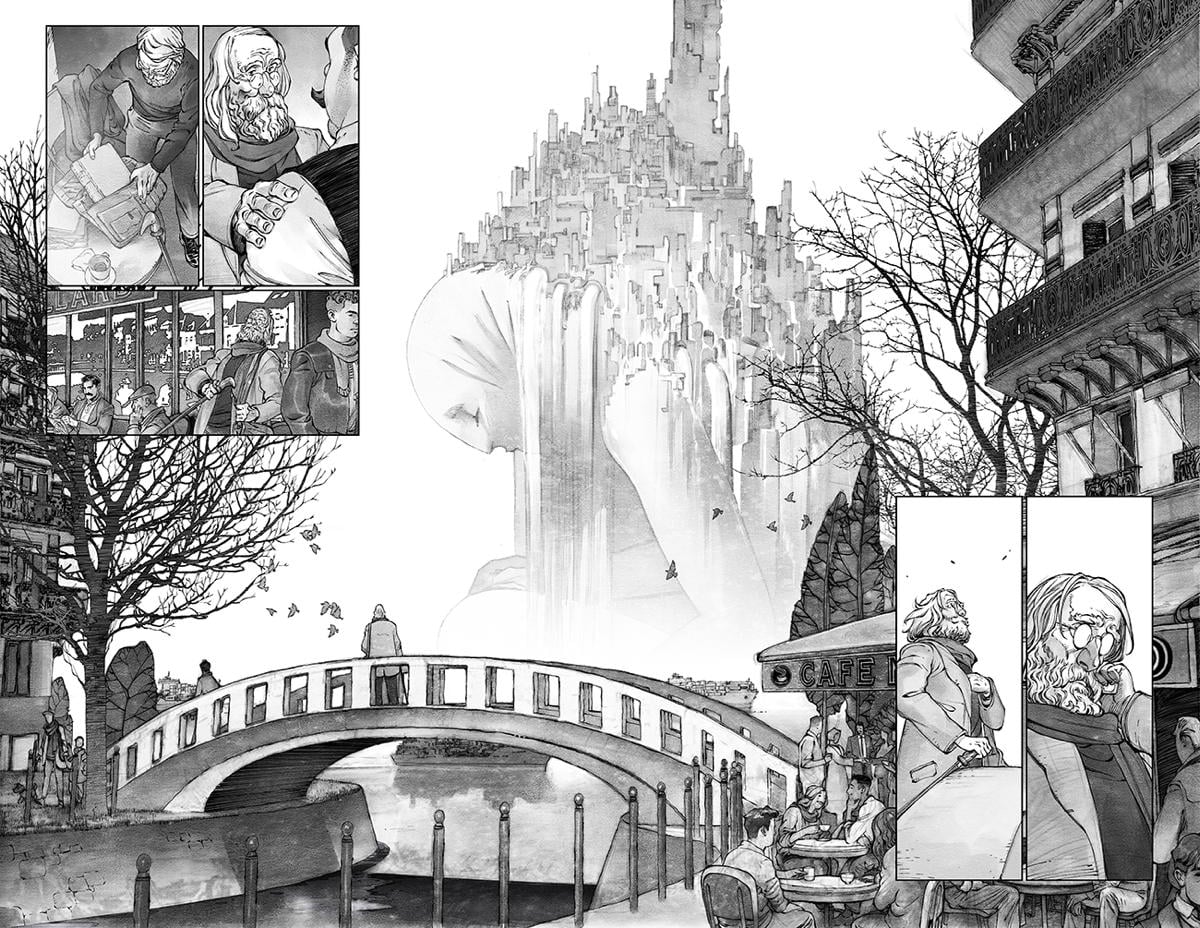
Ram: It’s not really a single issue. I wouldn’t call it an issue. I would say it’s the first 15-ish pages of the story, and it has a little preview and a little bit of text in terms of what is to come. And because Anand is going to be working on year two of the book, I kind of wanted him to do something for it. So, he’s got a cool double page spread in it as well.
So, it’s a taster of the first volume. It’s not a standalone thing. It’s from the first volume, which will arrive in October, and that’s 96 pages and is drawn by Evan Cagle with Anand doing the second one. The size is very interesting…
Ram: No, Anand’s going to do year two, so Evan’s going to do the first three books and then year two is going to be Anand. It’s nicer that way because you’re asking an artist to give you about a year and a half, maybe two years’ worth of commitment to make that and then they go away for a year, year and a half to do whatever the hell they want, and then they come back to the book.
It’s not this kind of, “We need to pause the book because my artist has been working for two years and they need to take a vacation kind of thing.” And so, in doing this sort of yearlong commitments with artists, you’re also telling those artists, you’re going to spend some time making these 300 pages, but then after that, go take a year off, travel, do something else, work on two other projects that you wanted to work on and then come back to this, which is not something you could do if you had a monthly ongoing at Image or any of the other publishers.
Is Anand doing that simultaneously as Evan? Is he already working on year two?
Ram: No, he’s not started working on it. He’s working on some design stuff. There’s a lot of world-building involved. We haven’t really talked about what the story is, but there’s a lot of world-building, a lot of different cultures, and ideas thrown around in there. And so, there’s a lot of design work that has already happened that Anand’s contributed to. What Evan is drawing, some of it’s been created by Evan, but some of it’s also been created by Anand. So that’s what he’s been contributing to at this point in time.
But I think Anand’s work on the book starts maybe closer to the end of this year, because I will have jumped far enough ahead to where Anand will be working on it.
Going back to the format, near as I can tell, it’s 96 pages. That’s roughly four issues long if you convert it into direct market math. Why is that the format that you all looked at and said, “This is what we want to do?”
Ram: Well, four Issues is a typical miniseries. Maybe five, but I’m not really looking at it through what issue count we’re doing. This is a unit of story that feels like a novella, like a good, meaty story that’s been told that someone could read and go like, “Yeah, I don’t need to know what happens next for the next three months or four months” or whatever it is.
It was simply a case of looking at that and going, okay, that feels like a good chunk of story to be telling. I can tell a story with a beginning, middle and end that feels like a significant installment of a much longer story.
That makes sense. So, what is Deicidium in your mind? How would you describe it?
Ram: Deicidium comes from the word deicide, which is to kill a god. And the idea for this really came to me from a weird sort of mishmash of different things in my head. Do you remember the old Tim Kring TV show Heroes?
Yeah, of course.
Ram: Save the Cheerleader, Save the World, that one. The thing that fascinated me about it was it was essentially superheroes, but it did this thing where it said, no, they aren’t born out of an accident. They all start coming up through the lives of everyday people, and that’s where the conflict that causes the origins of that series is rooted. I feel like that’s something that’s gone missing in these sorts of grand narratives…the involvement of everyday lives and everyday people.
I’ve been obsessed for the longest time with mythologies and gods and whatnot, and I had this weird idea of, what if all the gods came back to the world we live in? But they didn’t come down from the heavens. They started manifesting through everyday people. And then I went, well, obviously it has to be the sort of weird pre-organized religion, proto-pagan gods, right? And in conversation, it led to this discussion with Evan where I was just like, our gods used to live among us when we were sort of settler/hunter gatherer tribes. People worshiped the sun, they worshiped the volcanoes, they worshiped jaguars because they walked with these gods and they spent most of their day with these gods and they hoped that nothing bad would happen to them.
So, there was almost camaraderie with your gods. Not a sense of subservience, but a sense of companionship, and I kind of got fascinated by that idea and I knew I wanted to do something with it. But I also didn’t want to do something that was looking at the past. All the God’s coming back stuff is about the past. It’s always some God you already know coming back, so Deicidium is a story that is set in the future, where organized religion and corporations have banded together to form this new form of theocratic governance, where states are secondary to the church and the stock market.
And in this obviously dystopian place that looks quite lovely and wonderful and beautiful, something happens that starts the process of bringing these old gods back to the plane that we live on, except they manifest because these are naturalistic, primal, animalistic forces. They manifest into people whose personalities seem to be a best fit for them. So, you’ve got the sort of lightning and thunder god, but it’s someone who seemingly can’t control their temper. You’ve got the god of war, but it’s someone who seemingly wants to live away out in the forest, but people can’t seem to keep hunting him down and annoying him into conflict.
So, there’s all these wonderful characters that you could develop and make, and that’s really what I wanted to do. So, the gods come back and obviously, human beings being human beings have planned for this eventuality one day. On the other side, there are 12 humans that has been maintained since the beginning of time — orphans usually — that are trained to be god killers and given the implements of gods, if you will. When the dam breaks and these gods start coming out, the powers that be decide it’s time to unleash the 12.
And therein lies the drama.
These gods that are now on the run but slowly gaining in following and worship and power, running from these 12 that have dogmatically been told that the gods are bad, and you have to kill them. Then obviously by the time we get to that conflict, things will have changed. People will question loyalties, gods will be good, gods will be bad, gods will kill, they may have compassion. They may be psycho killers. Who knows?
You have sold the living hell out of me on this book. I mean, I was already sold, but hearing you talk about it, I’m very into it. It also makes a lot of sense. I don’t remember where I saw it, but I saw a list of genres for Deicidium and it was fantasy, sci-fi, philosophy, mythology, kinetic action, and shonen manga character dynamics, which is quite the melting pot. I remember thinking, how would that work? And now that you explained it, I can see why it works.
Ram: Yeah. The Shonen manga thing is a new sort of twist to be thrown into my taste library. If you look at my early work, it was very Vertigo and 1980s, 1990s influenced. Very hard sci-fi influenced. As I’ve gotten older, weirdly, I’ve gotten more into the simplicity. Shonen manga and anime seem to be able to develop heartfelt conflicts, and as a storyteller, that is a wonderful thing to watch.
I keep giving this example to people. I don’t know if you watched this Netflix show called Sanctuary about a guy who gets roped into training to become a sumo wrestler in Japan. It has this really wonderful moment where there’s another guy training alongside him who’s just physically never going to be a sumo wrestler because he looks like he could never put on weight.
And the main guy just doesn’t want to be a wrestler, and he keeps running away from his training. He keeps saying it’s too hard or finds one reason or the other to mess up and leave. there’s a wonderful scene where the guy who can’t put on weight follows him around, eventually bows down in front of him and he says, look at me, I am never going to be a sumo wrestler and this is the only thing I’ve ever wanted to do, but I’m never going to do it. Look at you, you’re gifted and endowed to be able to do it, so if I let you give this up, it will be yet another failure. So, I’m not going to let you give up.
That moment really hits you, and it’s so corny that anywhere other than a completely Japanese show where characters are allowed to be this level of earnest, it wouldn’t work. But it somehow works. And the same is true of a lot of Japanese narratives in anime and manga. There’s a level of earnestness that doesn’t work anywhere else. So, I’ve become fascinated with that, and I’m trying to import that into my work.
Even the core conflict of the 12 gods and the 12 god killers, that feels like a very manga/anime concept. I’m not going to say it’s something as cynical as, “I’m trying to mashup all the biggest things that are in varying global communities and put it all together to make something that speaks to everyone.” That’s not what you’re doing. You’re probably the first person who has found thematic connections and overlap in terms of development between Heroes and Sanctuary in the history of fiction, so congratulations.
Ram: Thank you. That’s the thing, right? People always ask you where your ideas come from. As a creator, you try to consume as many different things as possible, and you make this sort of primordial soup from which you can then lift out this concept that has come out of it. I know you said, “it’s like the mashup of all the most successful things,” but I came to it concept first. I had the idea for, “What if gods lived among us?” first, and so the fact that it finds itself into these places, that’s what tells you it’s a good idea. It’s going to these places that I hadn’t considered, which I already know and love, so it works.
And then obviously it has to be me, so it won’t feel like any of those other things that you’re talking about. It comes from a place where I know the feeling of what it’s like to have stories about gods be turned into religion, to have morality tales suddenly become edicts and to take texts that are meant to be metaphors and then interpret them very literally to control other people, right?
I come from India and Hinduism, and this has happened there for decades, as I’m sure it has happened with other religions everywhere in the world. So, there’s also a deeper point to make about our relationship with stories and our relationship with religions.
Obviously, the people you’re working with are people you’ve worked with repeatedly. Even designer Tom Muller’s on there, and then you have Eric Harburn editing it. What made this the right team for this story?
Ram: I think Evan’s work and Anand speak for themselves. So, I don’t need to tell you why they’re right. I just need to tell you to go pick up any of the work they’ve done in the past five years, and you’ll know why they’re right. Both are just masterful.
But the one thing that I will say that probably made them perfect for this is they’re both very thoughtful narratively, right? I’ve worked with incredibly talented artists who I will send a script to and then you’ll just get pages back, pages that are beautiful, but you’ll get them back pretty much exactly as they were in the script.
But with Evan and Anand, you always have this sense of, why are the characters doing this? What is their motivation? Why did they get here? What’s the emotion here? I’m struggling to pick up on what the underlying feeling of this is? And those are questions someone asks you when they’re thinking about story as a whole, not just, “I’m going to translate the script to art.”
I think that’s very important for a project like this, because translating my script to art will get really old if you’re doing it for a period of 300 pages over a year and a half and you’re building and I’m building the story at the same time. I want someone that I’m working with to feel like we’re building together. Where if I’m stuck on something, I can pick up the phone, call up Evan and be like, “I’m stuck on this bit, and I don’t know what to do.” And then Evan will have an idea.
There are entire cities involved in this future world that have been designed off one paragraph or a five-minute conversation I had with Anand. Then he went away for a week and came back with, this is the history and this is why these are their customs, and this is the architecture of their temples, and this is how they treat their people. All of that is not possible if you’re not working with someone who’s thoughtful on that sort of narrative world building level.
Both Anand and Evan are, and I think this is a place where they get to do that, which may not necessarily be true when they’re working on monthly books. Aditya is great because Aditya letters everything I’ve done and he knows my lettering choices before I know my lettering choices and he’s also wonderful because he has written his own book now and you can see he is also thoughtful from a narrative standpoint. His lettering is driven by a need to make narrative impact, not just visual impact, which is great.
And then Tom, whose work has been seen in comics in general, is this person who’s capable of looking at something quite holistically and transferring an aesthetic that is not just good design, but it’s narratively directed good design. That has been the sort of unifying factor throughout. I pick people who understand that they’re telling the story, not that they’re doing design or they’re doing lettering.
The same is true of Eric. Eric’s one of those few editors that I’ve worked with where I’ve gotten story…I don’t say this from a place of hubris, I say this from a place of slightly obsessive behavior. Usually when I get a note from an editor, I will look at the note and in my head there’s an impatient voice that just says, “I’ve already considered this. Why are you giving me this note?” And it’s not the editor’s fault because they’re doing their job.
But my brain goes, “But this is already on my list of things that I considered and eliminated. Why am I having to deal with it again?” (David laughs) To me, when I get a note from an editor and I look at it and go, I hadn’t considered that, and yet it is a completely valid and interesting question to ask…my brain does this thing where I’m like, you understand storytelling and it’s beautiful and you didn’t give me any of the notes that I already could. My experience working with Eric on the books with Filipe, (The Many Deaths of) Laila Starr and then later the beginning of Rare Flavours, was that Eric understands story on that level and I always get thoughtful, interesting notes from him.
This is an imperfect comparison. It’s probably an unnecessary comparison anyways. You worked on 3 Worlds/3 Moons, 2 and it’s interesting because I kind of feel there’s some interesting comparison points between this and that in the sense that both give creators who don’t normally get a lot of runway the space to do something, the space to build out, the space to dig into their instincts and their storytelling wants and desires in a way that they don’t normally get because of the monthly schedule.
Except for this feels like it’s, and I say this respectfully, it feels more narratively focused than 3 Worlds/3 Moons. Deicidium is more focused on a core story. I always appreciate this about your work. I’ve already probably mentioned it. I appreciate the fact that like, you seem to be very conscientious of, “Is this the only way we can do this? Is there a way that we can tell this story that fits the story better, fits my collaborators better, and brings the best out of everyone onto the page?” And it kind of seems like this is a hopeful realization of that.
Ram: Yeah, and the comparison is not without cause at all. As a self-professed (Jonathan) Hickman fan, there are definitely commonalities between what 3W3M does and what this is doing, but the commonalities are in the scope and scale of world building. I think 3W3M is interesting. I don’t necessarily think it’s a singular narrative. I think it’s meant to be a window. You’re watching an ant farm, but on a much bigger scale and something’s happening here that has no relation yet with something that’s happening here, and you’re getting to see all of them at the same time. That’s the experience with 3W3M for me.
But what I’ve always been a huge fan of is sort of Hickman’s eye for design in terms of narrative as well, right? Why pick these events to talk about? Because there’s a bigger picture in play that you or I as readers do not necessarily see, but clearly is something that is being built from a creative standpoint. I’m taking that same approach, except I know my bigger picture, right? I’m not building my bigger picture. I know my bigger picture. I know where it leads.
But I want the events and the things that happen around that to feel like they were designed with the same level of care and thought that you see in 3W3M or a lot of what Hickman has done. I think there is an engineering part of my brain that is very tickled by that and so we’ll continue to take that approach in a lot of the storytelling I do. I think it becomes an approach that is particularly useful to have when you’re doing things on a massive scale.
I don’t mean like when you have six people working on something. I mean like when the story is taking place across five different countries and has 24 characters to keep track of, having an underlying design ethos makes it easier to make a lot of good choices when it comes to storytelling and designing your narrative.
You mentioned five countries, 24 characters. I don’t know if that’s taken directly from the book or not, but I…
Ram: I mean, the countries is just a number out of my head, but 24 characters at least to start with kind of makes sense.
You’re thinking in years. Evan’s doing the first year, Anand’s doing the second year. How expansive could this be? What’s the roadmap you have in mind in an ideal world?
Ram: In an ideal world, I want to retire doing Deicidium books. In an ideal world, this is my swing at doing something like (Mike) Mignola has done where you’ve taken a character like Hellboy and you worked on it for decades and there’s volumes and volumes of story and other people have come on and told stories in the corner of a world that you designed. All of that is a possibility, but we’ll see if we get there.
There are also things about the long-term health and success of the book. So, when you were thinking in that sort of long-term, you start making interesting choices. You start making different choices than you would otherwise. I also want this to be a thing that sustains itself. My hope is that by year two, the book is doing well enough that at least on some level, it’s paying for itself. So, it’s not as hard of a decision for a publisher to go, “Yeah, we’ll put a little bit more money in for the next year.”
The first year is always the hardest, right? You’re starting from scratch and you don’t have a built-in audience. You have no idea how much the sales are going to be. But hopefully it’s an easier choice to make as the time goes on. So, we’ll see how long we can keep it up. There are plans for year three artists, obviously, because we’ve got three years. But then I know two or three other artists that have already said, “If this goes on longer, I would love to jump in for a year.” So yeah, it’s ambitious to say the least.
It’s scalable.
Ram: It’s scalable. There’s also lot of potential for adaptation into other places. We’re already starting to have that conversation a little bit. I’ve been super interested in animation before. I’ve worked on a few animation things myself. So, it makes sense at this point to start sort of tapping into those things as well now that I have a little bit of experience with other mediums too. There’s nothing set in stone yet, but we’ll see.
All those things help, right? If that happens, then it helps the health of the book to continue for as long as it needs to.
Last question for you. It’s the most boring one because we have to hype it up, but as we head towards Free Comic Book Day…this will be our first taste of the book. And as we head to the first actual full book of the series, what’s the thing that you’re most excited about sharing with potential readers?
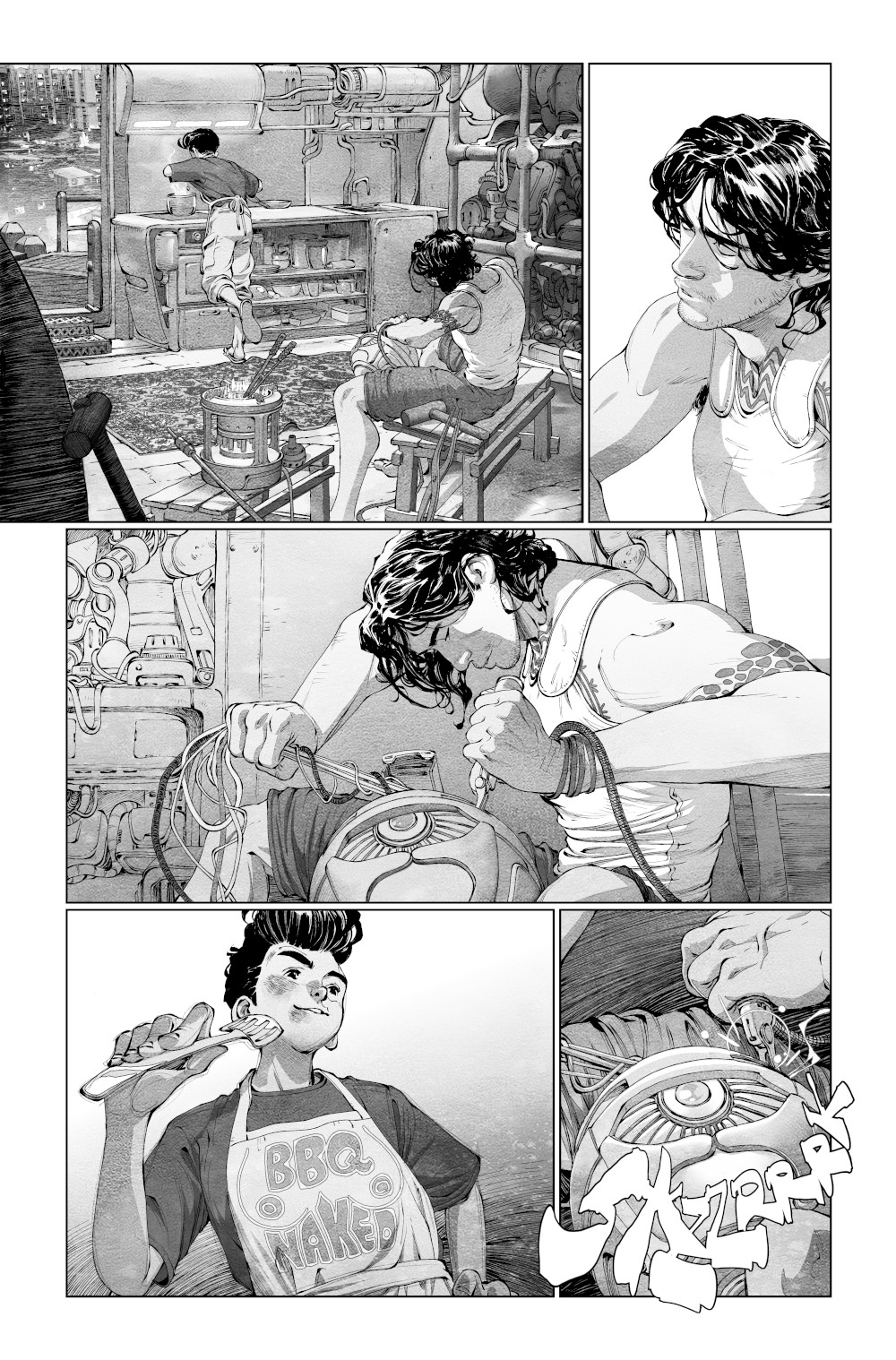
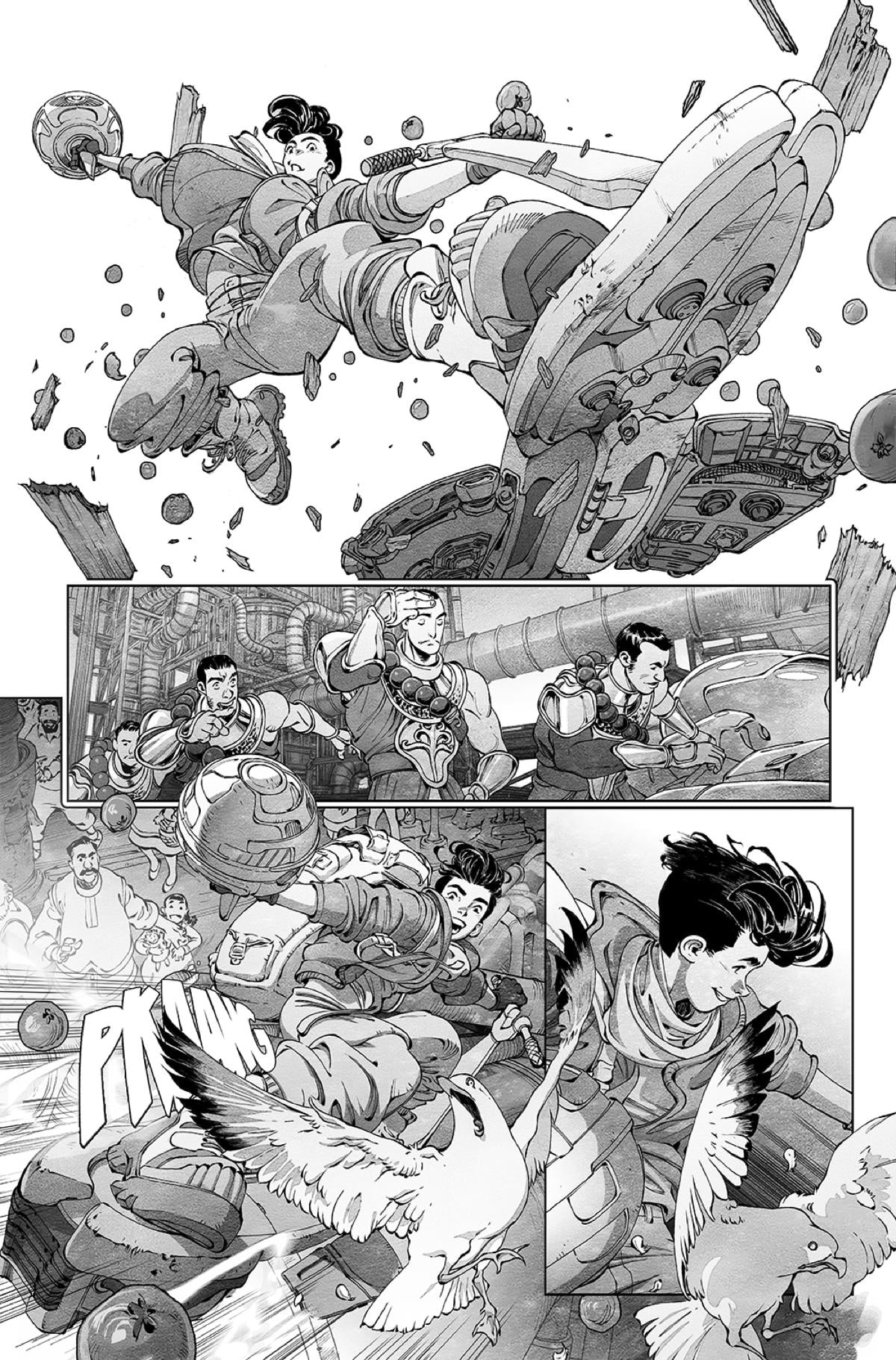
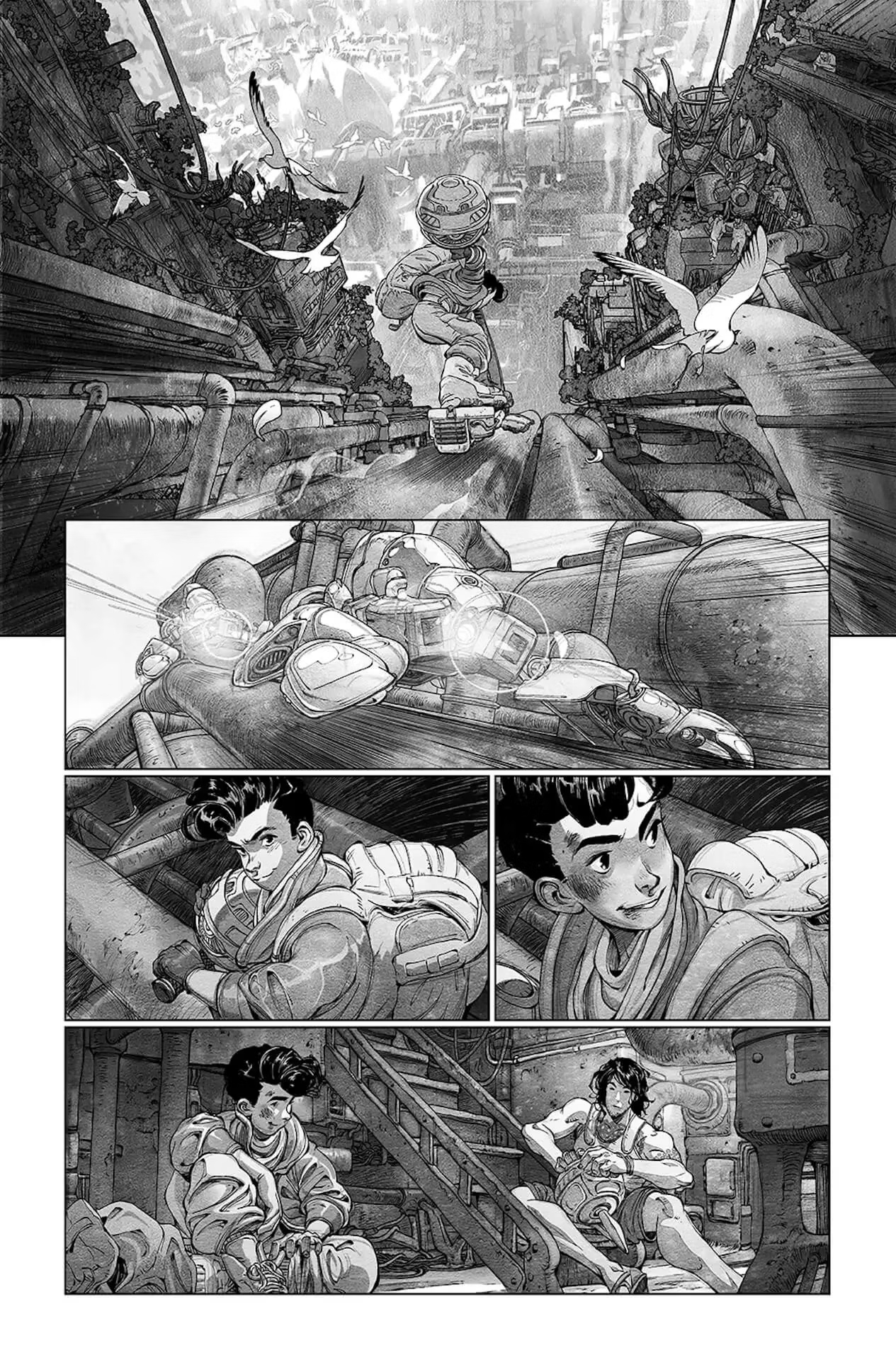
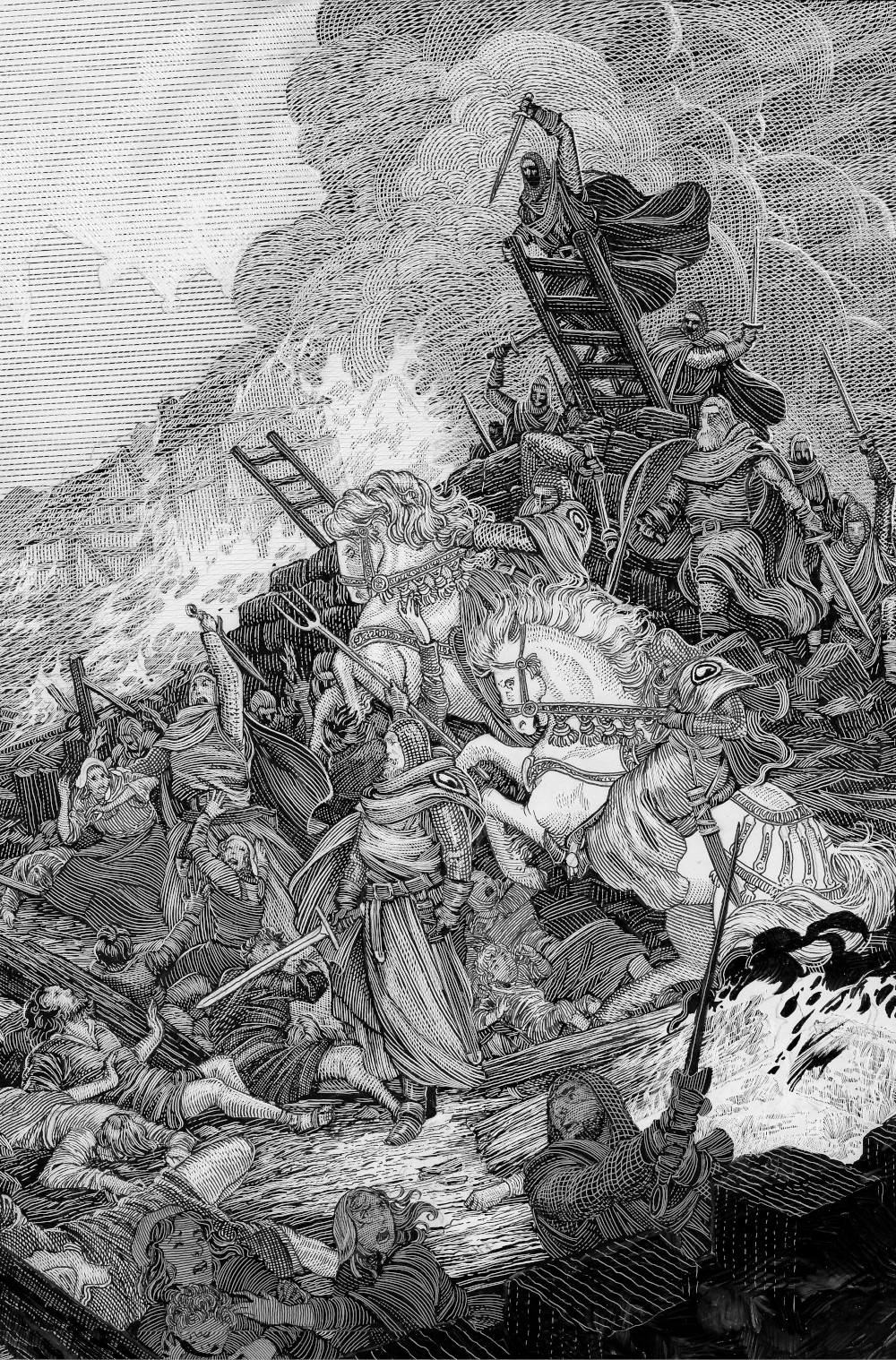
Ram: Just the ambition of it. I think the last time I did something that felt like it was broaching the narrative on this scale was probably Paradiso, which was my first book at Image, which has its hardcore fans, shall we say, but I don’t know how many people actually remember and continue to read it. But this is something that is on that scale. That much is evident even in the first 14 pages. You’re kind of zipping around the world. You’re going from a place that looks like it might have been some part of North America or Europe somewhere at one point in time, and then you zip eight pages later to someplace that feels like it’s in Southeast Asia and then if we had stayed a little bit longer we would have zipped to South America from there.
What that does visually is very exciting because you’re not only switching between characters that you’re investing with, but you’re also switching between cultures and locations. So, the first seven pages feel very visually distinct from the next five pages, which feel very visually distinct from the next five pages. So yeah, I’m excited for people to see all of that.
The other thing we haven’t mentioned is it’s in black and white. And I know that seems to be slightly odd to mention that as a point of excitement but imagine someone like an Evan Cagle or an Anand being able to go, “I’m not handing this off to anyone else. This is the finished product that I’m putting on paper, so I get to play with texture. I get to play with shadow. I get to play with light. So, the pages that you look at are going to be absolutely stunning
I don’t think there’s much more that gets me excited about a comic.
Thanks for reading this conversation with writer Ram V about the upcoming Deicidium. If you enjoyed this conversation, consider subscribing to SKTCHD to support the work that goes into it and to read more like it.