
The Design of Absolute DC: Rafael Albuquerque on Creating a “Monster” in Absolute Green Arrow
I’m not sure if you’ve heard, but Absolute DC? It’s a pretty big deal. And with Absolute Green Arrow launching soon — it’s on final order cutoff on Monday, April 27th and arrives in comic shops on May 20th — it felt like time to resurrect The Design of Absolute DC, a series that has explored the work of every Absolute artist (save the great Jahnoy Lindsay of Absolute Green Lantern) 13 as they’ve designed and developed these books. If you’ve missed the previous pieces in this series, make sure to catch up with these looks inside the design of Absolute Batman, Absolute Wonder Woman, Absolute Superman, Absolute Flash, and Absolute Martian Manhunter.
But we’re here to talk Absolute Green Arrow today, as the character is soon-to-be-resurrected as a nightmarish hunter of billionaires, and this piece features both artist Rafael Albuquerque and writer Pornsak Pichetshote sharing insight into the process of developing the look of this character and title.
DC’s Absolute line has earned a sterling reputation amongst creators, one that might be even more important than how it elevates each name involved with it, delivers towering original art sales, and results in monstrous signings. While those are obviously nice too, 14 the space it offers creators to actually create is rare for projects of this sort, as they get a chance to do what they do in an unusually unfettered fashion.
So, it shouldn’t be a surprise that someone like artist Rafael Albuquerque would have signed up for Absolute Green Arrow, his upcoming series with writer Pornsak Pichetshote and colorist Marcelo Maiolo. He’s long excelled on a variety of titles but clearly had an affinity for creator-owned projects like American Vampire, so it makes sense that this line and the freedoms it offers would resonate. But he already knew Absolute would match him well.
After all, he was one of the line’s earliest contributors.
“I’m feeling very comfortable and confident working in Absolute Green Arrow,” Albuquerque said. “It’s safe to say that comes from my previous experience on Absolute Superman where I was surprised by the creative freedom and empowerment that creators have.”
Albuquerque was the original artist of Absolute Superman, having spent time developing the look and feel of that character before he had to step back when floods overwhelmed his home of Brazil in 2024. So, when Absolute Green Arrow’s editor Katie Kubert reached out towards the middle of last year to see if he’d be interested in drawing this series about a frightening version of the character that hunts billionaires in the wake of Oliver Queen’s death, 15 it was an easy yes.
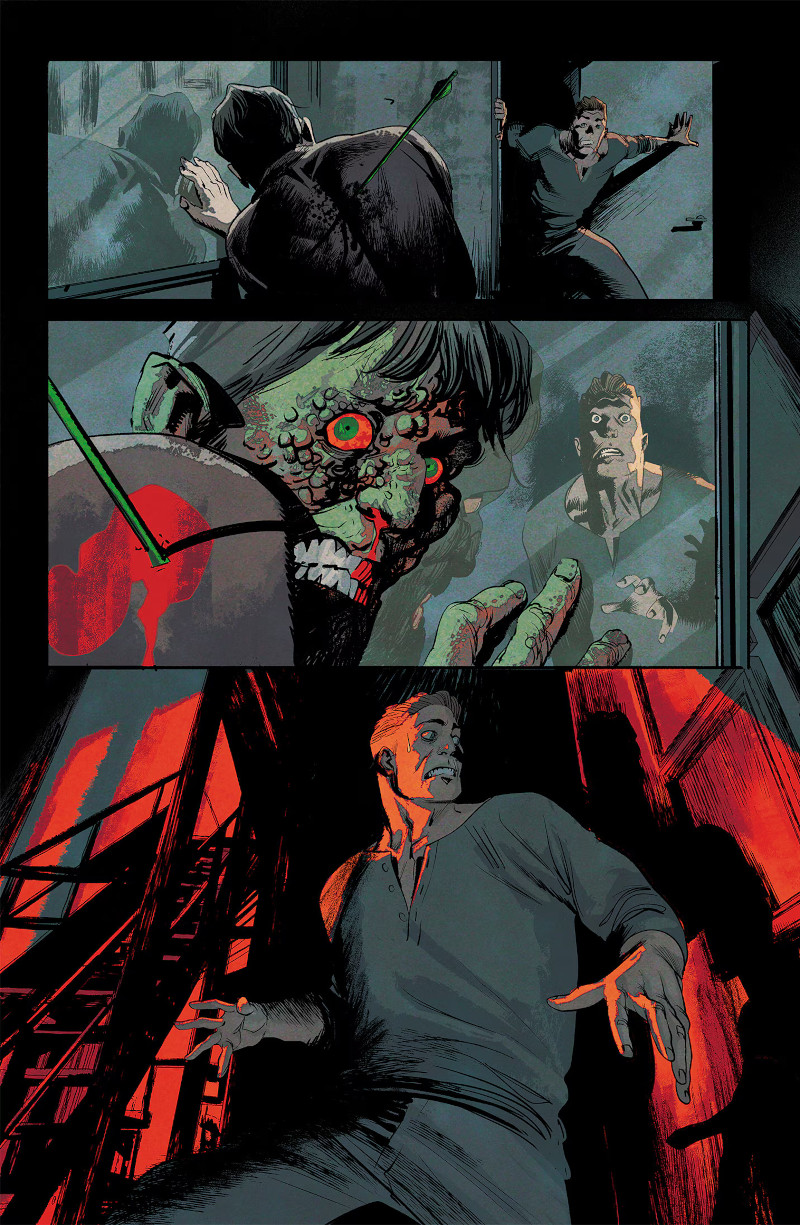
But it wasn’t the opportunity to work on the line that was the main appeal. Albuquerque was drawing Superman Unlimited for DC when this was offered to him, and he found that adapting his “style into something lighter and brighter” like that book required was a challenge. That’s why “the chance to return to a horror book” was the biggest hook for Albuquerque.
“Working with darker and creepier things is my comfort zone,” the artist said.
It helped that he was already friends with Pichetshote, someone he knew from the writer’s days as an editor at Vertigo, but everything about the project matched what he was looking for. He thrives in more open creative environments, he loves horror, and designing from the ground up is a passion, so Absolute Green Arrow checked a lot of boxes for him. That proved crucial, because the whole thing came together “quite fast,” per the artist. His final issue of Superman Unlimited arrived in October, and by that month, he was already doing pre-production work on Absolute Green Arrow, with interiors starting shortly after in December.
Despite the speed that was required of him, Albuquerque said he was given significant space to operate. While Pichetshote and editorial had ideas for him as he came onboard, it wasn’t “an imposition” but “a creative discussion on what makes sense for the story we wanted to tell.” There was a framework to build from — the character’s identity is a mystery, Dinah Lance is a key figure, and the objective was to tell a true horror story — but besides that, he and his collaborators were free to do as they pleased, really.
As he built from what was given to him, the artist had a clear line dividing the influences he’d consider when developing the design and the ones he wouldn’t. One that fell on the latter side is he “deliberately tried to avoid being influenced by previous approaches,” even though he’s a fan of Green Arrow. He knows some elements would naturally find themselves in the design, but he did his best to avoid it by not looking to the past. Like with the other Absolute characters, Albuquerque was “trying to bring a new take on these classic characters, something that ultimately would fit the story more than anything else.”
And its genre and the character’s objectives were far more essential to the design than Green Arrow’s previous looks.
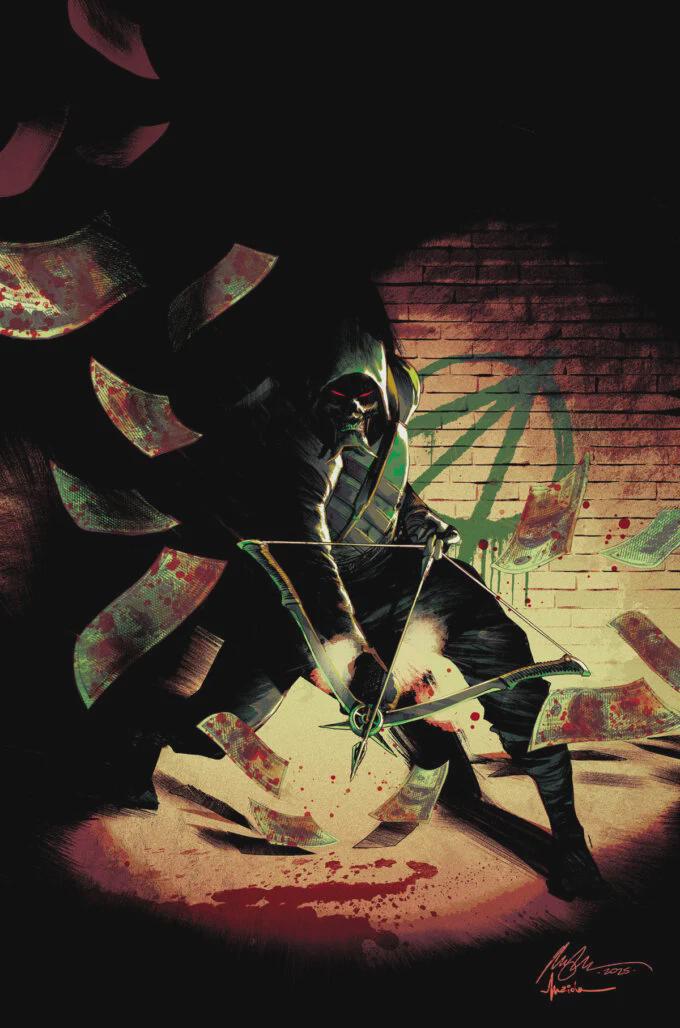
“One of the things I told Rafa was that most Green Arrow costumes are for some kind of military utility, but the main purpose of this guy is to scare the crap out of everyone he’s targeting,” Pichetshote said. “So, the rationale of the character is also the rationale of the designers. The purpose is to look scary.”
That’s why Albuquerque’s guiding lights weren’t names like Mike Grell or Neal Adams but ones like Jason, Michael Myers, and Freddy Krueger. While he admits his approach to Green Arrow isn’t all that different from the way depicts Batman, 16 the horror elements were far more influential simply because of the type of story they wanted to tell.
“We wanted readers to get that this was more than just a horror story, but a specific kind of horror. It was nostalgic, in a way,” Albuquerque said. “We worked to find the right visual approach that would bring the same feel from movies like Friday the 13th and The Texas Chain Saw Massacre but could also relate with modern times.”
As much as horror was the team’s guiding light, maybe the biggest influence on the look and feel of the book and its characters was the close relationship between its creative team.
“There were a lot of conversations between Pornsak, Marcelo, and me in order to understand how that character should look,” Albuquerque said. “Sometimes it feels like we are working in the same space. We talk constantly, which makes it easier for me to discuss ideas and really flesh out details that in the more traditional method is impossible. It makes the creative process much more horizontal and helps us deliver the finest work possible.”
“I’ve never had a design process that was such a conversation,” Pichetshote added. “This book is like that. It’s not like…turn one thing in and that’s it. It’s a conversation all the way.”
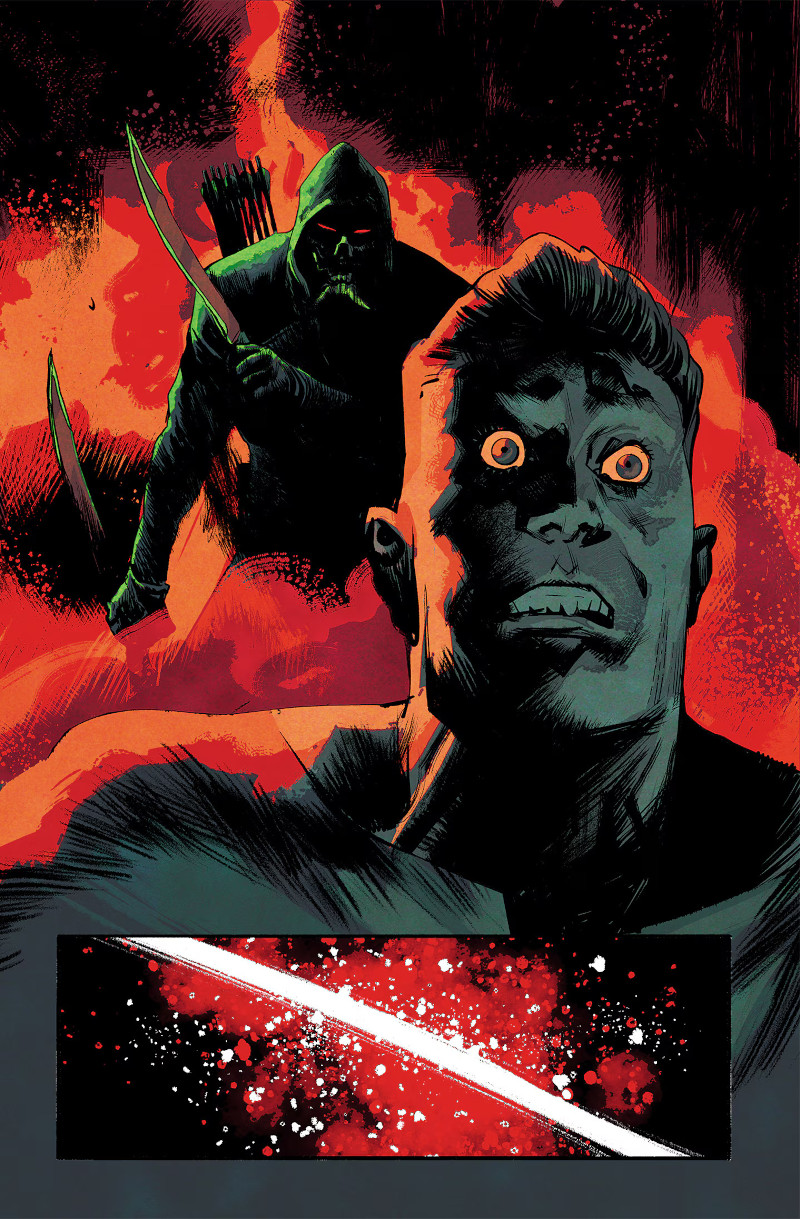
According to Albuquerque, that’s how they dialed in just “how menacing it should be.” 17 They didn’t want Absolute Green Arrow to be “a dark superhero, but something like a monster you just can’t escape from,” which might be why the design they “all agreed on was the one based on demon imagery from many cultures.”
subscribers only.
Learn more about what you get with a subscription
Although I’d like to change that!↩
Okay, really nice.↩
In Absolute Evil #1.↩
Speaking of, Pichetshote did share that Albuquerque mentioned Phantasm from Batman: Mask of the Phantasm as an influence.↩
Albuquerque mostly used “it” to describe the character, which I found interesting, both because of how it obfuscates who the character is underneath the costume and how it reinforces its monstrous nature.↩
Although I’d like to change that!↩
Okay, really nice.↩
In Absolute Evil #1.↩
Speaking of, Pichetshote did share that Albuquerque mentioned Phantasm from Batman: Mask of the Phantasm as an influence.↩
Albuquerque mostly used “it” to describe the character, which I found interesting, both because of how it obfuscates who the character is underneath the costume and how it reinforces its monstrous nature.↩
I wanted to say married but I honestly have no idea what their actual relationship status is currently in the main DC universe and the internet was not helpful in diagnosing that.↩
Which is corporate speak for “bodyguard.”↩
Although I’d like to change that!↩
Okay, really nice.↩
In Absolute Evil #1.↩
Speaking of, Pichetshote did share that Albuquerque mentioned Phantasm from Batman: Mask of the Phantasm as an influence.↩
Albuquerque mostly used “it” to describe the character, which I found interesting, both because of how it obfuscates who the character is underneath the costume and how it reinforces its monstrous nature.↩