
Critic and Marketer Steve Morris Talks the Eisner-Nominated Shelfdust and 2000 AD’s Move to America
Steve Morris is a lot of things, as we’ll get to in a second. But if you had to pick two things above all, he’s a marketing manager at Rebellion, the company that publishes the stories of Judge Dredd, Rogue Trooper, and beyond in 2000 AD, and the person behind Shelfdust, the Eisner Award-nominated comics criticism website where writers examine comics one issue, chapter, or episode at a time. Even though we’re battling each other for the throne in the Best Comics-Related Periodical/Journalism category this year, I must begrudgingly say that Morris is very good at what he does, regardless of the hat he’s wearing at the time.
And because of that Eisner Award-nomination, the ongoing discussion about the state of comic sites, his unique position as someone who operates in two different maligned spaces in comics criticism and comics marketing, and 2000 AD’s recent move into America as a weekly print publication, I thought talking with Morris would be a good thing to do, as few people bring the perspective and experience to the table he does. That’s what we did recently, as we sat down to discuss his many hats, what he does at Shelfdust, that Eisner Award nomination, the state of comic sites, the twin challenges of running a comic site and handling comics marketing, 2000 AD’s migration into America, its positioning, how he’s feeling about comics right now, and a whole lot more.
It’s a real treat, and a conversation that’s been edited for length, clarity, and the fact that my internet went out in the middle of the chat. Whoops! You can watch it below and on the SKTCHD YouTube (which, I should say, don’t forget to subscribe to that, folks!), and you can also read this conversation in full below as well. Want to support the work that went into it and everything else on SKTCHD? Make sure to subscribe to SKTCHD.
So, Steve, before we get into the meat of the chat, I want to introduce you to folks who might not know you. Steve is a marketing manager at Rebellion, which means you spend your time spread spreading the gospel of Judge Dredd. You’re a veteran comics critic who has written for sites like The Beat, The AV Club, Publishers Weekly, and many more. And you’re a website magnate (Morris laughs) who currently runs the comics criticism website, Shelfdust, that focuses on examining one issue at a time and rumor has it earned an Eisner Award nomination this year.
I told you this via WhatsApp probably, but I love that we’re both nominated this year because I feel like we’ve been operating in parallel this entire time. When did you start?
Steve Morris: This is going to be year eight (for Shelfdust).
I mean, what year did you start writing about comics?
Morris: About 2009.
That was my first year too.
Morris: It was my last year of university. I was an English student, so I had nothing to do at university. Like, you have one lecture a week. You read one book, you go in and talk about it, it’s a book club, and then they give you a degree at the end. It’s mad. So,I had to find something else to do. So, I read Runaways, and then I went, “Hey, comics are pretty good, actually. Let’s see what’s going on.”
So, I read a bunch of X-Men. I read Civil War as my main first thing I ever read, (laughs) and then from there onwards. Pretty quickly after that, because I had nothing to do, I wrote about them. It’s like people blogging at that time. It’s been 2009 until now, which is what, 15, 17 years?
17 years, yeah.
Morris: 17 years. God. 17 years of doing this, somehow.
I didn’t realize that you actually started reading comics in college and just went straight into it. You were like, “I’m just going to skip all the other steps. I’m just going to go straight into comics criticism.“
Morris: That’s all I wanted. The comics were just a route to get into the criticism. I didn’t need anything else. We probably start at the same place, I think, as well. I think you’ve got Comics Bulletin in your in your past. Have you not? Are you not a Comics Bulletin guy?
This is funny. I remember talking to Graeme McMillan about this at NYCC when I was going to go full time with comics journalism and everything. He was like, “Prepare for your taxes to be really confusing because you’re writing for all these outlets.” (Morris laughs) But I wrote for Multiversity Comics from 2009 to 2015, and then I started SKTCHD in 2015 and then stopped for a few years after a year, did a couple freelance things, and then brought SKTCHD back and besides like three or four freelance credits, I’ve only written for myself since, basically.
Morris: Wow. I mean, that’s impressive. And good for you. That’s how it should be done, as well. It’s great to work for places, I suppose, getting the exposure, building up, and so on, but getting the reps in yourself makes it a lot stronger. You build your own voice because otherwise I find when I was writing for websites, I was replicating this the voice of the website. I’ve got a bit of a mimic quality in me. So, if I’m surrounded by a lot of other writers and I’m reading them all the time, my writing becomes a bit like theirs.
So, when I jumped away and started doing my own thing, that’s when I became more of myself. And now I feel like I am a voice in a way that I wasn’t 15 years ago.

Can I tell you what I appreciate about Shelfdust?
Morris: No. (laughs) How dare you compliment my website? Yes, please do.
The thing I like about it is…you know, the one issue at a time thing where you’re writing about specific things like…what was the 52-part series that Charlotte Finn did?
Morris: Charlotte Finn did every issue of Astro City in a row. A Year in the Big City.
So, you do things like that or somebody writing about X, Y, or Z, but it’s always one issue or one manga chapter or whatever. That approach is completely you. And is I’ve said this a lot of times. I feel like comic sites don’t differentiate themselves enough. I’m not saying that you went with a strategic plan to create a differentiation for Shelfdust going in. You just want to highlight specific things. But I like that about you because it makes Shelfdust feel like its own thing. And that’s great. You should do your own thing.
Morris: It was a particular choice, actually. So, you’re completely right on that, because I’ve written for ComicsAlliance, CBR, a bunch of the big websites of the time. But my feeling was if I was going to go off and do something for myself, I had to make something that wasn’t going to compete with them because I couldn’t compete with them at the time.
So, doing the modular criticism, as I call it, where it’s one issue of a comic at a time or one manga chapter or one volume of a webcomic or whatever, it’s made it unique and different. I felt like it gave comics criticism a little bit more range. Like, every website that we’ve got, every podcast, every YouTube channel, it’s all additive to the general landscape of comics criticism and comics itself. Having all these different websites around with different sort of agendas, plans, voices and so on, it meant that comics felt to me more vibrant. Bigger.
The fact that there’s space for the weird stuff on the outskirts, then you could come in and you’ve got the safe harbors of a Newsarama or a Popverse or CBR, whatever it is, I think meant that you could have something for everyone. This all came from reading The AV Club, which was one of my favorite websites when I was at university. I would binge a TV show season, and then I go on AV Club and read all the episode reviews one after another in a row.
Seeing them learn about it and develop their own thoughts as it’s progressing made it so much more interesting and more engrossing as an experience for me than if they’d just gone, “We’ve watched all the episodes. Here’s our view of the entire season. It’s one piece.” Seeing them go off in wrong directions or get an idea about what’s going to happen in Game of Thrones or something, then be wrong footed or surprised by stuff, and seeing all the people comment underneath and talking about what they were expecting from it, that made it feel really vibrant and real to me.
Shelfdust was trying to pick up on that a little bit, and a little bit of Television Without Pity, which was something I tried to be exactly like to start with. But as I got my voice, I dumped that and went in a different direction. But this is where I think the benefit of having all of us is that we expand on what comics can be for people. So, you’ve got SKTCHD, of course, which covers a lot of things. You’ve got your oral histories, which no one else is really doing anymore, you’ve got your interviews with retailers in particular. I don’t think there’s any more of a more retailer focused site than yourselves.
ICv2 probably, but still.
Morris: Yeah. I guess giving a personality to the retailers is something that you do, which they maybe don’t do so much.
Yeah, it almost feels like a different flavor to some degree.
Morris: But having ICv2 with all the stats and figures, which are useful. Then you’ve got The Beat’s and you’ve got the editorials from Heidi in particular, where she uses her experience to talk about “this is what this actually is, if you ask me.” And then you’ve got the other writers underneath, like, you Samantha Puc and Zack Quaintance and Taimur Dar and a lot of great… Ricky Serrano. Loads of great writers underneath.
And then you’ve got a Shelfdust. I’ll mention Chloe Maveal’s The Gutter Review, which is now turning into a zine called The Trash Humper, which again is a thing that only Chloe would do. It’s very Shelly Bond to do something like that. I think having these little outskirts and outliers, like Shelfdust, like Trash Humper or whatever, it just means that people can find the lane that fits them best and they can go down that lane and find more comics, read more comics, and be more invested in what happens.
Differentiation is a very buzzwordy way to put it, but Shelfdust, like what I do on SKTCHD, is you embracing what you want to do rather than what you see others doing, which I think is a healthier way to do it. Especially because…like with TV writing, I love Alan Sepinwall. And while he does recaps, he also brings himself into it, and that’s one of the things that your writers do, which is you can bring in your own flavor. It’s not just like, here’s me writing about why I think Steve Pugh is great on End of Life. It’s also, this is why this really specific part speaks to me because of my personal history with X, Y, or Z.
Morris: Yeah, the hyper focus within it. I remember reading an issue of Silk from a long time ago. This is the first one of Silk, the Marvel character.
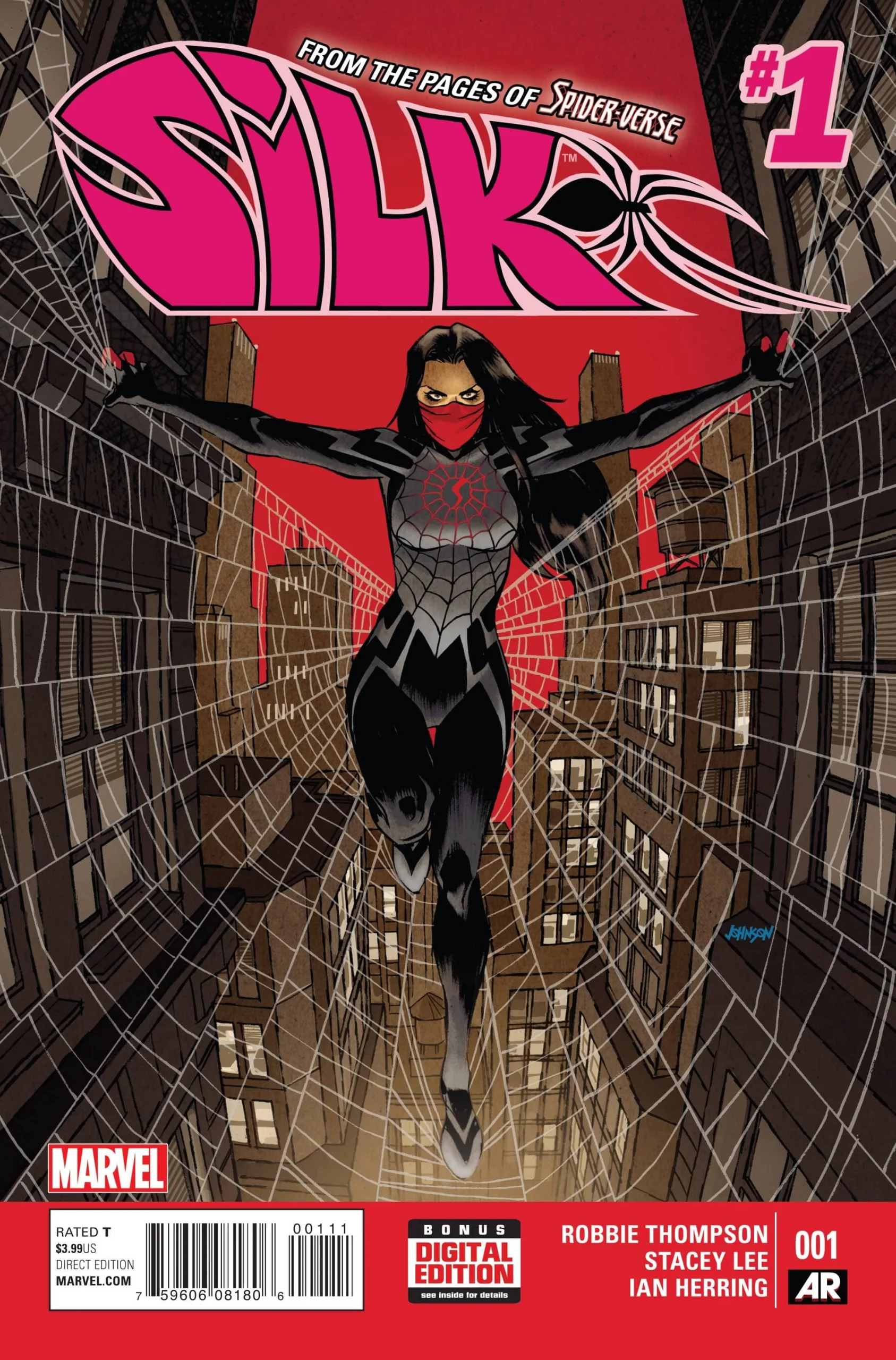
It was good! Was Stacey Lee the artist on it?
Morris: Right. Stacey Lee was the artist on it, and I wrote a piece for ComicsAlliance about it, talking about how she played her distance. Because when she was drawing the characters, she always drew the characters with the distance from other characters, and the angles that she drew them from would tell a story about that character’s perspective on life. And that’s kind of the first time I felt like, I’m not looking at the art as a thing on top of everything else. I’m going, this is a very specific choice that Stacey Lee’s made that I’ll then follow through and I can write about and find interesting.
And from there, other writers have come and gone, “I’ve got this take on the toxic nature of Swamp Thing,” or “I want to talk about the way that John Constantine’s body language in this issue shows that he’s not really listening to people and therefore you can see the twist coming at the end.” And seeing those hyper focuses make for really interesting…again, it gives you a reason to pick up the issue one more time and go, “I didn’t notice the first time. Now I can see it and I’m learning something new about it. I’m reading it for the whole with a whole new way.”
This brings up something that has been a bugaboo for me recently. I’m not trying to call this this person out. I’m not going to say who it is. I’ve actually seen several people say this. Sometimes I’ll see like sites or podcasts or YouTubers or whatever say something like, “The job of podcasters and YouTubers and comic sites is to promote comics.” I do not personally believe that is true in any way, shape, or form. You probably are unsurprised by me saying this from your marketing manager job because clearly that is not really a focus of mine.
But I think that what you’re talking about, where you are, as you said, being additive, but your job is not to sell Astro City. You want people to consider or reconsider Astro City as they’re reading this. I’m curious, how do you see it? What do you see the role of sites and podcasts and YouTubers and whatever else in in today’s comics ecosystem?
Morris: There are I think two different audiences that people work towards and one of them is towards the comics readership and one is towards the comics industry. And you can mix them. I’d argue that SKTCHD mixes those two audiences together, which not many people can actually do.
I also aim for no one, (Morris laughs) which may be stupid, but it’s maybe how I end up with both of them.
Morris: But other people will aggressively target the comics industry, because the comics industry has a small man syndrome, you could argue. Which I can say because I’m a short person. I’m allowed to say that. (David laughs) I’m probably not. But the comics industry always feels like it is undervalued, underprivileged, and not given the opportunities that it should be given. People have just used it as a step towards making their TV show or their film, whatever, and comics have been forgotten about.
So, I think because of that, you find that a lot of people in the comics industry are looking for recognition, they’re looking for a level of priority and respect. They’re looking for websites and reviewers to give them good scores they can put onto their pull quotes that they can use for their press releases, that can put their website, that they can then use to go, “Hi DC, look at my indie book, it had loads of good reviews. Here we go.” There’s an obviously decreasing number of places that you can do that now, that they can find a good review on, or find a review at all. People don’t tend to review as much as they used to. So, I think there is a space for there to be a website that has that audience.
But I will always prefer a website that has a mixed audience or goes for comics readers, and I think you can tell that normally in the way the comments run or what the kind of response they get on social media or Reddit, you can tell which is which because the ones aimed at the comics industry tend to just get quoted by the people who they are writing about. But the other websites get quoted and shown about, even when they’re not all about you. Like, a website like SKTCHD may have, “Hey, here’s a feature on Daredevil,” or something, and the writer of Batman might share it.
Other websites, it’s literally just, “Hey, we wrote about Power Rangers,” and the people creating Power Rangers have shared it and that’s it. It’s very limited.
I just don’t look at comic sites or what we do as promotion. We’re not a promotional wing of comics in general. This brings up a quote from a Broken Frontier interview you did that I thought was great. You said, “Shelfdust is largely useless to the comics industry itself,” which might be part self-deprecating but also is probably a true thought of yours.
I don’t think that that’s necessarily a bad thing. I think it’s fine to create for yourself and I think it’s fine to create for whatever reasons you deem fit.
Morris: When I wrote for ComicsAlliance, which is a website that was useful for everyone…that was the ideal audience. That was a point in time when the internet was being read properly, and people were coming to things and looking and searching. So, when I wrote for ComicsAlliance, I was immediately on the radar of all the marketers. They would send me books or send me review copies and everyone would be in touch with me.
Shelfdust has largely avoided all of that because marketers will look at it and go, “They’re just covering anything. We don’t know what’s going to happen every week. We don’t know if it’s going to be anything that we’ve made, anything that’s useful for us right now. It’s probably going to be a comic from the 1940s or ‘70s or whatever. There’s not a huge amount of use in someone covering…what this week we had, Venom: Lethal Protector #1 as our main as our main piece.
Hell yeah. (Morris laughs)
Morris: I guess if you’re the Marvel person, you’re like, “That’s nice, but there’s no point to it for me right now.” As opposed to back in the old days writing for ComicsAlliance, you’d be like, “Hey, this issue of Transformers: More Than Meets the Eye is out this week and here’s why it’s great,” and the people making that would go, “Hey, look, they think it’s great, let’s share it and pass it on from there.” So yeah, Shelfdust is useless in that regard.
I posted about this last night because one of the old internet mainstays of “Who are reviews for?” was going around on Bluesky a little bit. I have a pretty hardline stance, which is that I never tag creators into any pieces that are written on Shelfdust, regardless of what it’s like. If it’s a negative review, you don’t tag the creators in because it’s just rude. (laughs) What’s the writer and artist going to do about me saying, “I thought it just bad.” That’s not very nice for them. No one’s going to share it.
But if they write something good, and I then say, @ writer or @ artist in the piece, why would anyone want to bother reading it? Because they know I think it’s good. Otherwise, why would I have tagged them in it? So, I think if the creators want to find reviews — I know this from experience — they’ll just find them. You don’t have to tag them in. You don’t have to be promotional in that regard. They will look at whatever you’ve written anyway, and if they can find something good in it, they will share it, they will use it. If they can’t find anything good in it, they will hopefully just ignore it and keep out of your DMs.
But in either case, I don’t think there’s a real point in comics websites being promotional in that regard. 2000 AD has its own website. We do our own interviews, we do our own pieces, features, blogs. So, it’s basically the idea that as a person who runs comics marketing, I already have my own website, my own blog that I do for 2000 AD. So, anything that people do on top of that is additional and beneficial, but a website doesn’t need to promote itself just for my benefit. It’s nice to get a good review of Judge Dredd. I don’t need it so much because I can just interview the Judge Dredd team on my website.
So, I do feel like with all this, tagging creators is one thing you see a lot of websites do to start with and hopefully then start rolling away from it because you are writing for readers, you’re writing for the general audience, you’re not writing for the person who made the comic. I think readers will in particular look straight through it and go, “They’re just writing a nice review because they want that creative team to like them, because then maybe that creative team will do an interview with them later or be nice to them at a convention or get them work at Marvel” or whatever it may be. So, personally, I never tag creators anymore.
They will find it if they want to find it.
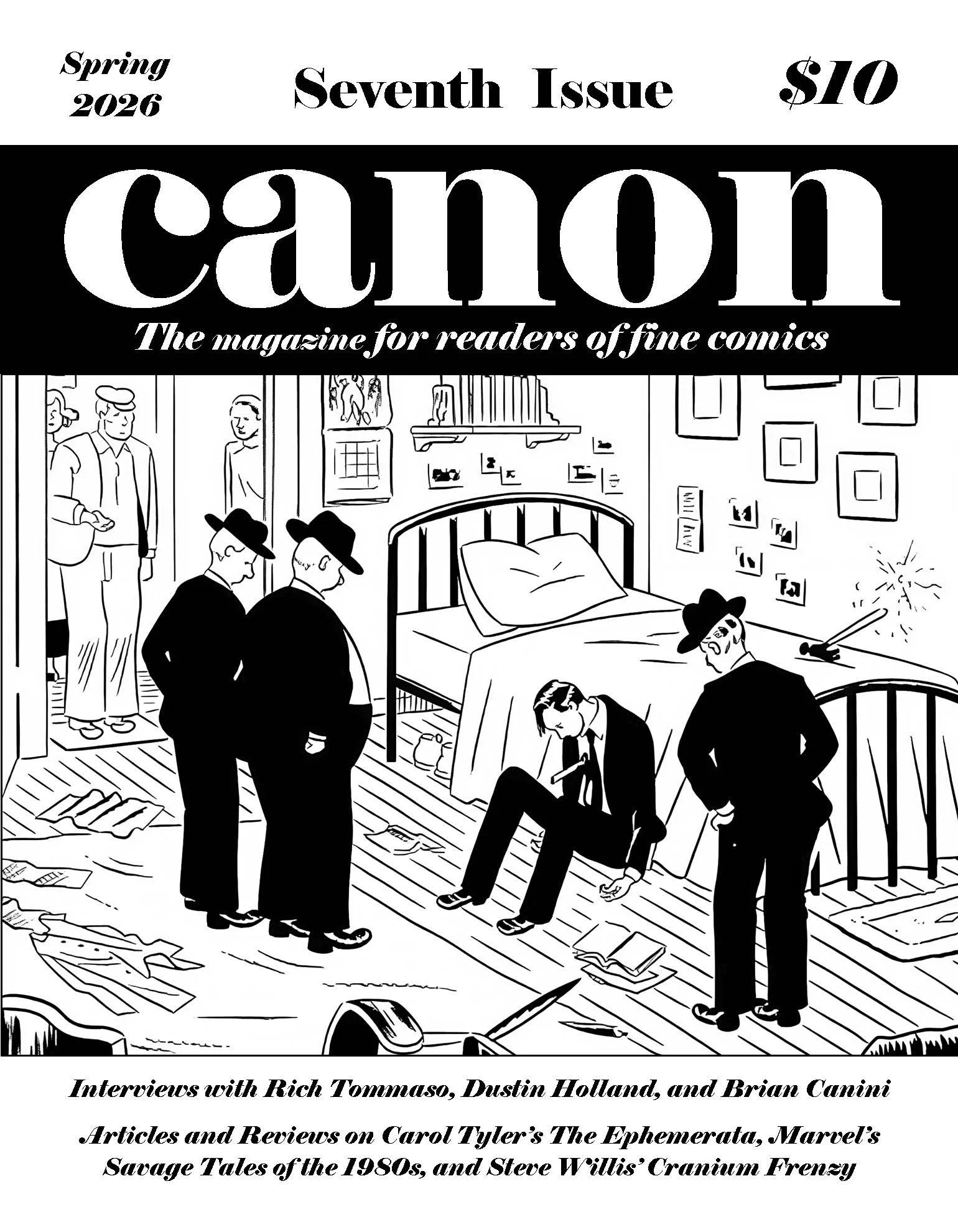
You and I have the same ethos on this stuff, which I really appreciate. But I will say, one of the things I think is fun about the nominees in the Best Comics-Related Periodical/Journalism category that we’re a part of in the Eisner Awards is…well, we’re two of the six, which is fun. But I was chatting with Alex Eklund from Canon, the zine that is nominated, and he had reached out and sent me some of the issues of it. It looks awesome, and it looks like something that is done for the love of the medium but isn’t being done for anyone besides themselves. They’re not looking to be a conduit for the success of creator X, Y, or Z.
I will say, if that happens, that’s a good thing. Like, if somebody reads Astro City because of Charlotte’s writing, you’re going to be happy about it, I’m sure, but it’s not why you’re doing it. You’re not doing it because you want to put money in Kurt Busiek’s wallet or something. But I think that’s one of the cool things about looking at the nominees this year. It’s a very eclectic bunch. It’s a bunch of lesser-known ones. And it also includes us, which is great.
Morris: I am one of the lesser-known ones. (laughs) I’ll point out that there is David Harper and SOLRAD and then the crew.
But that’s exactly what’s great about this year. I didn’t know two or three of the nominees in that category. People always talk about comics criticism and how it is dying, comics journalism’s falling apart, it’s going away. Well, look, the Eisner judges found a bunch of places I never even heard of, and I’m paying more attention than most people would on this sort of thing, and I’m not seeing these places.
Now I am. Now I know about Dummy and Canon, in particular. I can look them up, find their creators, follow them on socials, see what they’re doing, keep track of what’s coming next. I imagine the same’s true for Shelfdust. People do not know what Shelfdust is, and now perhaps they’re coming on and clicking and going interesting. I’ll follow it, just to see what’s going on. And it just shows that there’s a lot more life and a lot more range than maybe was given credit for.
But look at that list and you’ve got, I’d say, yourself and SOLRAD are the two most well-known ones on there.
Can I make a really quick note? I believe Comic Book Creator from TwoMorrows won this award before.
Morris: Well, yeah. And that’s heavy on the periodical side of things, right? The Eisner’s have always loved a printed piece of media. So, in that category there’s always something…which is usually you’ve got Roy Thomas involved somewhere, (David laughs) but he tends to show up in that category all the time. But…he had…how’s it called? LAAB? Ron Wimberly’s project.
Yeah. LAAB Magazine.
Morris: LAAB Magazine was in there a few years past.
I mean, honestly, I would say, (laughs) with no disrespect to yourself or myself or anyone else, the big news story of the Comics Journalism Eisner this year is that the person who was going to win it became a judge this year, (laughs) so they couldn’t be eligible for it. Because I think The Comics Courier probably would have been right up there in the nominees list if Tiffany (Babb) hadn’t selflessly volunteered to be a judge this year.
So, shout to Tiffany for that one.
I heard that Tiffany actually volunteered to be a judge because she didn’t want that smoke from you and I. She was too scared of us.
Morris: I’ve heard this. I’ve had times in the past where I’ve gone up to her at a show and she’s run away crying. I know that we come across as really intimidating, like alpha manly men, but I want people to know that we can be approached. We’re not just insane bodies and bright minds. We are approachable, so please don’t be scared of us.
I also like that we’re talking about a person you went to Disneyland with this year. (laughs)
How are you feeling about the Eisner nomination? Were you surprised? Were you excited? Where were you at?
Morris: I was surprised. Shelfdust has never been nominated. Nothing I’ve worked on really has been nominated for, except for the previous year when I was a freelancer for ComicsAlliance, CBR, those sort places. I am so under the radar that I never expect anything. So, a nomination is the highest acclaim for me. I’m very happy with that. That’s great for me.
I think even beyond winning the award or anything else, getting nominated and being in the same sort of category as yourself and SOLRAD and Dummy, all these great outlets, that is the reward for me. That’s the nice fit of all of it, and I think my personal goal would be to try and get nominated next year as well. I would be happy to be an eternal nominee, like, you know, any letterer from 1980 to 1999 was never going to win because Todd Klein was there.
But it’s nice to be nominated. It’s nice to be in there. And if you’re in there every single year, it shows people respect what you’re doing. So, my goal is to be in that sort of realm. I’m not going to be a Comics Reporter. I’m not a Heidi (MacDonald), but I will hopefully try and stay in that sort of recognition phase and keep making things on Shelfdust that gets people coming in and going, “That’s a weird thing they did. That’s interesting. I’ll see what that’s about.”
This is actually the third straight nomination for SOLRAD, which is awesome.
Morris: I mean, they do something that we don’t really do as well. There’s a lot of self-published and independent work on there. I think I’ll say also to them, I’m pretty sure they’ve got a really good rate that they pay their freelancers, which is great. So, I would always like to see a website like that that’s paying people to write about comics get these nominations, because a lot of websites don’t pay.
So, I think it is nice to see SOLRAD rewarded for doing something different, but also rewarded for doing the right thing all the time, in the way they look after their contributors, because those contributors, a lot of them have been there since the beginning, which must show that editorial’s doing a good job and that they’re looking after people.
I mean, you do the same. You pay all your writers, right? You do what you can. It’s entirely funded through Patreon, right?
Morris: And my own money a little bit, but I don’t really make very much money. We started off on a rate which is basically just a token. I think it was ten dollars or something, and now I’ve paid up to about fifty dollars a time for an article. The rate is usually between $25 and $35, something like that. But it depends on the piece, and it depends on what we’re doing.
But it’s risen in line with the Patreon rising. The more money Patreon makes for us, the higher the rate goes, because there’s nowhere to spend that money, so it goes to the contributors.
What both of us do, and I imagine a lot of these platforms to some degree, are largely crowdfunded. You mentioned Tiffany Babb, who does The Comics Courier and The Comics Staple, and one of the things we talked about when she came on the podcast recently was…we actually have a different view on the current state of comics journalism and comics criticism and sites. She believes it’s down. I understand why she thinks it’s a down time.
Nobody’s getting rich. There are no Jonah Weilands out there. There’s nobody who has a yacht during San Diego Comic Con or anything like that. But at the same time, I think that the space has evolved dramatically and that it’s also spread out into a lot of different pockets. We’re talking about with all these nominees in the category, they’re doing different things. And you look through YouTube, and there are a million different YouTubers, some of whom are just doing the same thing, but then there’s other ones who are just doing wild different takes on how you can make a comics YouTube.
I just think that for as much as people talk about how the world of talking about comics, like that umbrella, is suffering or doing terribly, a) I think if it is down, it’s for the same reasons that every other type of writing — about sports, about TV, about movies, or whatever — is down. But also, b) I think it’s evolved to become something different than it was when you and I started in 2009. It’s not recognizable, but it’s still there.
Morris: Yeah. I mean, you look at the people who have been doing stuff long-term, and in alternate formats, like…look at Jay and Miles, who’ve been X-Plaining the X-Men for a very, very long time, and that has been a rock for decade. I know they’re finishing up soon, but you look at them or you look at the other podcasts, the very specific ones, like Cerebro, which is very much X-Men orientated, or you look at War Rocket Ajax or iFanboy, these ones that have been around for such a long time.
Then you compare them to the newer ones. The newer things that are coming out, the new YouTube channels that have been starting up. I obviously got the longer-term people like Omar Valdivieso from Near Mint Condition. But every time I get some time to do this, I try and take a little break and look at what’s around on YouTube, on TikTok, on Instagram, who’s talking about comics, where they’re doing it because it’s useful for work, but also just need to see what’s going on and what people are talking about.
I paused recently and looked on Instagram and just all these comic creators now are just posting their own creative process. They’re just walking through what they’re doing, they’re making all these videos about how they make things, how they do things, and some of them have people come in to talk to them and interview them and so on. I think there’s some really interesting conversations being had which, because they’re not being had in a blog format, people maybe look right past, but there’s some really interesting stuff going on in these places.
I think a lot of websites as well are transforming themselves and changing to be something that’s useful and new. So, for every website like a Newsarama, which slowly fades away, sadly, look at something like Comiccon.com, which continues to have good interviews and features on there every single week, because they’ve shifted from being “this is what we do” and it’s maybe found a slightly changed audience, but it’s progressed and found a continuing audience.
Yeah, you just can’t do the same thing that you did in 2009. I just shared this in a chat with Chip Zdarsky, but when I wrote for Multiversity Comics, I was there for like 4.5 years, and I think I wrote like 3,500 articles over that time. It was previews, news articles, reviews, I was reviewing The Walking Dead TV show for a while. I was doing this Mignolaversity column with other people there. I was doing longform features too, and I came to realize that I enjoyed writing longform more and doing deeper dives.
But then I started SKTCHD and it has a podcast in Off Panel, and I started doing video, and it’s not like chasing trends. It’s just a natural expansion based on the tools that are available to us. I couldn’t do this in 2009. I couldn’t have such a nice video setup like this with Riverside back then. There are just a lot more opportunities available to people.
But I did want to ask, what is Shelfdust for you? Is it a side hustle? Is it a second full time job? What is it?
Morris: It’s a second full time job, it feels like. (laughs) In its best moments, it is a fun escape from everything else I’m doing. It’s nice to have someone come into my inbox and say, “I read an issue of The Spectre and I want to write 2,000 about it. Can I do that?” And you can say, Yeah, okay, cool, what have you got? And they send you back something I never thought about the Spectre as a character or as a series. I never knew he existed in the in the 1980s or whatever. Now I do. Now I’m reading it. This is interesting. I’m going to read the comics. I’ve got so many comics behind me and on shelves because people have covered them on Shelfdust. I go, “That’s interesting. I want to know what this is about. I need to read more of this.”
At its worst, it is a huge slog, which is every single week, something has to happen a Wednesday. I’ve got to have something new all the time. It’s much like my day job, which is every single Wednesday, a new issue of 2000 AD is out. So, you’ve got to rush for that. It runs the gamut for me. (laughs)
If I won the lottery and I was just doing Shelfdust full time, I feel like I would have a brilliant time, but I would also have a continuing breakdown. So, it’s everything at once for me.
I hope I can avoid the continued breakdown now that I’m full time with SKTCHD and Off Panel. Fingers crossed.
Morris: Yeah. I mean the smart thing you did was you took a month off. I followed that pattern that you did. I think it was it two years ago he said, “I’m going to take an April off” and he took an April off and he came back and any fire that’d been lost was burning twice as hard now and you had more things to cover. Again, taking a pause and just going, “What’s actually happening right now? What should I do? I’m going to stop myself from doing anything for a month and then I’ll come back with renewed power.” That was a strong move and I’ve copied that myself because it really does help.
I just took two weeks off, which doesn’t seem like a lot of time. Also, I still work during it. But it was amazing. Like you said, publishing each Wednesday…I kept telling people that it isn’t that I’m not working, it’s that I’m working without having a clock in my head, if that makes sense. That allows you to think in a different way. I had three giant features kick off during that window. And sure, I also played a lot of video games and hung out with friends and family a lot more than I normally do, sadly. But part of it was just creating without having that clock.
I did want to ask…well, first off, I think it’s funny that you might operate in the two least respected spaces in comics in comics marketing and comics criticism. I hate saying that.
Morris: It feels very true.
I’m sorry I brought that up, but it was an observation I made when I was putting this together. But what’s more challenging today? Marketing comics or running a comics criticism site? (Morris laughs)
Morris: When comics journalism started fading and going away, that’s when the comics creators perhaps realized that no, they were actually doing a lot of stuff that we have to do ourselves now. Which is when the criticism then went, “Oh, the comics marketers aren’t helping now. It used to be the comics journalists would cover us, we’d get loads of features, loads of buzz, then we can sell our books.” They went away. “Oh dear, we yelled at them too much, now they’ve gone.” Now they’re yelling at the marketers, saying the marketers aren’t doing enough.
Fair enough. We’re probably not. But marketing is by far harder. 2000 AD is a very specific creature as well, one that works in a way that nothing else works in comics. I’ve seen the hard work that a lot of marketers do. There’s Gregg (Katzman) at IDW, there’s Jazzlyn (Stone, at Tiny Onion), there’s loads of great people who are doing amazing marketing stuff, but there’s just so many comics and so little time.
And money.
Morris: Yeah, and money. And the money…if you had the money, you’d just want another person helping you because there are so many things that you want to do in comics, but you have so much you’ve got to cover in one week and you don’t have time for it. My remit is basically a weekly comic, a monthly comic, and about fifty graphic novels a year, and I’m the one promoting all of that. That’s my side of things.
On top of that, I have to sell subscriptions and the general brand. I’ve got to do events, signings, conventions, stuff like that, and then media, press, all that sort of stuff. It’s all on you. So, you try and make sure every book is getting as much coverage as you can give it, but at the end of the day, once the week’s gone through, you’ve probably got some more stuff coming your way. You have to in some ways compartmentalize what you’ve been working on and move on to the next thing. There’s always something new.
I’ve told a few people this before but at 2000 AD in particular, a comic is produced ten days before it goes on the shelf. (laughs) So, if you can imagine having to promote that, like, you say, “Hey, here’s a new Judge Dredd story, I saw it and I have ten days now to get interviews or features or previews or coverage of it in some way,” it’s a very tight turnaround that you’re doing every single week.
Shelfdust is a lot more relaxing than that really, (David laughs) especially once you can get ahead of yourself. If you have a great fast writer who can just produce a lot for you, you can get ahead and then you can rest and relax. With comics, there’s always something more, and you’ve always got to run on to next thing. You’ve always got make sure you’re giving everything the treatment it deserves, which can be very tricky.
You brought up the fact that comics marketing became the punching bag after comic sites died down quite a bit, and I do think that people underrate that connection. They’re lamenting how comics marketing is bad now, but also not supporting comic sites. Those two things are related. I don’t think people really think because as much as the system has evolved and become something new, I also think that to some degree the lack of support in in in terms of comic sites being a going concern has made it more difficult for people like you to market it. There are fewer places that can move the needle.
I imagine with as much as you’re producing and as few outlets you have to work with, you really have to pick your spots and how you approach things.
Morris: Yes. Also, a thing that I do, which I’m sure other people do as well, is I try and make sure I’m not pitching stuff that someone’s going to hate. So, if I was pitching something to yourself to run on SKTCHD or whatever, I wouldn’t say, “Hey, here’s a comic which makes fun of baseball.” I wouldn’t be making fun of sports. If I’m going to show a comic to you, I want to show you a comic that I think you’d actually like.
I think the first comic I showed you was probably Brink, which is Dan Abnett and INJ Culbard, because I’m pretty sure you’ve read their other stuff, like Wild’s End. Easy connection there. You know, other reviewers, interviews, other websites, I think they probably get a lot of pitches, but they don’t get the personalized pitches. That’s what gets you coverage, so if I find a journalist who really likes talking about supernatural characters, then that’s the pitch they’re going to get from me. If they’re like horror, they’re going to get a horror pitch from me.
I’m not just going to go, “Hey, everyone, cover Judge Dredd,” because a lot of people go, “I don’t want to read Judge Dredd.” That’s fine. But what will they like? This, this or this. Okay, great. That’s where I lead you to, and that’s a unique thing that more people could do with their own self-published comics is market them to the people who want to see them as opposed to just blanket approaches, which I don’t think works as well.
And also, it’s on you to find those crossovers. Like you mentioned, I love Wild’s End. I think it’s one of the most underrated comics of this century. I think it is just a tremendous comic and like more people should have read it, which gives you a natural connection to pitch me on Brink, which they did together. But then there’s Pye Parr, who is doing M.A.S.K. over at Skybound. It’s a big book that’s part of the Energon Universe. But Pye Parr has worked for 2000 AD, which makes for a natural connection to Petrol Head and Rob Williams, and there’s even more connections there.
I think your approach is smart because the strongest marketers are the ones who are able to tailor pitches to people rather than just being like, “Here’s a bunch of stuff, do what you will with that.” You’re more likely to get a response that way. But it’s also a lot more work and you are one person and how can you tailor everything to everyone? You can’t really.
Morris: The benefit of Shelfdust is I know a lot of these people. I compartmentalize it, but I know them already. So, I can sort of remember that this critic likes these characters or responded well to that story previously, or, if The Beat gave this comic a good review, then when that comic returns to 2000 AD, I will approach them again and say, “Hey, this comic you like is coming back. Do you want a preview?” Or, this writer likes these types of characters, so that’s what I’ll do. You know, Omar likes nice big fancy editions. Here’s our big fancy editions to look at as opposed to, “Hey Omar, have some digital PDFs,” which he’s not going to want. Just simple things like that.
You are operating in a very interesting moment as a marketer because 2000 AD is now being released weekly in comic shops in America for the first time, right?
Morris: Yes, that’s right.
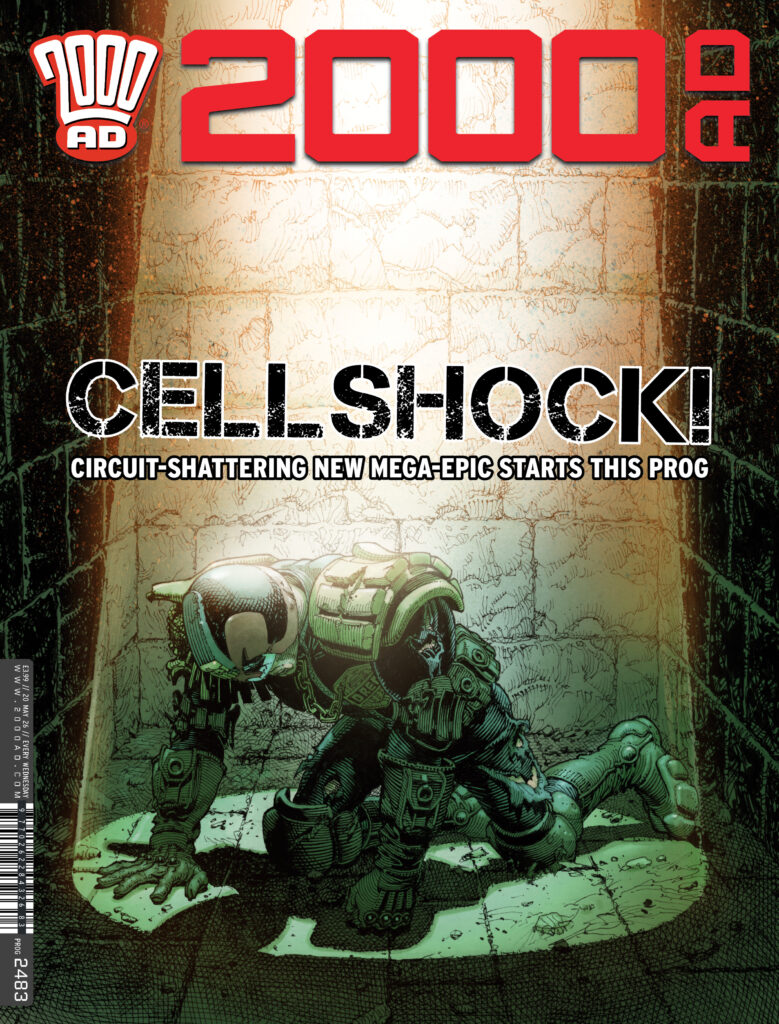
So, you have your marketer hat on. You have all these different options available for you. What was your approach to try to make that a successful venture?
Morris: It’s so difficult, because what I think America would have wanted was a relaunch, a revamp, a rebrand to go, here’s 2000 AD, volume two, issue one…
Prog one.
Morris: I’m glad you’re on it. (laughs) But I think it was more important for us to continue the numbering, continue the legacy, because 2000 AD has gone every single week since 1977. No breaks. It went through the pandemic. It went through everything that’s happened.
Over the years, it’s continued. It’s survived everything, and I think it’s better trying to appeal to readers to say, “Actually, being stuck down the rabbit hole is the good thing.” That isn’t the thing that isn’t fun. The point to 2000 AD isn’t that you go, “Why did I start with Judge Dredd?” The point is you start with next week’s issue, and that’s where you start. Some of the stories will be on part one, some stories will be on part seven, some will be on the final part.
Being a bit lost for a few weeks is part of the fun of it, in my mind. This was true for me when I started reading X-Men. I read, like, issue seven of Joss Whedon’s Astonishing X-Men or something. It’s like, “What is this? I don’t understand what’s going on. I don’t know any of this continuity. What is Decimation?” Then you learn it. I think that’s a thing that people are trying to move away from right now, and I want to move back towards is this idea of being a bit lost and finding your way into it.
I pay a lot attention to social media and Reddit, and people are always saying, “I want to start Judge Dredd or Rogue Trooper in a pristine way. Give me the very first appearance, I will read everything from there.” And I say, that’s going to drive you mad because the first appearances of Judge Dredd were not the best appearances of Judge Dredd. He didn’t develop into his character until a few years had passed. Why not start with something good? Then you can go back and be a completionist later.
And so, with 2000 AD, it’s been about emphasizing the fact that you will be lost, but you will find a place eventually. And, you know, the first issue for 2000 AD only had two stories starting with part one in America. But then give it two weeks and more stories will be at number one. And then I think when you get to June, every story will have finished and revamped with a new one by that point. So, anyone who’s been reading the entire time will then be in on the loop. They’ll know everything’s going on and they’ll be able to read along.
That’s the goal is to keep them reading through the highs and lows because the highs are going to be incredibly high once you once you’ve reached them.
I fully support everything you just said. I wrote an article last year that was called “There’s No Wrong Place to Start.” I think people have made reading comics overly complicated. They’re so desperate to find the perfect place to start that they don’t realize that anywhere is a good place to start. I know Rebellion has created some easy button answers for 2000 AD. Was it The Best of 2000 AD where they had that beautiful Jamie McKelvie cover with the Tom Muller design? When you had those, that was your kind of easy button answer.
But I just think people make it too hard. And there’s the added complication of, despite the fact that…I’m not saying that 2000 AD is copying this, because obviously that’s not true, but what is the difference between Shonen Jump and manga and 2000 AD and all the print books that come out of it? There is no difference besides trim size. And yet it is oddly difficult to get American readers to read British and European comics in a way that it is not hard to get them to do with Japanese comics.
Morris: Yes. Exactly. That is the exact comparison that we always make at conventions with readers when they talk about what is 2000 AD, we say it’s Shonen Jump, basically. It is a British version of Shonen Jump, essentially. I’ve just pulled down some volumes off my shelf, but just read The Case Files, right? You could start with volume one if you wanted to. It’s all there from the beginning. But people who say they want to do that, we always say don’t.
If you want to start Judge Dredd, start with volume five. (laughs) That is the actual starting point because that has all the best stories in it, and it’s the best entryway. I can scroll through here and I’m looking at Brian Bolland, Steve Dillon, Carlos Ezquerra, Mick McMahon, all in a row. All our best artists in a row, just one after another. I think this is hopefully going to be key to 2000 AD’s success in America…appealing to younger readers and to manga readers.
We just announced last week that we’re going to be doing the compacts that everyone else is doing, so DC sized compacts, but it’s going to be Judge Dredd from the beginning. The black and white era. So, it’s basically going to be like having a set of manga on your shelf, except it’s Judge Dredd doing Judge Dredd stuff. Hopefully there’ll be a lot of crossover between that and newer generations who will read Judge Dredd and go, “This isn’t the black and white homework comics I thought it was. This is black and white relevant comics that are speaking to America right now and are fun, funny, and vibrant. It’s just that they were published in another country a long time ago.”
So, our aim is to point out to people that 2000 AD is in 1977 making comics that are relevant to 2026, and it is not old fashioned.
I know this is an oversimplification of what a marketer’s job is, but a lot of what I imagine you do at 2000 AD when you’re marketing these books is tearing down the obstacles that people perceive there to be in terms of reading these books. And there really aren’t any. Like, as much as you would say that someone shouldn’t start with Judge Dredd Case Files volume one, if somebody does and they like it, you’d probably be happy with that.
I also think it’s funny that when you were announcing at ComicsPRO that the progs were going to be released in America for the first time, I emailed you with the hypothesis that you were going to have Judge Dredd crossover with Absolute Batman, which you said was incorrect. I still think it would have been effective though! (Morris laughs) I still think it’d been pretty good! (laughs)
Morris: You know, Absolute Batman is working his way up now. Give Absolute Batman some time to become a competent fighter and then he can take on Dredd. I don’t want him to get walked, you know? Dredd took out the original Batman in a panel in Judgment on Gotham. (David laughs) You put Absolute Batman up against Judge Dredd, then Absolute Batman’s just going to jail. So, let’s give him some time to get good at it, and then we’ll discuss that perhaps. That’s my challenge to DC.
Yeah, we’ll revisit it. Maybe in a couple hundred issues you’ll have a shot, Absolute Batman, but not right now. Judge Dredd would take him down too quick.
Morris: Get some training in, lad, because the law is not going to be at all scared of you right now and your big axe. (laughs)
You told me over email that you know that the two biggest UK comics are selling a lot per week. Like, a very nice number, especially when you think about what it adds up to from a monthly standpoint. And I do think it’s interesting how…I don’t really know what it is about American readers that have such a tough time with it. Not with 2000 AD, but…I’m a big fan of BD, or bandes dessinées. There’s a lot of great stuff that’s being translated by companies like Magnetic Press and Ablaze that are brought over here, and they should speak to American audiences. But readers just don’t seem to want to try it.
It’s fascinating how difficult it is to get American comic readers to expand their horizons, and that’s true both from a marketing standpoint and a comics journalism standpoint. It can be difficult to get people to pay attention to something that’s not DC right now, you know?
Morris: Yeah. The reverse is true as well. The interesting thing about 2000 AD’s core fans of readers is the subscribers, they read 2000 AD and they don’t read any other comics. I’ve had them in the past go, Who’s Nick Dragotta? What’s a Ms. Marvel? And you’re like, these are huge things with TV series, and they are in the zeitgeist and our readers just do not cross
The same’s true for me. It’s taking me lot of time to get into reading manga or, “Have you got into Usagi Yojimbo or Hellboy?” or all these paths that you could go down. Because comics don’t tend to have an end, they like to get into their zone, into their comfort zone, and they just stay in there. It’s like a big warm bath they don’t have to get out of. And switching from being someone who reads every issue of Spider Man to being someone who then tries reading a British anthology comic is like getting out of the bath, walking across and going into a different bath.
This is a bad metaphor. (laughs)
I like it.
Morris: But it’s the idea of, you have to walk along the floor, your feet are cold, you’re shivering, it’s wet, it’s a bit gross, I’m comfortable where I am, do I need to move? I’ve got enough stuff already. And I don’t judge people who have got all the comics they need. I have so many blind spots in my reading career. I’ve literally just bought a pack from Gosh Comics, who are lovely, of League of Extraordinary Gentlemen, which I’ve never read. So, that’s something I’ll try reading soon, you know?
But I don’t blame people who don’t want to do that jump because it is very easy to get into a position of, “This is something I do for enjoyment.” I don’t want to make it anything more than it has to be. If people don’t read manga, don’t read 2000 AD, don’t read bandes dessinées, they know they’re missing out, but maybe that’s comfortable and there’s nothing really wrong with that.
There’s nothing wrong with that for sure. I just think that people put themselves in a box that they don’t necessarily need to be in, and they be happier outside that box. But I’m also a loon who reads everything, basically, which now includes 2000 AD. Everyone read Judge Dredd: A Better World. It’s fantastic.
So, you’re an Eisner nominee. (Morris laughs) You are a publishing magnate. We’re going to fight to the death to determine the winner on stage at the Eisner Awards.
Morris: At the White House.
(David laughs) At the White House. It’s going to be quite the show. Read it in your future progs, people. (Morris laughs) You’re entering this new era for 2000 AD where Americans can now read it each week. Comics seem to be doing well overall. What has you excited about where things are headed? Both as a marketer and as a critic, publishing magnate, etc. Are you feeling the positivity right now, Steve?
Morris: I am, yes. I think it’s seeing new readers at conventions, on YouTube, on Instagram, on TikTok, places like that, picking up stuff that I would never expect them to be reading. Like, young people going, “I’ve just read V from Vendetta. This is giving me some ideas about the world.” Like, the fact that comics has not forgotten its original generations and its original foundational works and is still using those to then push on to new things.
You look at a Ram V, for example, who’s probably one of the strongest writers we’ve got in all of comics right now, moving on and saying, “I’ve done my American work for now. I’m going to go to France and I’m going to use their deal. I’m going to I’m going to start publishing with them.” What is that going to be? So, the fact that all this stuff from the past is still relevant and is still being read, still being revered, and talked about in different ways and covered in new ways…which I guess Shelfdust is kind of like that.
But then also that the people who are making comics right now are looking at alternatives and they are branching out into those directions. We’ve had so many unexpected people start doing work for 2000 AD in recent months that which people will start seeing in 2027 and beyond. Names you wouldn’t expect are now going to do things 2000 AD. They’re going to do things for the bandes dessinées market. They’re going to expand out because they’re seeing that there is a renewed interest in comics as a medium.
So, they have opportunities that were not there for the British, the Americans, the Western comics society. That’s something I’m excited for right now, seeing where people are going to go now that maybe traditional barriers are being cut down and people just go where they want and do new things with them.