
“It’s Such a Good Feeling”: Cartoonist Lee Lai on the Joy and Journey of Making Comics
I’m very much on record as being a fan of Lee Lai.
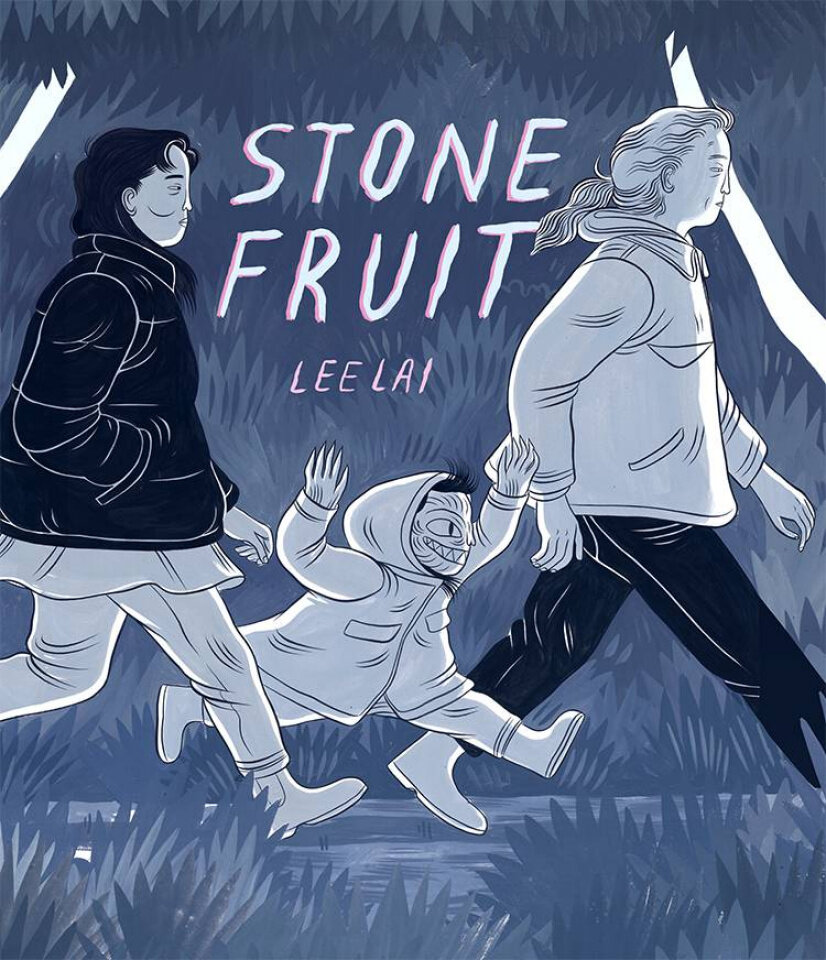
The cartoonist is a truly exceptional talent, as she crafted one of my Comics of 2021 in Stone Fruit and one of my Comics of 2025 in Cannon, with the latter project showcasing a staggering jump in craft and storytelling from an already high point. But you don’t need me to tell you that, as these types of plaudits being pretty run of the mill for Lai. She’s an Eisner Award nominee, a recent Doug Wright Award winner, the first ever trans and non-binary person to win the Stella Prize, a literary award that celebrates the best Australian women and non-binary writers, and was a finalist for the Carol Shields Prize for Fiction for the best work by women or non-binary writers in Canada or the United States. These things come Lai’s way often, and deservedly so, and they aren’t just meaningful recognition but sometimes massively impactful in terms of doing the work, as the Stella Prize win earned Lai $60,000 and the nomination for the Carol Shields Prize for Fiction came with $12,500 — both of which are huge for a working comic creator.
These kinds of things can change a creative person’s life, and with Lai hitting press row recently as she traveled the world from event and ceremony to event and ceremony, I thought it’d be a good time to talk with the cartoonist about everything that’s been happening and her views on creating comics in general. It resulted in a genuinely lovely conversation where we talked about the different experiences she had on Stone Fruit and Cannon, the deluge of events in her life, how those wins and nominations change things for her, her creative process, how she’s evolved as a cartoonist, the joys of telling stories, and a whole lot more. You can read this conversation, which has been edited for length and clarity, below.
Stone Fruit came out in 2021, so everyone was dipping their toes in the water of going outside during the pandemic but also keeping separated. So, even if you were nominated for a prize or an award or something like that, it was almost certainly all on Zoom or something like that. And then Cannon is released in 2025, and everything is normalized. So, now you find yourself on like a tour circuit and everything of that sort because you have awards and ceremonies and all these different things. It’s obviously going to be different simply because Stone Fruit was your first major release, but how different did the release of Cannon and the aftermath of release feel to the release and aftermath for Stone Fruit?
Lee Lai: Quite different, probably because of so much of the in person traveling aspect. My wonderful publicist who’s also a good friend and cares about me, took me aside before and said, “I know you’re leaning introvert, but just so you know, you have agency in how much you say yes to in this process. Obviously there will be plenty of requests for you to do this or that public appearance or signing or panel conversation or interview, but you are allowed to say no. Keep in mind that cartoonists burn out quite regularly in this process, so we will defer to your capacity as you as we build your itinerary and say yes to things on behalf of you.”
I just said yes to everything because this is my first time and it’s a learning curve that I appreciate being on. It feels like a privilege to be figuring that stuff out with a publisher who’s down to figure that out with me. It’s exhilarating and it’s also exhausting. Both of those things exist.
I was thinking a lot about I don’t know whether she said this publicly, but I’ve certainly heard it through the grapevine. Lynda Barry is famously the most delightful person to meet of the various cartoonists. I remember being at a TCAF with her when her when she was signing. Her line was three hours long or something, and it was because she was taking so much time with each person that came up to her and people have so much to say to her. I think she said somewhere that it’s her opportunity to give back to the people who have made it possible for her to have a career. and I feel that everyone who writes comics with particular kinds of identity intersections ends up speaking to a specific crowd and then, if you’re lucky, beyond that as well.
A lot of the people that will come and talk to me after an event share identities with my own in one way or another, and it’s special to talk to people who have things to say about their experience of your book.
It’s such a bizarre and special thing.
It’s undeniably special, but does it ever feel like that comes with pressure to it?
Lai: Well, I think it comes with…I wouldn’t say pressure, but high expectations to not be an asshole. I want to be as generous as I can with anyone who’s taken the time to read my book, let alone taken the time to come out and say something to me in public. That’s such a generosity.
And I’m allowed to have boundaries within that, but it’s I still exist in such a niche that it’s not a real problem. It’s more just my responsibility to make sure I get a good night’s sleep and have a decent meal before I go and talk to a bunch of people.
One of the things that’s interesting about all this is…regardless of the level of fame you are or whatever type of fame you have, when you’re a public figure, I think there’s this idea that
You go out there and suddenly you’re just dealing with people professionally. But you mentioned a learning curve when it comes to doing these events. I imagine in a different way, but also in a similar one conceptually, every time you do one of these events, maybe it gets a little bit easier to understand how to handle it. Maybe you are learning each time how to be better at handling a TCAF or handling a Carol Shields event or something like that. Do you find that to be the case?
Lai: Totally. And there’s things that are practical, like this was the first time I’ve done an in-person tour and I was ambitious about trying to connect with friends who live in the cities where I was doing an event. I did not realize that between landing in the city and going to the event to set up, you have maybe four hours, and those four hours are for showering and a nap and maybe staring at a wall.
That is not four hours that you can have a coffee and catch up with someone. Maybe you have to do a stock signing in a bookstore, but the whole day is just getting to the location and that that is enough. Don’t be more ambitious than that. Then there are more subtle interpersonal things like in learning how to talk publicly to a room full of people. I become a lot more careful about the personal information that I share. That’s not necessarily because anything super adverse has come from that, but I find that I regret it when I do it. I’m learning to have clearer lines in terms of protecting my own stories.
Actually, no, that’s not true. There have been adverse effects of that. One of the big ones, and I’ve already talked about this publicly, is there was a lot of harassment that came with the Stella Prize because…I understand that the way I look is confusing to people and it’s historically a woman’s prize even though it’s been open to non-binary people for a long time now. Its patronage is often folks who are older and less familiar with gender diversity of any kind that isn’t the binary, and it was a strange experience to go online and see hateful people using AI to scrape the internet for everything I’ve ever said about my body or about my identity to figure out how furious they should be or how they should be directing their ire.
Before I had some words with some wise friends, I was full of regret that I’d said anything about myself ever. And that’s not the answer. Obviously, that’s not the way that we have to navigate these things.
Shit just exists online.
Before we started recording, we were talking about just how much travel you’ve been doing. I mean, you’ve been to and from Australia multiple times in 2026, and you’re moving from city to city constantly. This upcoming weekend, after doing the ceremony for the Carol Shields Prize for Fiction, you’re doing TCAF, so you have a con after all of this. So, you’re just doing everything. I think a lot of times people think about it solely from a physical exhaustion standpoint, where it’s like, “What time zone am I in? Am I getting good sleep? Am I eating well so I’m not burning myself out in that way?”
But there’s also the mental and emotional exhaustion that comes with the events themselves. I imagine all of that is a lot.
Lai: It’s…yeah. I definitely did not get into the business for anything other than sitting in a room and drawing quietly, which is why most people become cartoonists. They love to do that, you know? No one’s in it to do any of these kinds of events because they’re not a given. It’s a happy problem, but it’s one to figure out. The best part of it is that I’ve continuously met writers, whether they be cartoonists or prose, along the way who have all their own strategies for taking care of themselves, and they’re super generous around sharing that. It is energizing and exciting to meet them.
Also, it’s so conditional that maybe this is my experience this time and the next book I put out is going to be much quieter. That would be fine, you know? So, I figure I may as well enjoy it while I can, and I have to remind myself that there is plenty of agency in this and at some point I will go back to my extremely quiet and small life, and then I get to process it all at my own pace and enjoy the things that could be enjoyed. I think they’re happening at too fast a pace to fully land right now. But I think at some point when they hit home, I will be able to.
subscribers only.
Learn more about what you get with a subscription