
The Evolution of Keigo Shinzo
The creator of Hirayasumi has grown a lot, and readers could see exactly how — and why — on the page.
This article originally appeared in The Comics Courier’s third issue, which you can buy in print here and digitally here. It was edited by Tiffany Babb, which is probably why it reads so smooth. Thanks to Babb for allowing me to publish it here on SKTCHD.
Change is humanity’s one constant.
The person we were in our youth isn’t who we are when we’re old. What we care about, how we operate, what we value, how we feel, and a practically infinite number of other variables are rarely the same when you compare any person to a younger version of themselves.
It can be difficult to pinpoint the differences between these disparate versions of yourself. That doesn’t stop us from trying, of course. But the reality is it’s a lot easier to feel like something changed than it is to know precisely what it is or how it happened. This is true of everyone. Students. Salespeople. Janitors. Real estate agents. Even cartoonists. We all evolve, and yet, identifying how we did and what inspired that evolution can be an impossible task.
Not for Keigo Shinzo, though.
Keigo Shinzo knows exactly when everything changed. And perhaps more interestingly, readers can see it happen across three projects, which enriches and enhances each in a meaningful way.
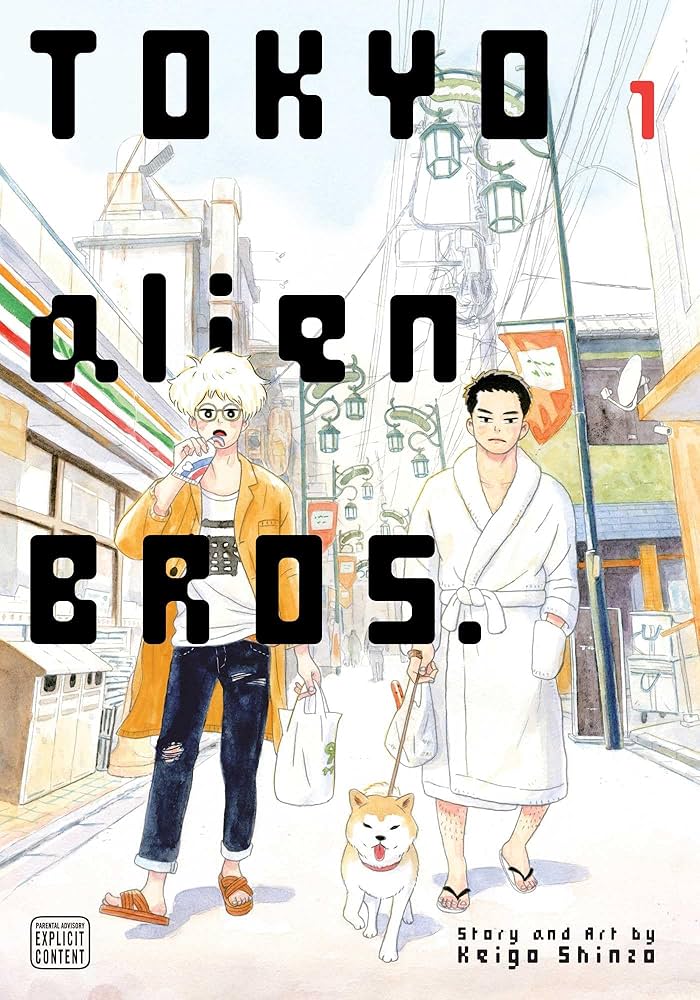
First was Tokyo Alien Bros, which follows Fuyunosuke, an alien thriving on Earth in the disguise of a hip twentysomething as he tries to decide if his species would fit on the planet. There’s just one problem. His brother Natsutaro, who barely understands how to be his regular self, let alone a human, has joined him.
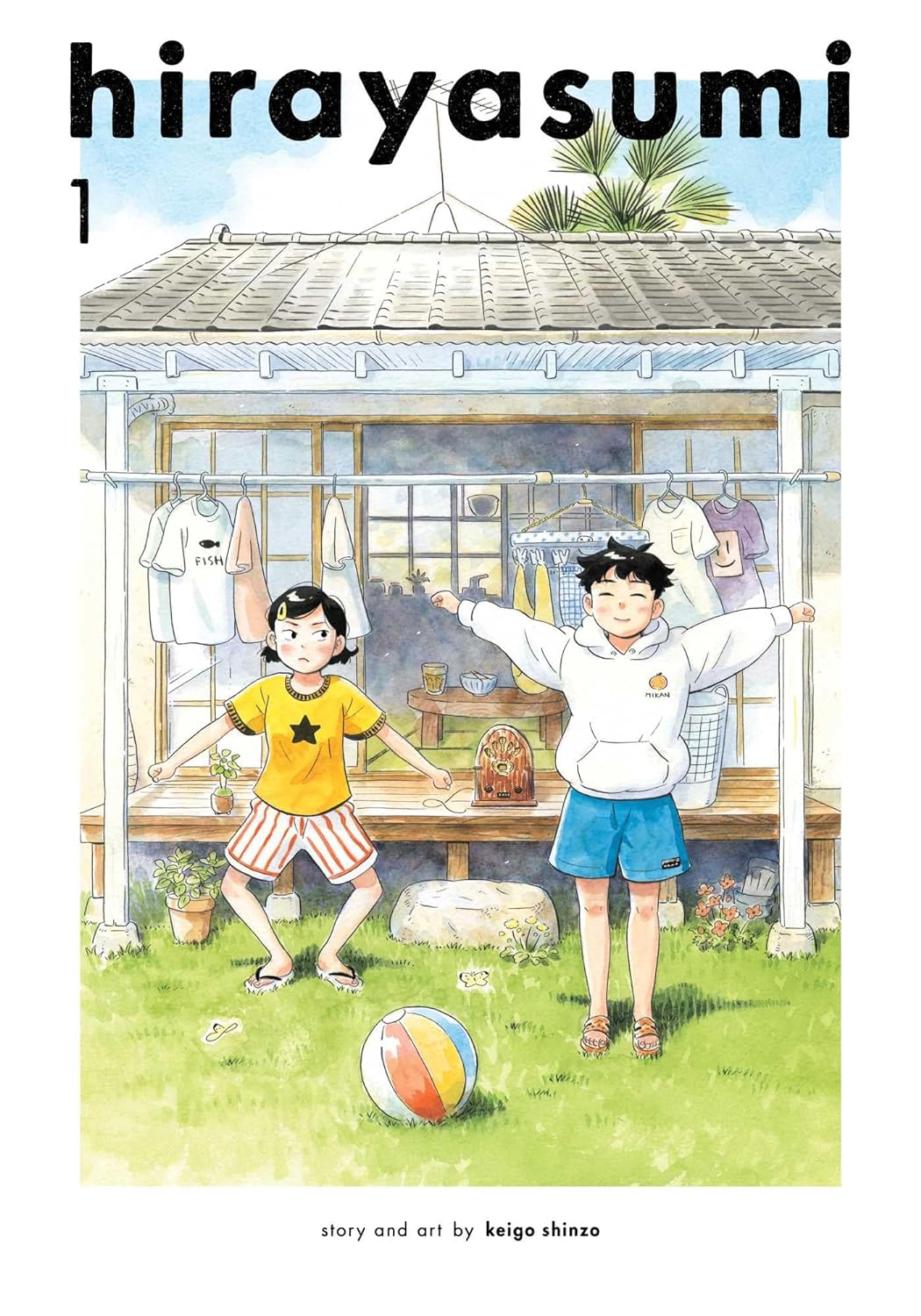
Next was Hirayasumi, which arrived five years later in Japan but was translated to English the year before Tokyo Alien Bros. It’s a slice of life story that follows the adventures of a young easygoing man named Hiroto as he shares a newly inherited home with his art student cousin Natsumi, who is tense and has high aspirations. Drama naturally unfolds as their lives play out on the page.
What came between Tokyo Alien Bros and Hirayasumi speaks to the events that fueled Shinzo’s change. Shinzo was hospitalized for lymphoma at the beginning of the pandemic. It was a life-changing experience for the cartoonist, and it’s a period Shinzo examined in a one-shot called, “About the Time I was Hospitalized for Malignant Lymphoma.” In it, he reveals the loneliness he felt during that hospital stay, and the insight it brought to his life and work in the process.
These comics give you a before and after view of who Shinzo was before that life-changing event. We can see, in a very real way, how he changed as a human and creative. It also shows why he changed, which creates a fascinating interplay between these three comics.
The Keigo Shinzo of Hirayasumi is not the Keigo Shinzo of Tokyo Alien Bros. There is overlap, of course. You can see the creator he’ll become in the latter. But in a way, Shinzo’s growth is almost best represented by the titular brothers seen in the latter.
Fuyunosuke arrives to Earth first and excels when he does. Everyone gravitates towards him, as his friend group swells and suitors line up. But it’s hollow. That’s showcased best in the second volume, when Fuyunosuke admits to his human confidante Hakuru that he doesn’t understand love, even though he constantly wins it from anyone he meets. He’s great at the game of life. But there’s no passion or understanding driving it.
On the other hand, Earth is a challenge for Natsutaro. He doesn’t understand its people or customs or why he should ever change clothes. But his heart is in it. He may be awkward, but he finds connection everywhere, whether it’s with the animals of the planet or humans who are desperate for someone to understand what they’re going through. That empathy tethers him to his new home. The former is who Shinzo was, while the latter is who he will become, as if he knew what was approaching before it happened.
Tokyo Alien Bros. is rougher around the edges than Hirayasumi. Its cartooning is charming but has some details to figure out, particularly in action sequences like when Natsutaro crashes into a vehicle in its first volume. Its world feels less rich and lived in, particularly when it comes to its supporting cast, who mostly exist to move the story along. Every ingredient is there, and it results in something worthwhile. But it’s not fully cooked, as if Shinzo’s worldview and mindset have yet to catch up with his talent.
Malignant Lymphoma gets him there. It’s a short story about a time of great fear, isolation, and boredom for Shinzo. It also coincided with when the cartoonist needed to conceive his next comic, something he’d been trying to do but had yet to crack.
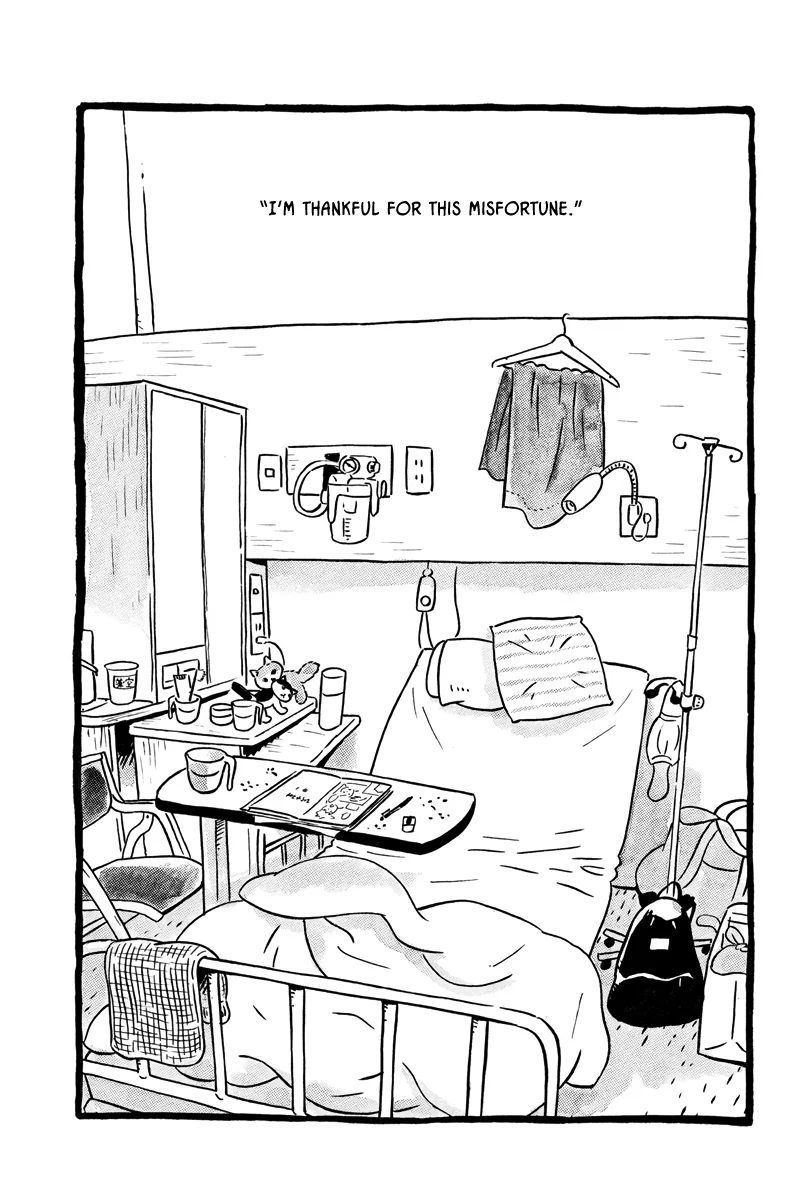
You might not be surprised to learn that this time of isolation led to Hirayasumi, but in the process, Shinzo shows how he became the person necessary to tell that story. Escaping the drawing board forced him to experience others, either up close or in person, which reminded Shinzo of what makes humanity so special. And the absence of simple pleasures like his favorite foods helped him realize how special the little things are, as he adorns his hospital room with illustrations of his favorite dishes. He learns that it’s the details that make life worth living, a concept that wasn’t quite fully formed in Tokyo Alien Bros.
Malignant Lymphoma is a superb comic, one that takes readers inside a consequential time in Shinzo’s life, when he learned to see the world in a different way. It’s filled with smart, thoughtful choices, like empty white panels used for journal-like narration, as well as spare and lovely cartooning that’s packed with subtle yet impactful details. It’s from the heart, which is an approach that will define Shinzo’s work going forward.
Not to downplay his other comics, but Hirayasumi is beyond compare. It’s also incredibly simple. It isn’t oriented on plot as much as it is regular human existence, as Hiroto and Natsumi navigate life as their worlds expand with friends and potential love interests. It’s a slice of life story, through and through. But what separates it from its peers , is its worldview. It’s a story of joy and change and hardships, dedicating entire pages to the little things, whether that’s Hiroto silently watering his garden or its two leads joyfully running through the rain. Its heart is rooted in an essential line from Malignant Lymphoma, one that found Shinzo recalling the moment he learned of his condition. That line?
“I’m thankful for this misfortune.”
Hirayasumi feels real, but it’s also reflective of a creator and lead who now look on the brighter side of life. Bad things happen. We cannot stop them. But what can we control in that moment? What can we do to carry on? Where can we find joy?
Shinzo’s gifts with character are essential to making this work. Play it wrong and the cast doesn’t feel alive, as we saw in Tokyo Alien Bros. The truth is, the Keigo Shinzo of Tokyo Alien Bros. couldn’t have made Hirayasumi. He needed to be torn down and built back up. How that kind of thing happens, and why it does, is often a mystery to us. But we can see it on the page in these three comics that show us the evolution of Keigo Shinzo.
If you enjoyed this piece and would like to read more of my writing about comics, maybe consider subscribing to my Eisner Award nominated site SKTCHD. It’s pretty neat, and it costs less than a comic a month on the most affordable plan!