
Getting Comic Pages in From An Artist? It’s as Magical as Writers Say It Is
If you talk to enough comic writers, you’ll quickly come to realize that everyone loves getting pages in from the artists they work with. If you had to power rank everyone’s favorite parts of the whole “writing comics” job, it might finish first. While there are levels to it — when a writer gets pages in for the first comic they wrote is particularly special, as are the ones they receive for original and creator-owned projects — it seems like something writers never really tire of. And why would they? If you’re a writer, someone who sits at a computer all day brewing up with ideas and just hoping they might look cool, it has to be straight up magical to discover that they look even cooler than you could have imagined.
That’s not something I ever expected to experience, and that’s for one simple reason: I have never, ever been interested in making comics.
That’s considered a rarity for someone in my line of the work, as the belief is that the people who write about comics or podcast and/or create videos about them would like to eventually make their own. That’s not the case for me, though. It’s just never been something I wanted to do. The truth is, if there’s one thing I want to do in comics that isn’t what I already do, it’s owning a comic book shop rather than writing or creating them. I have proof of that too. When subscribers or patrons have asked me who would be on the creative team of a theoretical Stilt-Man comic I’d work on, I was never the writer. I wouldn’t even be the editor. I’d be the assistant editor. 1 That’s right. Even the fantasy version of my comic wasn’t written by me!
After saying all that, you might be wondering why I decided to write a short Stilt-Man story — which is drawn and colored by Javier Pulido, lettered by VC’s Joe Caramagna, and edited by Wil Moss — in the upcoming Marvel Winter Break Special #1. It’s a fair question. If I’m being honest, it required fierce negotiations between Marvel and I. I’ll take you inside those with an oral history of how it went down.
Marvel: Do you want to write a short Stilt-Man story?
Me: Yeah.
Okay, I guess it wasn’t that intense.
It was an easy yes, especially after I emphasized to the publisher that writing this wouldn’t lead to any changes in how I cover Marvel on SKTCHD and Off Panel, and they were fine with it. 2 Once that was established, I was in. I viewed this as a one and done project, something that would let me finally say I’ve written a comic. I love trying new things, and this let me do that. So, why not, I figured.
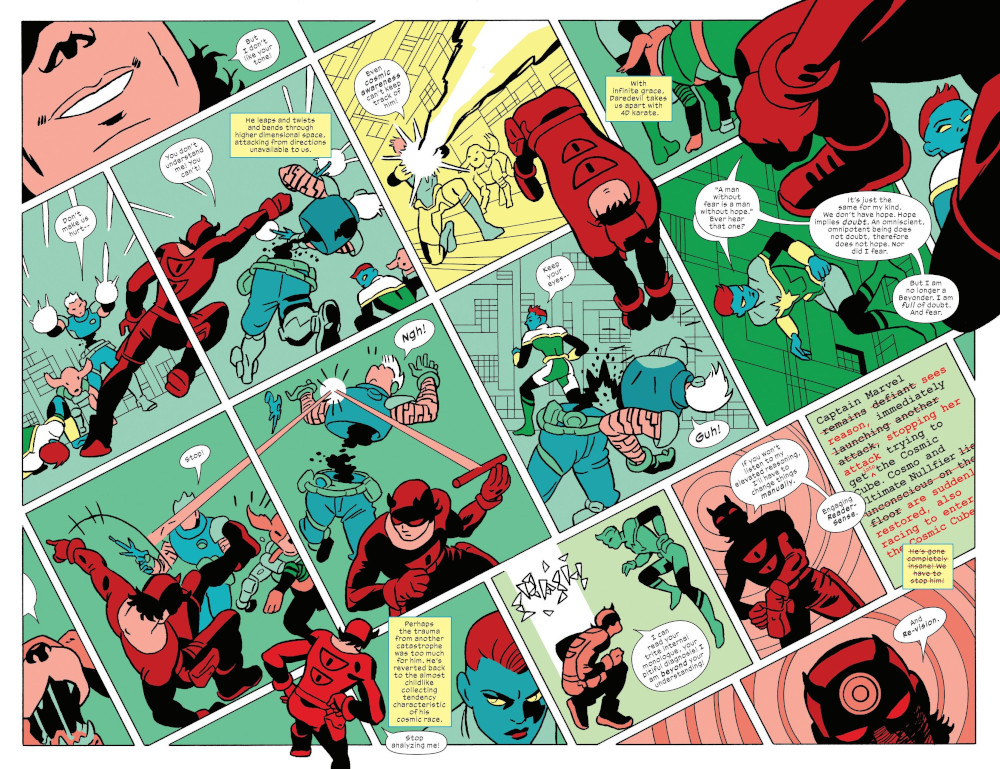
One thing I quickly discovered was that writing comics? It’s a lot of fun! It’s not just the concept work or scripting the story, but the entire collaboration. Talking with everyone involved with the story was a pleasure, as was brewing the whole thing up. But as writers have always told me, the coolest part was getting art in, especially given that Marvel (somewhat inexplicably given the nature and focus of the story) hired the great Javier Pulido to draw this tale about a very tall man who is very bad at living life in any way that couldn’t best be described as “disastrously.” And this wasn’t because it’s always cool to see art from Pulido, which it is. It wasn’t even because the artist painstakingly followed what I wrote in the script.
The opposite was true, actually, as the most exciting for me as a creative tourist, someone who parachuted in to write a comic once and quite possibly never again, was seeing how Pulido took what I wrote and turned it into something so much better. I don’t want to get too far into it because this is a three-page story and to discuss any aspect of it in detail would spoil it. But I don’t think it’s dramatic to say that Pulido’s contributions to this story ensured that I will never, ever look at comics in the same way again.
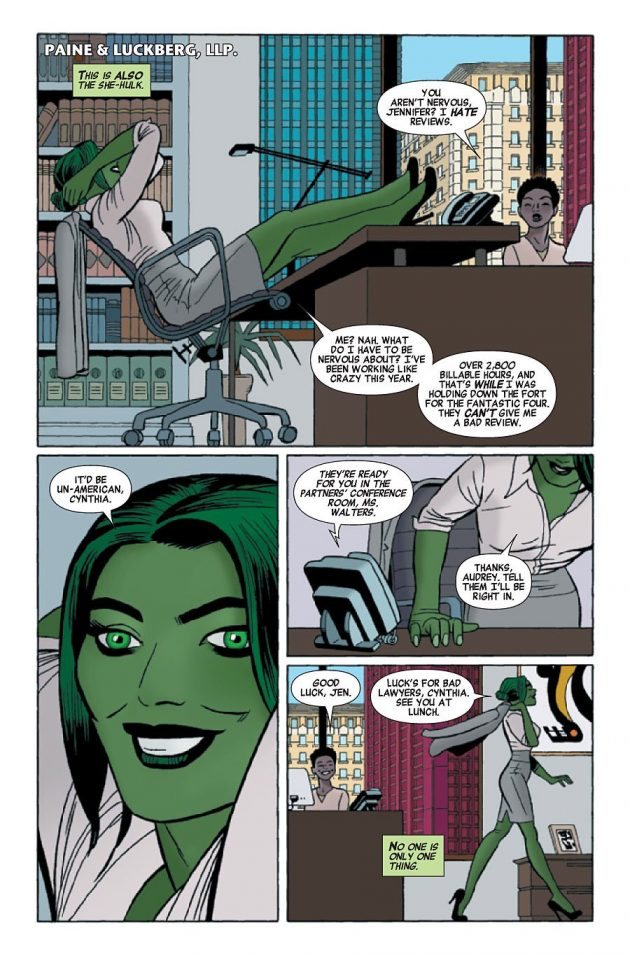
That’s what surprised me the most from the experience, to be honest. I thought I wrote a good script, something that was worthy of my guy, Stilt-Man. I’d even say that I did, but it was only part of what the story needed to become real. That’s where Pulido came in, who turned it into something so much more. Maybe I should have expected that as someone who is, and has been for a long time, a fan of Pulido’s work. But the way he sculpted and shaped this story into something so much more, something special, could not have been predicted. In fact, when I first opened the emails with his layouts and colors, 3 it was so surprising that I honestly needed to take a step back to understand what he did before I could fully appreciate just how much his efforts defined the story — and for the better.
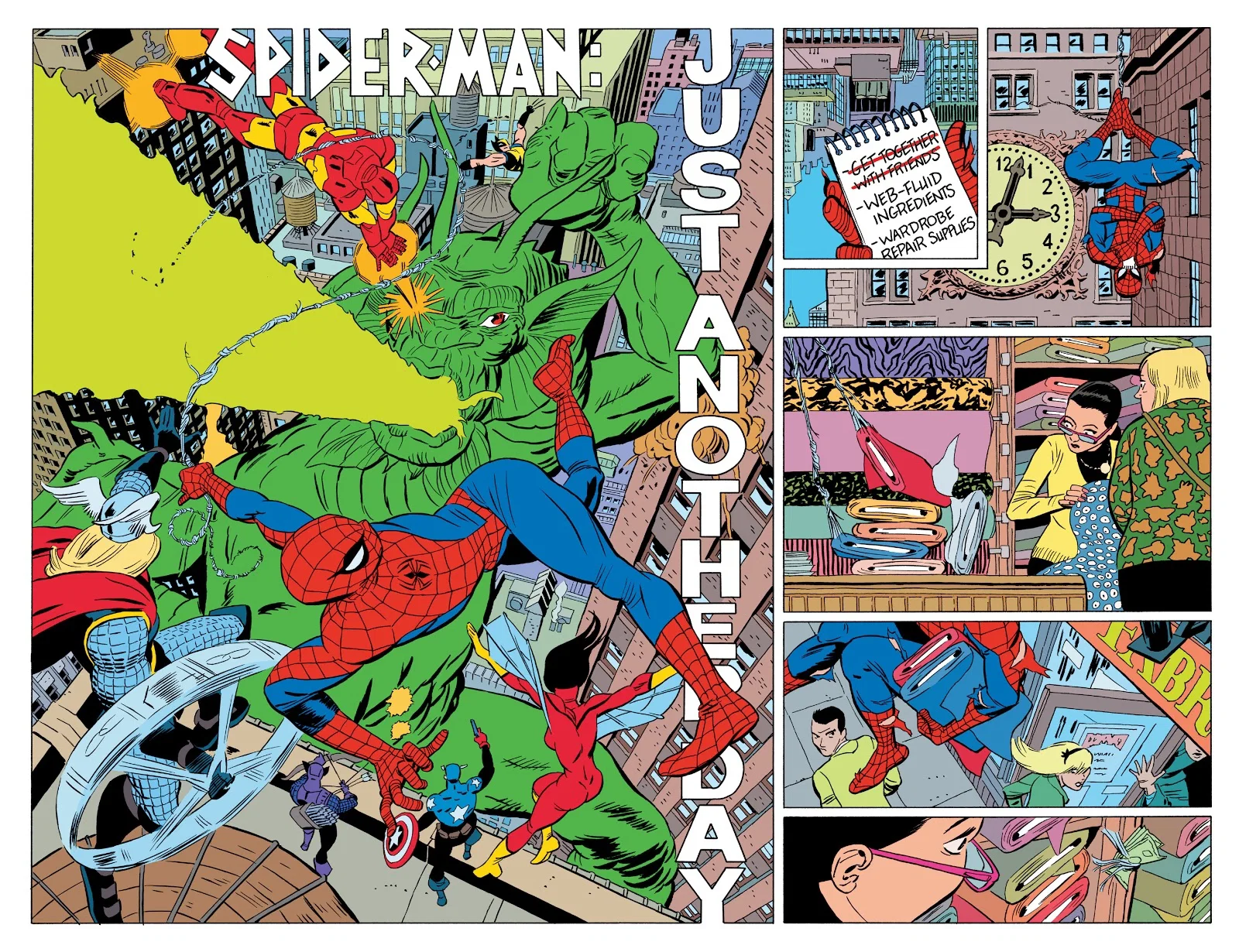
Even though I have always somewhat facetiously called comic artists “wizards,” as I’d suggest to anyone who listened that what they did was magic, my belief was I understood what they did at a fundamental level. They would draw the comics, and in the process, they’d dictate how the story was told visually. That’s true, of course. But working with Pulido made me realize that I only recognized part of what someone as talented and thoughtful as him brings to the table while underlining just how much a comic artist can contribute to a story without readers properly understanding it. Someone like Pulido isn’t just an artist; he’s a storyteller, and a remarkable one at that. In an experience filled with firsts, getting to see pages come in for the first time was my favorite one, and it’s one that’s truly changed the way I see comics in the very best of ways.
Needless to say, I was impressed by Javier Pulido before, but now? Like my beloved Stilt-Man, he’s been elevated into rarefied air.
The editor for my dream Stilt-Man comic was always Wil Moss, who is actually editing it!↩
Which, for anyone who might be concerned by how this project could affect my coverage, please note that I recorded this year’s Superhero State of the Union on the podcast after I had agreed. If you listened to that, you’ll certainly agree that I’m alright saying what I actually think still!↩
Which were two separate instances.↩