
“Let’s Be Ambitious”: Hunter Gorinson on Where Things Are and Where Things Are Headed for Oni Press
If there was a presentation that led the way for me during ComicsPRO, the recent annual conference for the trade organization for comic retailers, it was the one from Oni Press. Hunter Gorinson, its Publisher and President, spoke to the crowd and owned the room during his allotted time with a smart plan designed to get as many of Oni’s comics in readers’ hands as possible. That’s especially important this year, because Oni has an exciting slate in 2026 that includes the arrival of Matt Kindt’s Flux House imprint and its new Archie line, 1 to say nothing of its big move to Penguin Random House for distribution.
With all that energy and excitement meeting the publisher at the event, it felt like the right time to sit down with Gorinson and dig into Oni’s world a little more than three years after he took over the top spot at the company. It’s been a few years of change at the veteran publisher, and now that the plans of this new(ish) regime are finally going into effect, I wanted to talk with the Oni head about what’s happening at Oni, the arrival of Flux House and Archie, operating within the current market, comics marketing, reacting (or not reacting) to what’s happening in comic shops, and a whole lot more.
So, we did just that, as we hopped on video and discussed all that and more in this interview that you can read in full below. It’s been edited for length and clarity, and it’s open to non-subscribers. That said, if you enjoy this read and would like to read more pieces like it (and support the work that goes into it), maybe consider subscribing to SKTCHD. This site is entirely powered by subscribers and it’s my full-time focus these days, so your support makes a huge difference.
Hunter, I want to start with the basics. You are the president and publisher of Oni-Lion Forge Publishing Group. What does that mean? What do you do exactly?
Hunter Gorinson: The Oni-Lion Forge Publishing Group is Oni Press. It’s the predominant brand under there and the one that we publish all our books through. It just means that once the merger between Lion Forge and Oni happened, I believe in 2019, 2020, somewhere around there, Oni also absorbed the library of Lion Forge at that time. So, we have two great independent comic book libraries wedded together in eternity. Being publisher of Oni essentially means that every piece of both businesses and to some extent creative has to come across my desk in some capacity.
A lot of times it feels like being the ringmaster of the circus (David laughs), the tiny little independent comic circus. Other times it’s the greatest job in the world. It really is a tremendous pleasure to be able to be able to think and talk and opine and spitball about comics day in and day out about the kind of books we should be publishing, the kinds of creators we want to work with, the gaps that we see in the marketplace, how we think or what place Oni occupies within that industry and how we can reaffirm that.
These are all kinds of things that we’re talking about, and activating on a daily, monthly, annual and sometimes minute by minute, hour by hour basis throughout the day. (David laughs)
So, the buck stops with you.
Gorinson: Yes, but also our editor in chief, Sierra Hahn, who is enormously talented. We worked together at BOOM! previously. She also has worked at both Dark Horse Comics and Vertigo prior to that.She is, with no exaggeration, one of the greatest living comic book editors, and it’s a tremendous pleasure to be able to work with her as well as the rest of our executive team, which also includes Spencer Simpson, who’s the head of marketing and sales, and Troy Look, who I think is the unsung hero of Oni Press. He oversees our operations and design teams and really is in charge. I cannot get the books from the creators into your hands without Troy, who does a phenomenal job, and I think is Oni’s longest standing employee at this point as well.
This is a complete aside, but operations people…lowkey superstars for comic publishers. Very underrated. I’ve met some great operations people and I’m always like, “Oh, so you do everything.”
Gorinson: 100%. And not just MVPs, but if you work in a company with a great one, hold on to them like gold because that is a difficult job. Knowing where your books are from the time they leave the plant to the time they show up in that store, that is all the job of operations. It is highly detail-oriented and it’s difficult, so finding a good one…hold on to them for dear life.
I would say Troy is one of those, as is Megan Christopher, who’s our Director of Operations, who also rocks.
The split between the business side of running a comic publisher and the creative side…that’s where a publisher lives. That’s a tough line to walk. Someone who is hired for that position often leans very heavily in one direction or the other, and that isn’t necessarily a bad thing, but it does lead to an imbalance. I have to say, you worked with Filip Sablik at BOOM! who is now over at Ignition Press, and I feel like you’re kind of in the Filip school where you play both well. That’s a tricky balance, so good job by you, Hunter.
Gorinson: Well, I appreciate that. I have a huge amount of respect for Filip, who I worked with for a little over a year at BOOM! I’m happy to say he was a friend and mentor for years before that. So, Filip’s one of the good ones, and that is high praise. Thank you, David.
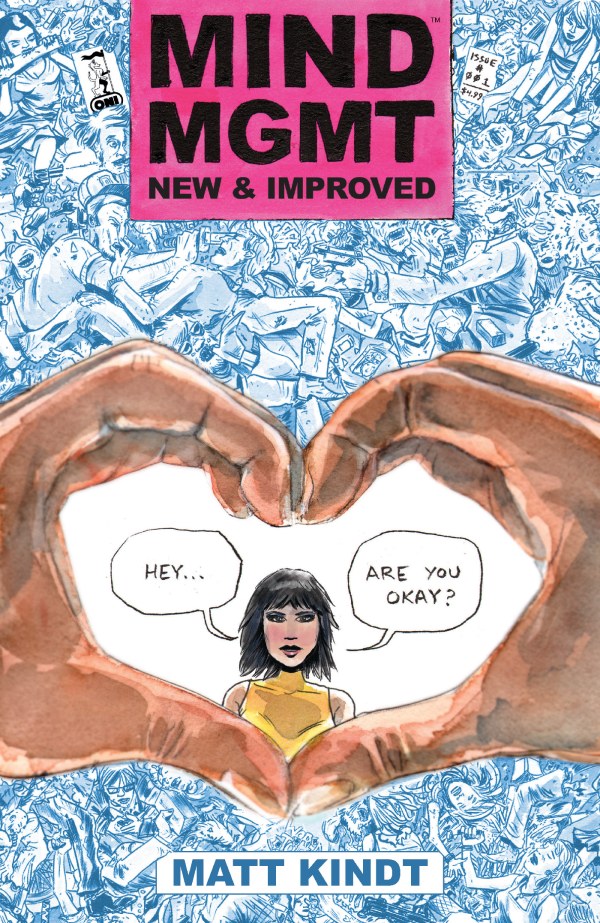
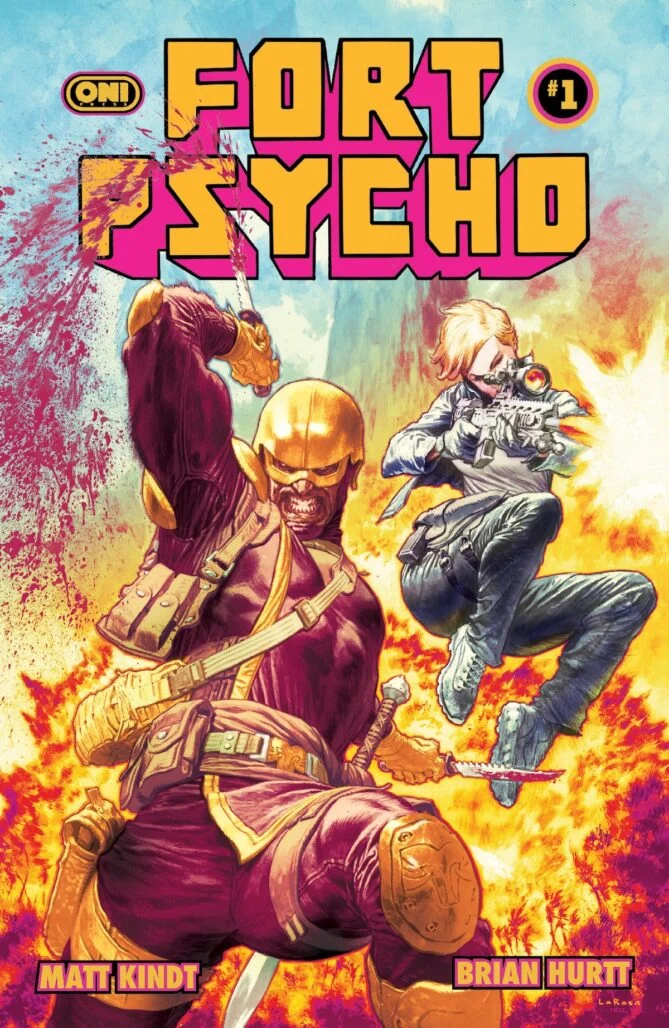
You have a lot of big things cooking. You have Matt Kindt’s Flux House moving over and all the shenanigans that are coming with that, which I will get to here in a little bit, you have your collaboration with Archie coming soon, and then there’s also the migration to Penguin Random House for distribution on August 1st. How are things in Oni Land overall?
Gorinson: Good. We’re just super busy, man. When I started…I started as publisher in December 2022, which feels like yesterday, but I was looking back across the years with Sierra the other day, and we cannot believe how far we’ve come in what has been a relatively short time. But it also means that we’re just exceptionally busy. We put a lot of big moving pieces on the board for ourselves and now comes the fun part. It’s great to talk about doing things, but now we have to do them.
For instance, when you hear a comic book publisher is moving distributors, that doesn’t mean we just sign a piece of paper and suddenly our books are coming out from a different distributor. It means we have to physically move tens of thousands of units, if not hundreds of thousands of units, of inventory from different points across the country, get them all scanned in, make sure they’re all done to specification, which circles back to my good friends in the operation department. We appreciate you. We see you because a lot of that burden falls on them. But it’s a lot of work.
And then also the creative lift of…I’ve had the pleasure of knowing and working with Matt Kindt for probably 15 years at this point. I’ve sold more comics with Matt than any other single creator in the industry.
Was Valiant where you met?
Gorinson: Yeah, we met through Valiant, then worked together at Bad Idea and BOOM!, and then onto now Oni. So, Matt is the one consistent touchstone I’ve worked with across all four of those companies. And Flux House is an established brand. Matt is an established creator, but we knew we wanted to shake things up and do things a little bit differently. I’m sure we’ll touch on it, but we’re doing this crazy blind bag program for MIND MGMT: New & Improved #1 in June. That thing alone is one of the most difficult projects I’ve ever worked on just from a logistics standpoint.
It turns out it’s pretty hard to get all those different books into the bags, David.
Also, you have to get Lee Harvey Oswald to do his, and I imagine it’s pretty much a nightmare trying to get his work in on time.
Gorinson: Not great. Not great.
And then with Archie too…Archie might be the most important thing I’ve ever worked on. It’s a huge opportunity, and it’s a huge honor to be able to collaborate with Archie HQ on these characters. But it’s also a massive creative lift of, “We’re trying to do something a little bit different on a schedule and getting all those things into alignment.”
So, it’s an earthquake and hurricane at the same time.
Those who don’t really know how all this works probably have this idea that there’s this instantaneous turnaround where…you get hired in December 2022, and from then on, it’s your vision. But the thing is, direct market comics, even though so much of it is based on a monthly timeline, you’re typically thinking out in at least 18 months. You’re thinking in this long timeline where your vision, Sierra’s vision, everyone’s vision, it isn’t being implemented for probably a couple of years after you stepped in. Do you feel like now, over three years in, you have a firm idea of what this era looks like and is defined by?
Gorinson: Yeah, I think it pretty well kicked in towards the beginning or middle of last year. That’s when most if not all of the books coming out had been greenlit under the Hunter and Sierra leadership model of Oni Press. That doesn’t mean there weren’t good books that were in process that we were proud to publish during that time, but we finally got through the production cycle of everything else that had been in the pipeline up until that point.
Right now, I’m pretty well planned through late 2027, early 2028. There’s room in there. There’s squishiness in there for things to move around or change. But we have a pretty good idea of what we’ll be publishing then.
One of the tricky things is you’re coming in after a pretty seismic change where several very well-liked people, including James Lucas Jones and Charlie Chu, who I’m friends with, were let go. When they left, many people were like, “What is happening here? What is this?” And…Oni’s been around for…how long has it been? 30 years?
Gorinson: Next year is the 30th anniversary of Oni.
30 years next year. So, what do you think today’s version of Oni is, and what parts of its roots are still there?
Gorinson: So, my pitch was… naturally you get asked to do an interview for a job like this and people ask, “What would you do?” My pitch was essentially threefold. It was to kind of synthesize what I saw as the three great eras of Oni.
I had been an Oni fan. I remember buying the Clerks and Oni Double Feature off the stands as a teenager in the late 1990s. I was probably 12 and obsessed with Kevin Smith. I remember copying Jim Mahfood’s art out of Clerks #1, and Oni at that time occupied a niche for me that felt like it was a reaction against the excess of 1990s comics. They were attempting to do something that was very similar to…not to sound like the world’s oldest man at this point, but they were doing Matador Records or Sub Pop Records for comics.
Going full old school indie in kind of like the Fantagraphics underground comics mode but being commercial but cool and giving voice to things that weren’t just dudes with giant guns and big cybernetic arms and glowing eyes in the late 1990s.
I know cybernetic arms very well, Hunter. (laughs)
Gorinson: Hell yeah. We got some cybernetic arms here at Oni. Don’t get me wrong. There’s nothing wrong with that. But that kind of “comics as counterculture” thing, I think is central to the Oni identity. I wanted to go back and isolate some of that, so that’s one of the tentpoles.
The other tentpole was doing what happened like 2010, 2011, 2012, which is when books like Letter 44 and The Sixth Gun started coming out and doing highly credible indie comics with a genre bent. Those books ran for a long time, and they set the template for a lot of what was happening at Image or Dark Horse at the time. I think if you go back in the time machine and look at Oni 2010, 2011, before the Image relaunch of 2012, 2013, Oni was running the table on cool genre stuff in comics. It was the most desirable place to work for a certain strain of creator in the industry. And so, we’re trying to get back into that.
Then there was the place that Oni had gone over the course of the past five to 10 years prior to me coming on board, which was being one of the first publishers to credibly move into doing LGBTQ+ content, which they did a lot of at Limerence Press, the imprint, but then it also came through Lion Forge, like Gender Queer. Maia Kobabe’s Gender Queer was a Lion Forge book but was ported into Oni through the merger. And kids’ books as well, including comics like the Tea Dragon Society and Sheets, which is a YA trilogy also came through Lion Forge.
But like, doing all that stuff, not just doing one of them, and trying to weave that tapestry so that is now the three legs of the stool that support Oni Press, if that makes sense.
It totally makes sense.
I’m sure you’ve talked to Chris Conroy about Vertigo stuff, but what they were doing with the new Vertigo is similar in that there are all these discrete eras even if it was always Vertigo, where each has its own identity. So, how do you take the best parts of each and make it a stronger whole? That makes sense because the thing is, 30 years is a long time. When Oni first started in 1997, it was a completely different industry in every single way it possibly could be. So, do you try to do the same thing because that’s what worked before? You have to adjust to the industry and the medium you exist in today.
Gorinson: Yeah, and as the people who work at Oni and a lot of her creators have heard me say a bunch of times…I hold what I call several controversial theses about comics that I’ve attempted to prove through publishing at Oni. And one of the things that I put on the table as publisher was there’s a mantra in comics that’s come into vogue over the course of the past five, 10 years that I think from a value standpoint makes a lot of sense. Comics are for everyone.
I appreciate the values of that. Comics shouldn’t be a gatekeeping thing that shuts people out. There should be a place for every kind of story and every kind of creator or medium. I 100 % agree with that sentiment. The part of “comics are for everyone” that I disagree with is on a reader level, on a day-to-day level, I actually don’t believe the medium of comics is for every reader or every person out there. The only things that are for everyone are shampoo and toothpaste, you know what I mean?
Comics aren’t. Comics are a niche. We are a counterculture thing. We are kind of an underground thing. That doesn’t mean that underground can’t become mainstream or counterculture can’t become mainstream. But we don’t want to make comics that try to please everybody. I want to make comics that some people fucking love. So, that’s what we were trying to drill in on at Oni over the course of the past couple years.
Yeah, I mean, you’re trying to create passion.
I’m going to Ratatouille you for a second. I think comics can be for everyone, but I think that the process of getting there is instead of trying to make comics for everyone, where you’re trying to four quadrants the medium, you have to find different books that speak to individual groups so you create it in aggregate, if that makes sense.
Gorinson: Exactly. And each piece of art, I don’t care what it is, begins with a passionate fan base that is not incredibly broad in the beginning.
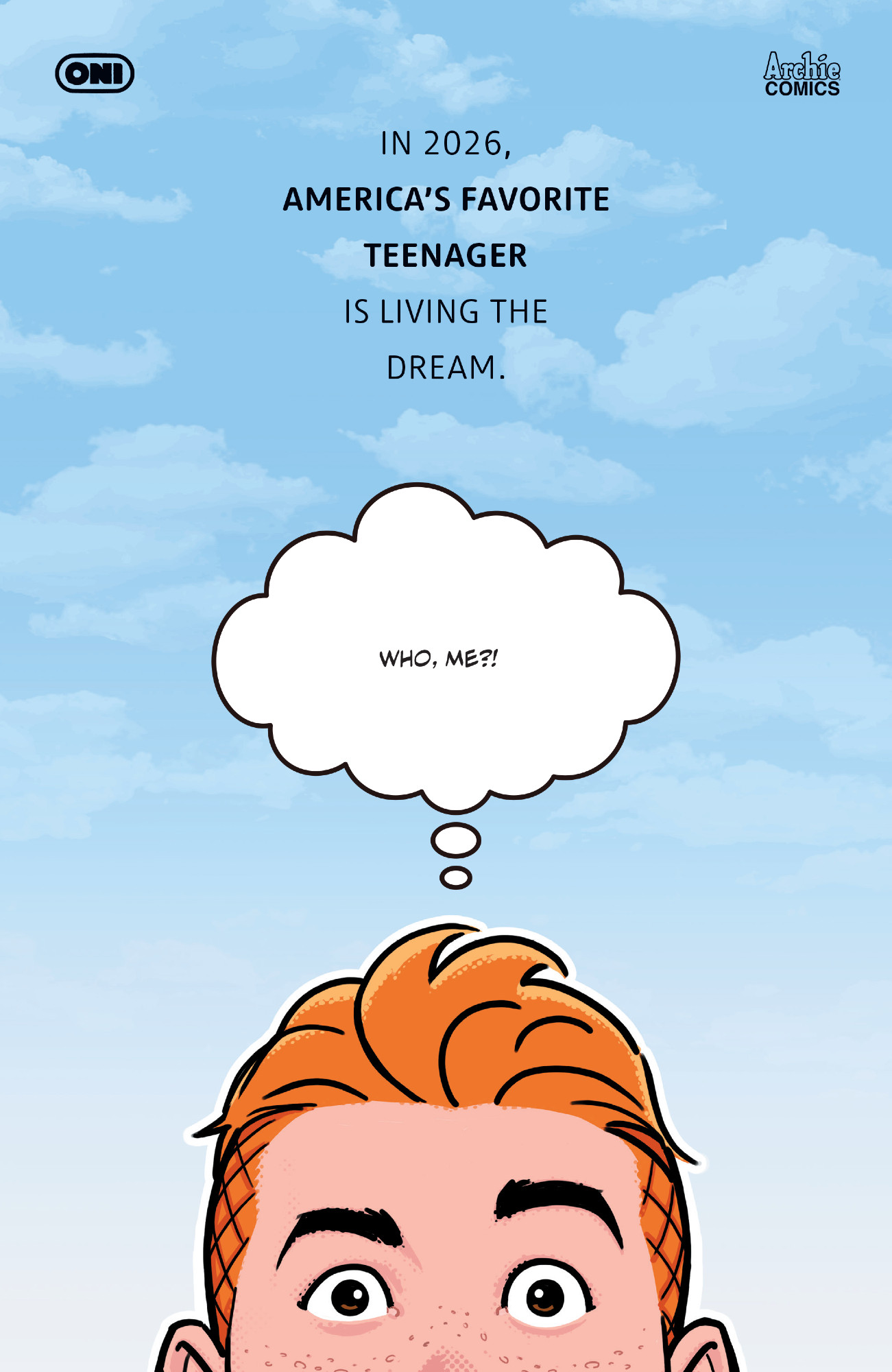
This gives me the chance to bring up Archie because I think it’s fascinating. Let’s start with the beginning. How did this partnership with Archie Comics come together?
Gorinson: So, the business side of comics I’ve come to appreciate over the course of my career, which is now quickly coming up to the 20-year mark, which is shocking to me, is that…I’ll tell you an anecdote, which still holds true. When I interviewed for my first job at Valiant, it was with Peter Cuneo, who’s the former CEO of Marvel and was the primary investor and chairman in Valiant. He asked me a question, which was, “What do you think the secret is to the comics industry?” And I said, the secret of the comics industry is that the actual people who make decisions and run the business side of our industry could probably fit into a medium sized conference room in a Ramada in Paramus, New Jersey. There’s like 17 of us. It’s an incredibly small industry.
So, I’ve had the pleasure of meeting the Goldwater family, John Goldwater and his son Jesse Goldwater, as well as Mike Pellerito of Archie many times over the years. We were catching up on a couple different things because again, a lot of us publishers talk amongst ourselves at least a couple times a year. We’re all pretty friendly with each other and it’s good to take stock, especially on the independent side of comics.
We were catching up, and then sometimes it’s just…a big part of my job I’ve found is sometimes I just ask super obvious questions. So, I asked, have you ever thought about doing this? Would it make sense to you now? Would it make sense to partner up and allow a publisher like Oni to take a crack at some of these characters? They had seen what we had done with the EC Comics Library, which was a big swing that I know had a lot of skeptics in the beginning, but has quickly become Oni’s most successful line of single-issue comics ever created.
That seemed to be a template and a model that we could go down. So, we have a lot of big surprises in store for Archie. I think we’ve only revealed the teeniest tiny tip of that iceberg so far, but I’m incredibly excited. But it couldn’t be more of an honor to work on these characters. I never thought I would get a chance to work on characters like Archie or Betty and Veronica or Sabrina. These aren’t just comics characters; these are American icons.
The reason I wanted to bring up Archie now is as a fit for that idea of comics are for everyone in an aggregate sense, because the first compact edition you announced were for the new Archie, or whatever you want to call it. The Mark Waid and Fiona Staples Archie title, the Jughead series from Chip Zdarsky and Erica Henderson, and the Veronica Fish and Kelly Thompson Sabrina. There are some others in the mix that aren’t part of that era, but they also fit that target. But the single-issue titles are just bananas. As soon as you have W. Maxwell Prince writing an Archie comic, you’re operating on a wavelength that no one really ever expected.
When you all were looking at this and trying to think, “How do we do this for today? How do we try to approach the market in a way that stands out creatively, but also is doing something that’s intelligently enough positioned?” What was your approach for figuring those things out? The approach makes sense to me from the outside, but I’m curious as to the logic behind it.
Gorinson: Yeah, it’s twofold, and I’m going to try and answer this without spoiling anything we have coming up (David laughs), because I think it will become self-evident where we’re going in about four to six weeks. That’s when we’ll be talking more about the exact content of each of the three launch books.
But the thesis was the creative parameters that we helped put on the board at the outset. I had to think about this a lot, and sometimes with a project like this, what I’ll put on the board on a personal level is, “What would it take for me as a reader to become interested in this?” And so, we spent a lot of time looking at the books from 2015, which were incredibly successful. You can’t ask for a better creative team than Mark Waid and Fiona Staples to launch Archie. So, how do we do something that exists in the lineage of Archie Comics that isn’t just trying to recapture that? This is only the third Archie number one that’s ever been created. How do we do something that extends that legacy, but also feels like a part of 2026 without being retro or immediately going back to 2015? We had a lot of conversations about that.
The other part of it is just, tonally and creatively, how do these books align with one another? Who are the creators we want to work with? It’s not just the art of publishing, which is tough, but how do we give these books a life and a trajectory that will make sure they run for more than four to six issues in the current climate?
If I’m launching new Archie and Sabrina series, I want them to run for years, not months. So, trying to crack big ideas and creative configurations that will allow that to happen and get good buy in from fans and retailers to make that happen too. So, it literally is a hybrid creative/business proposition about how we figure out the best marketing and publishing strategy and also get the best possible stories to be told.
Yeah, I mean, your presentation about it at ComicsPRO where you walked through some of the program and how the rotating artists were going to work for Archie and everything like that, and the fact that had Stuart Immonen as a cover artist on the first issue is…or is he doing regular covers?
Gorinson: He’s going to do at least the first arc. Knock on wood, but I would love it if Stuart would do ongoing covers for Archie. I can think of nothing else that would make me happier.
It was interesting listening to you talk about it because you hit the nail on the head. There are two tricky parts about this. Well, I’m sure there are way more than two, but I’m going to identify two of them. One is that the 2015 relaunch already brought the flavor of, “What if you took direct market creators and put them on Archie?” So, you can’t just do the same thing. That’s gone.
Then the other thing is, you’re making a new flavor of Archie…how do you position that in a way that makes sense both for the direct market and the broader comics market because Archie has a name that speaks to people outside the direct market. So, you have to do something that rides that line. That’s the tricky thing. You can’t go to the same path, but you also have to do something that is versatile enough to speak to multiple markets at once, which is a difficulty for a lot of direct market publishers.
Gorinson: Yeah. My thesis from the beginning was we will do a three-tiered program. It will be a direct market program, which will be the tip of the spear because comics are cool, man. People care about comics by definition. They will just attract the most attention and we can do new, slightly more mature things with these characters for the direct market.
Then, of course, there’s a massive business in an audience for middle grade and young adult graphic novels. We have a whole slate of stuff for Archie and development for the kind of books that you haven’t heard about yet that will prove to be equally interesting once we start talking about them. There’s one idea in there that I think is the most obvious untapped idea in Archie Comics history that I also think is one of the coolest things we’re going to do.
And then of course just the backlist collections. Archie goes back 85 years this year. There’s so much great stuff in there. How do we sensibly and logically put together a backlist publishing program. What you’ve been seeing is we’ve been kind of doing it in reverse order. We’ve started with the most recent and we’ll be going back even farther into the Bronze, Silver, and Golden Ages over the course of the next year or two.
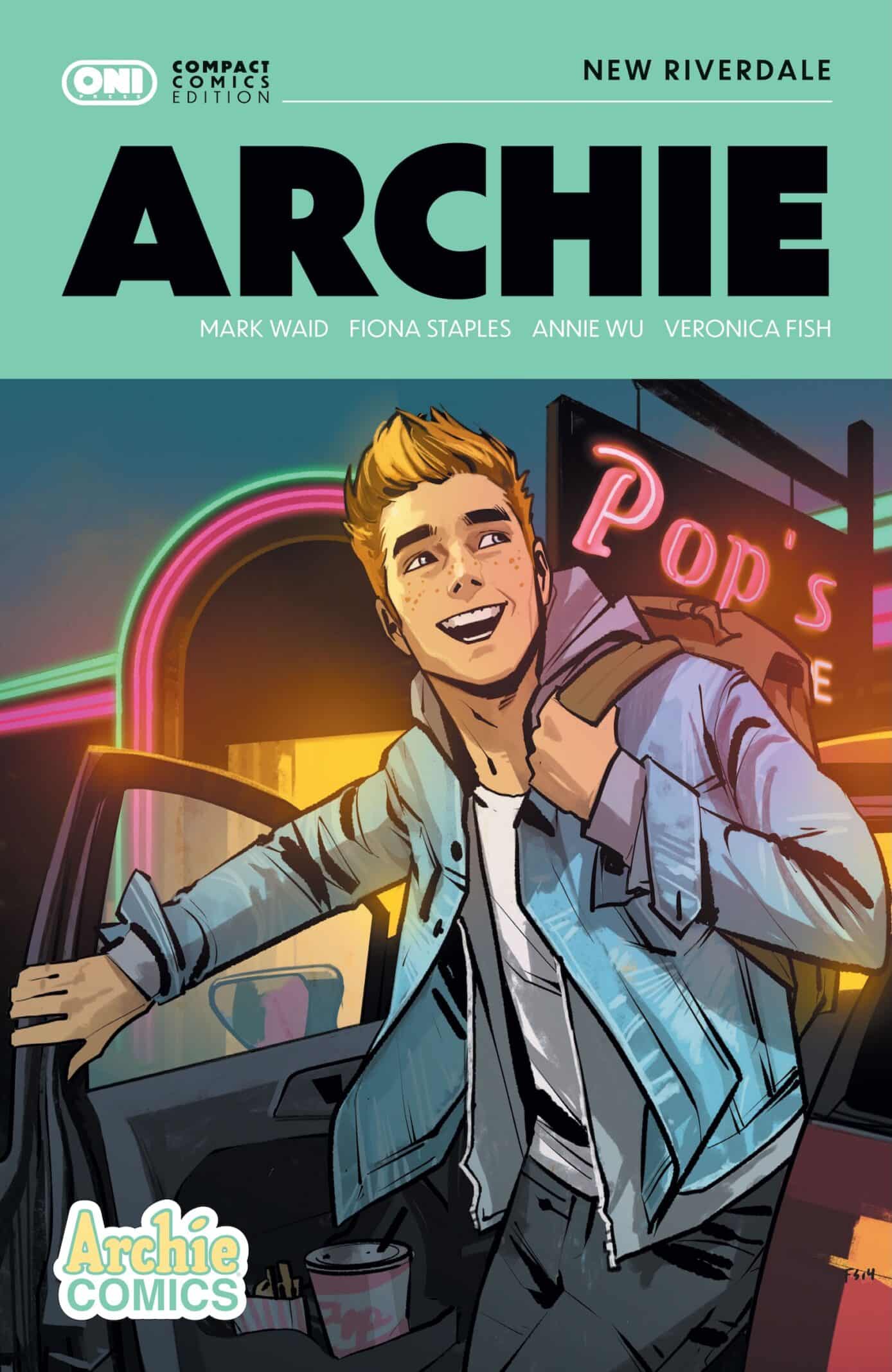
I want to give a quick shout out to whoever designed the new Archie compacts. A+. I don’t know who did it, but they killed it.
Gorinson: I believe it’s our designer. It turns out when we started this process, we had a designer internally, Carey Soucy, who put up her hand and was like, “Guys, I am an Archie super fan. (David laughs) I will crawl over everyone else here to design these books.” So, I believe Carey did it. Carey’s done a ton of work on these books. I can’t say she specifically designed those, but I will double check.
The thing that’s interesting about this entire Archie program is it taps into something that you’re already doing that I think is a massive miss for a lot of direct market publishers, which is that everyone has these really expanded backlists, Archie maybe more than anybody, but no one really uses those properly.
Oni has a 30-year history, Archie has a long history too. I like that there’s this format boom going on where publishers are like, let’s repackage stuff as compendiums, let’s repackage them as digest books. You’re doing that with several different things right now. I think what you’re doing there is smart, but also, I’m curious as to whether you think there’s an opportunity for Oni overall to look at its backlist and try to think about how to repackage it in the same way that you’re repackaging everything for Archie right now.
Gorinson: Yeah, backlist management is one of the most often overlooked difficulties of a job like this. It’s also one of the things that when I was presented with this opportunity…there were some things going on with the company at the time, as you’ve articulated, that I think a lot of people were like (makes a sound of unease and uncertainty).
I have an old friend from the Valiant days named Warren Simons who was our editor in chief, and he had a famous catchphrase he used to throw around, which was look at the doughnut, not the hole. I heard Warren’s voice say to me, look at the doughnut, not the hole. Oni had a great library of books. And you know what’s hard to assemble? And you can’t just will out of thin air? A great library of books. So that was one of the positives that I saw about Oni that was worth holding on to.
We’ve repackaged a lot of the Oni library, and we’re continuously doing new things in that vein. But even the compacts, that spins out of something that we were doing with Rick & Morty and Adventure Time. So, that’s a contiguous line with those two other things that are already under the licensed umbrella at Oni.
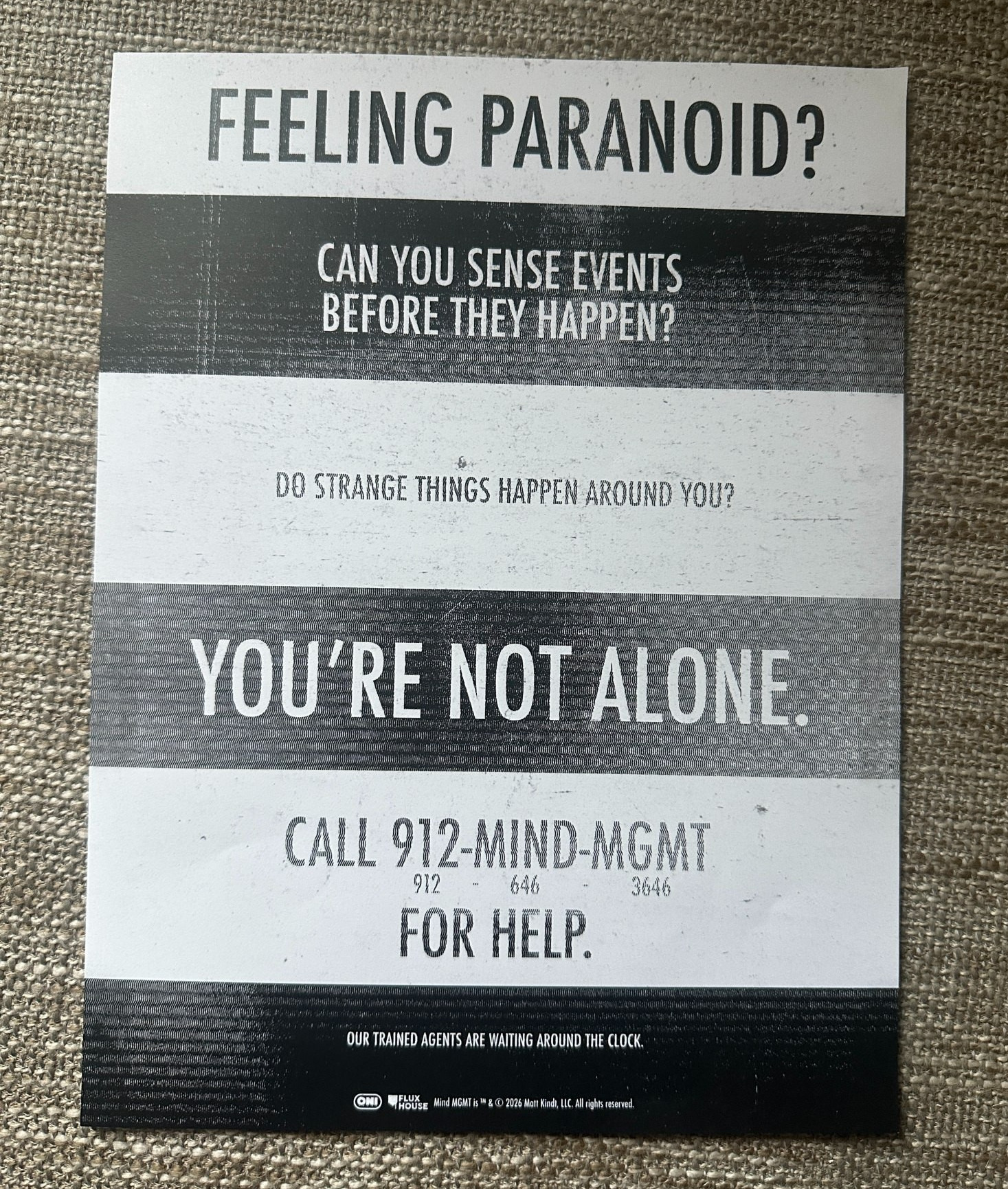
Speaking of another opportunity, comics marketing is in a fascinating place. It’s a challenge for a lot of publishers, but I appreciate the things you’re trying to do with Flux House to promote it. I mean, you all managed to creep out an entire hotel at ComicsPRO (laughs) by putting flyers underneath their doors, which were alarming and fantastic and I loved them. You also put up actual billboards for MIND MGMT: New & Improved, which is amazing. At the very least, it feels like you’re trying to make a dent, and that’s a welcome change of pace for direct market promotional efforts. How big of a focus for you is not just making good comics, but trying to connect them with audiences in a way that isn’t just the same dog and pony show we’ve seen for years?
Gorinson: Yeah, here’s the thing that I think about a lot, which is as a former comics marketing person, this is my bread and butter. It was my first discipline in comics going all the way back to being an intern at Marvel. I was an intern for David Gabriel, Arune Singh, who’s now at Skybound and Jim Viscardi, who’s now at Image. So, we were the quatro of comics marketing people at Marvel around 2010, 2011, and I learned a lot of lessons there.
But one of the things that’s always resonated with me is if you’ve ever had a miss in comics marketing but then you have to go tell the creator about it. This is what I tell people who come to work in comics marketing, which is, for you, it’s Tuesday. For the person whose book comes out tomorrow, they may have sat in their basement writing, drawing, hand lettering, and water coloring this book for the past few years, okay? It is their birthday, bar mitzvah, and wedding day, all rolled into one. We are the only people here who are going to make sure that people come to that party.
So, again, you’re feeling that it’s Tuesday. They’re feeling like it’s the most important day of their life. It very well might be if we do our jobs right. It’s our job to make people show up for the party, and I feel that’s an immense responsibility. It’s a huge gift, and I don’t mean this to sound like saccharine or patronizing…the best part of my job is being in a position to help will pieces of great art that I think should exist or the people who I work with think should exist into reality and getting to hold that book in your hand at the end of the day. All that is for naught if we don’t do everything we can to…it’s not just making the book, it’s also supporting it so other people can read it.
One of the greatest failings of comics, as anyone as any creator or retailer will tell you is that with comics marketing, it may be 2026 outside, but it’s like 1987 constantly in the world of comics marketing. (David laughs) We as an industry are lagged about 10 years behind everyone else. Comics marketing is in the 20th century. So, figuring out ways to hack that system and do things that you can just get people’s attention in this distraction rich environment, I’m open to ideas and those include getting the Oni sales team to go put flyers under people’s doors at 2 a.m. at a hotel. (laughs)
And getting Lee Harvey Oswald to do a variant cover for your blind bag program.
Gorinson: Right. Anything you can do to make people pay attention is great. And if it’s in service of the story…that’s the other thing. Stunts are stunts, but it has to tie back to the book in some way.
And that fits Matt well. Matt is an unconventional person who is open to unconventional things, and I appreciate that.
I’d like you to walk through the blind bag program a little bit, but I wanted to say the thing I appreciate about the blind bag program is…respectfully, I get an email from Marvel where they’re like, “We got Charlie Cox signed Daredevil comics in our blind bags!” and whoever else, and that’s cool. But it all feels very rote and like it’s not going to move the needle for some people. That’s why I appreciate the extremely outside the box approach you have to this blind bag program. It stands out at a time where we’re in a moment of oversaturation for those.
So, when you were building something like that out, what is the mindset? What do you go in thinking? Do you think about what Matt wants? Do you think about what the market needs? What’s your approach?
Gorinson: So, as we were putting together Flux House, which is Matt’s imprint that he brought from Dark Horse to Oni, we were talking about what we wanted to save of how that was conceptually built and what we wanted to change. Matt and I have been down this road of doing crazy activation stuff for 10 years. So, I have a pretty good idea of what his tolerance and what his appetite for this kind of stuff is, you know what I mean?
I don’t imagine he has a line.
Gorinson: I think we share similar lines. The thing with the blind bag specifically is through a certain lens, blind bags are crass commercialism at their worst for comics where you’re completely minimizing the story and focusing only on a physical, tangible collectible and trying to get people to buy as many possible copies of them for some sort of monetary prize, reward, value, whatever that is, you know what I mean?
And so, with every one of these stunts or gimmicks or antics, call them what you will, the thing that I’ve always put on the board, and I think Matt shares the same sensibility, is if we’re going to do it, how do we do it in a way that reaffirms what the story is about and helps bring attention to the book and the story that’s being told. And in the specific case of the MIND MGMT one, how do we deconstruct the crass commercialism of blind bags a little bit? You know what I mean?
So, we’ve tried to do all that while also accepting that we think commerce are cool. I don’t have a moral, philosophical objection to blind bags. I wouldn’t be making one if I did. But if we’re doing it for MIND MGMT, which I think is on the Mount Rushmore of great independent comics of the 21st century instead of comics based on action figures, how do we make that interesting to people who are interested in creator-owned comics?
I don’t have a fundamental issue with variant covers. I don’t really have a fundamental issue with damn near anything in comics. The thing is, if you just do something to do something rather than having a plan that reflects the book and the creator and everything like that, that’s when you start to lose me. That’s what I like about this. I hate to keep bringing up the Lee Harvey Oswald variant or the CIA one, but that wouldn’t work for Transformers, but it works perfectly for MIND MGMT. I appreciate how tailored and specific it feels to the book because it is commercial, but it’s also an extension of the project in a thoughtful way.
Gorinson: Exactly. We were trying to figure out how to crack this idea, and that was the last thing we happened upon.
I have to give a shout out to a graphic designer named Scott Sugiuchi who designed all those art pieces. Scott is an incredibly talented poster designer. He recently wrote and designed a book about Estrus Records, which is a famous underground punk garage record label. It looks awesome. By day, he’s also the graphic designer. He’s the head of design for the Alamo Drafthouse. I was a huge fan of his work. I collect a lot of his posters, and we’ve done some work in the past, so he was the first person who sprang to mind when we thought, how could we use real world declassified CIA documents or like these iconic photos of Lee Harvey Oswald or whatever to put into the blind bags?
I called him and he was like, “Did you know that mind management is my favorite comic of all time?” And I was like, “No.” And he’s like, “I am in. I’m going to annihilate this.” (laughs) We got the covers back and he was like, “Oh my God, I hope Matt likes them.” Matt was like, “No notes.” (David laughs) We have the best note of all, Scott. No notes. So, they are 100% unvarnished Scott Sugiuchi, and they look awesome.
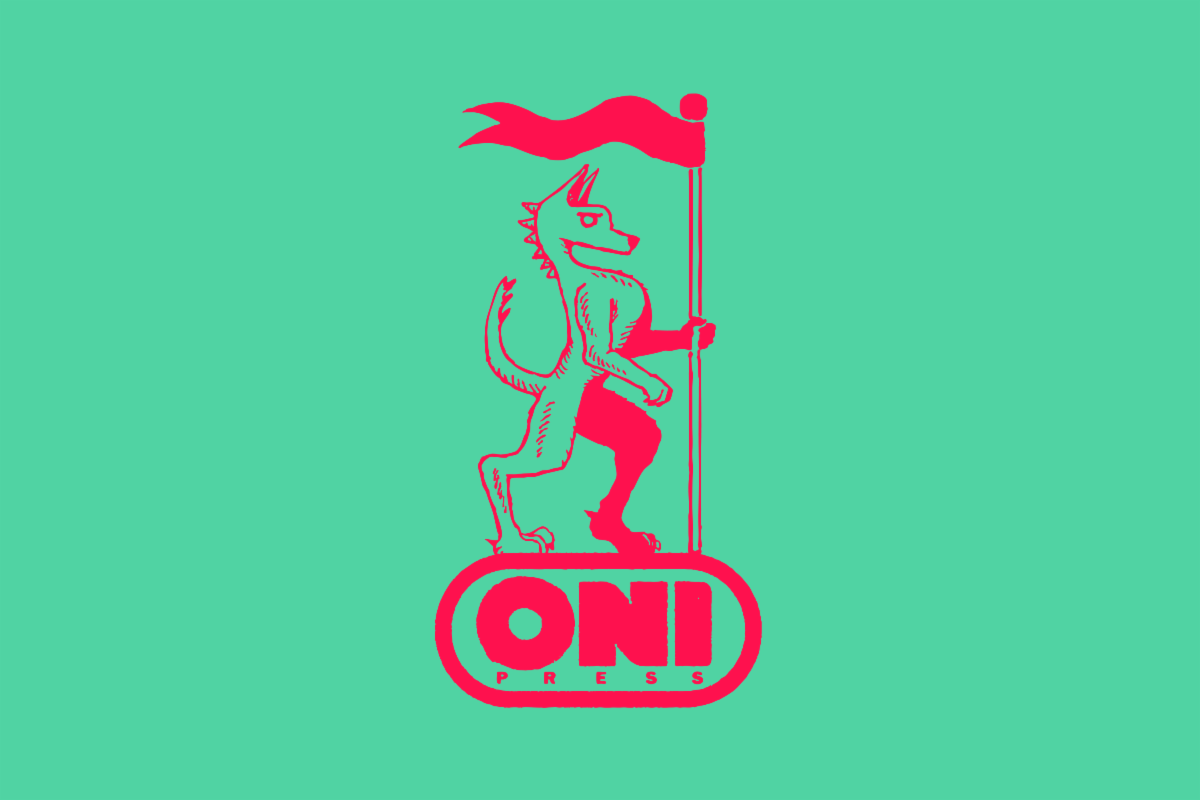
That’s awesome. Now that we have complimented two different graphic designers, I cannot miss the opportunity to compliment Peow’s Patrick Crotty, who did the new logo design for Oni. I appreciate good design and it feels like you do too, based on the direction you all are headed in. But I do like that you guys did that new logo design because it feels like it fits your ethos, it fits the history of the publisher, but it also allows you to have your own mark for the era because you’re doing something that’s a little bit different.
Gorinson: The logo of Oni was something that me and Sierra as well as other people in the company definitely felt we wanted to change sooner or later, especially in advance of the 30th anniversary. It was a massive conversation. Patrick obviously designed the Scott Pilgrim 20th anniversary box sets that got an Eisner Award nomination. He couldn’t have done a better job on those. And as part of that, he did like 30 different variations of the Oni logo before the one that finally wound up on those boxes, which is Oni like a Sony logo. We were like, I think Patrick’s the guy.
We had a lot of conversations about what that logo should represent at a very high level and extremely detailed way before we landed on the version you can see now. But it was an intricate process. I think it’s great. And I only had one retailer tell me they liked the old one more. One guy came up to me at New York Comic Con and went, “I like the old one more.” (David laughs) So, nuts to him. He’s the only one. Everyone else likes the new one.
We’ve talked a lot about Flux House. We’ve talked a lot about Archie. Those are big focuses, but how do you spread the ethos of what you’re bringing to those books to the rest of your line? Because you have a lot of other things going on. The governing ethos of what you’re talking about here…is that something you’re trying to make sure is present in everything you do basically?
Gorinson: The thing we always come back to with the core of the company is there is no Oni Press without creator-owned comics and cartoonists. So, I always want to have new books by exciting cartoonists writing and drawing their own work at Oni. I think that is essential to what we do. It is kind of like the atomic core around which all the other electrons can rotate.
So, you’ll see in May we have Destination Kill by Joe Palmer coming out, which, if this isn’t one of the best-looking comics of the year…I can’t help you if you don’t agree. Joe brought this book to editor Bess Pallares at Oni I think, like, a year ago. I try not to get too excited too quickly in the process of vetting projects and bringing them in. But I think you heard me say it at ComicsPRO where I was like, “Give me book. I want book. Love book.” (laughs) I fell in love with this thing. It looks so cool. I can’t be more excited about that.
It should be announced by the time this goes live, but Matt Lesniewski is doing another volume of Faceless and the Family that will also be coming out this summer. He’s someone else who I think is just so phenomenally talented and I will publish his work until the end of time. We have Jay Stevens working on new Dwellings. Meredith McLaren did a book for us called Meat Eaters last year that I’m still trying to get into people’s hands. I think it’s also incredible.
So, we have a whole corpus of work going on around these two things. These happen to be our tentpoles. Like, hey, Matt Kindt’s writing and drawing MIND MGMT. That’s a priority for. That’s a big book. So, Archie and Flux House are our tent poles for the year, but we had a lot of other great work behind that.
I’m very proud of the work we’ve accomplished at Oni over the past three to four years. We have some good books. This is this is the strongest slate of books I’ve ever put out into the world. I feel like we’ve reached our max RPMs with incredibly powerful comics.
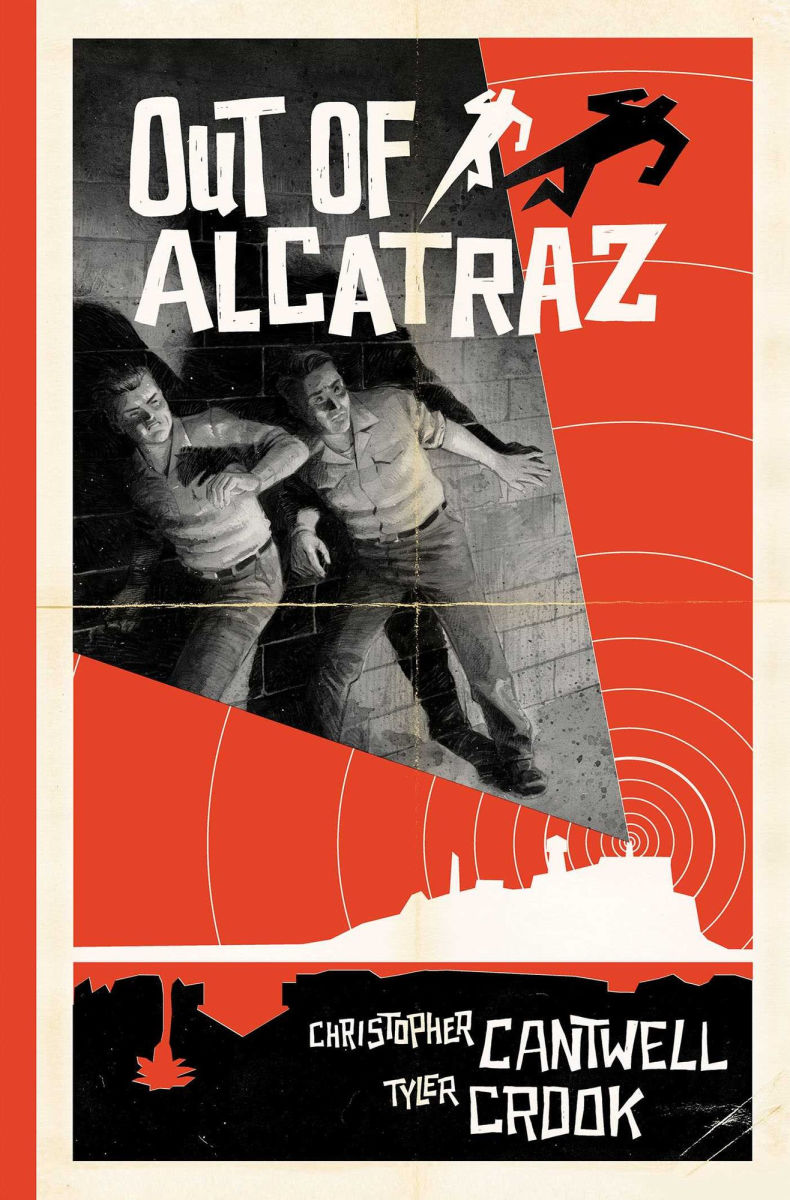
I know this is a 2025 book but shouts to Out of Alcatraz. That book was awesome.
Gorinson: No, I mean, Out of Alcatraz…Out of Alcatraz, I can’t take any credit. I can take any credit for Out of Alcatraz whatsoever. Chris Cantwell and Tyler Crook showed up fully formed. Bess edited that book as well. Those three people, I mean, again, I’m trying not to be hyperbolic, but Out of Alcatraz is maybe one of the finest books I’ve ever had the opportunity to publish or work on at any capacity. I think it’s a masterpiece.
So, I’m holding my breath for awards nominations later this year. I’m knocking on wood now so I don’t jinx myself. But it’s a stunning book.
And that hardcover production was gorgeous. Not to keep bringing up design and production value, but that is so key to me. If you have a good-looking book that’s well produced, it’s going to make me pick it up if I’ve never read it.
Gorinson: No, it’s a huge part of comics. These are artifacts that exist in the world. There’s a couple of publishers out there I think could increase their sales by 10 to 15% if they paid more attention to graphic design aesthetics. There’s a strong case to be made that Tom Muller increased sales at Image Comics by a large percentage just by existing and doing such great work.
I mean, even the X-Men stuff that Tom worked on with Jonathan Hickman…I’m not saying that’s the reason why that popped, but it’s part of the reason it stood out as so different, and you need to do that in the comics market.
I want to close with some bigger picture thoughts. When we first met, you were at Valiant, and that feels like a completely different world in retrospect. How much of what you and your team at Oni have been doing has been shaped by the realities of today’s comic market versus when you first started?
Gorinson: Here is the experience that I got from Valiant that I brought forward, which is in some ways, there was nothing less cool in comics in the year 2011 than Valiant Comics. (David laughs) I have a lot of respect for those fans and for those creators who originally created them. All the people we worked with did some amazing stuff. I’m still really proud of those books, but Valiant was perceived as being broadly uncool. I don’t think that’s controversial to say.
My job often felt like coming in on Monday and being taken out to the parking lot and like, hey, “Here’s a giant boulder. Here’s a chain. When I come back on Friday, I want to see the boulder on the other side of the parking lot.” And I moved that boulder over and over and over again to the point where me and Matt Kindt and Tomas Giorello sold 100,000 copies of X-O Manowar #1 in 2017. So, the system works and you can do it if you come at it with ingenuity and enthusiasm, etc.
This is an incredibly hard industry. It never stops. It doesn’t stop for your wedding anniversary. It doesn’t stop for Christmas. It doesn’t stop for Memorial Day weekend. There’s always somebody who’s late. There’s always a box that got lost somewhere. There’s always a production delay. An artist breaks their hand or has fallen sick. A date has to move. Someone can’t do their schedule. It just never ends, and you kind of just have to surrender to the enormity of all that and then work within the parameters you’re given.
I think anyone who works at Oni would tell you I’ve tried to bring a little bit more grit and gusto to Oni in terms of, let’s build plans, let’s be ambitious, let’s try and outrun our rivals. We’re a tiny little engine that could. There are 30 people here. Let’s go surprise people again. That gets me motivated and I think our team motivated to go do some big things, which is why we’re making these books.
Let’s say two of the biggest stories from the past year and a half in comics have been Absolute DC and the influx of new readers that have come into comic shops, at least in part because of Absolute. Obviously, we’ve talked already about how you’re operating on a long arc of time. You’re not just thinking of something on Monday and doing it on Wednesday for it to hit the following Wednesday. You just can’t do that.
Do you try to avoid being reactionary or do you have to think about the way things are trending as you’re developing plans?
Gorinson: It’s a little bit of both. I’m a big believer that a company like Oni should not just imitate trends. The next big thing that will be popular tomorrow is not popular now. It’s our job to be able to identify what those things are and then help preserve that spark and hope that it catches.
But by that same token, you never know what’s going to be a hit. You just don’t. That’s not the way that culture works. You can only use your taste and expertise to try and make informed decisions. But I definitely don’t want to ever be in the position where we’re making carbon copy xeroxes of things that are popular in an attempt to be the best-selling thing behind that thing we’re copying. I think that’s probably the death of creativity ultimately.
And there’ll be times when you see things that are hits and that’ll inform…maybe we can position something this way or…blind bags are perfect. Blind bags are back. That’s working. I definitely wouldn’t be considering doing that idea without the success of Invincible Universe: Battle Beast. But we’re not trying to carbon copy it either.
I’ve heard from a lot of creators about breaking into comics and how as soon as you go in one way, no one else can go in that way because it’s already been done, and I think that is true for the approach to positioning comics as well. The way to make the next Absolute is not to carbon copy Absolute, it’s to try to find something that taps into the same energy in a way that works for that book or creator that speaks to the audience in a different way.
I think it’s interesting how…you’ve seen some of the reactions and how some of it, respectfully…I say respectfully, but every time you say respectfully, it’s just preceding something that’s kind of mean. But you see stuff where it’s just like, “Let’s do an homage cover to Absolute Batman #1,” a comic that came out a year and a half ago. It’s tricky because every time we see something pop in comics in a way that expands beyond a minor level of success in the direct market, it becomes a crossover hit in a substantial way, it’s not because it reminded you of something else. It’s because it did something new. I sometimes think we lose that in the conversation about all this.
Gorinson: No, you’re exactly right, which is, again, you can’t predict what is going to satisfy the zeitgeist at any given time. If we could predict the zeitgeist, I would know exactly what to publish and I wouldn’t have to be experimental.
Scott Pilgrim is a great example. I’ve learned from talking to Bryan (Lee O’Malley) here. There were no comics like Scott Pilgrim before Scott Pilgrim. There have been probably some that have tried to imitate it, but none that have come close to capturing what that book is. And there are still 16-year-olds now, 21 years later, picking that book up and being like, “This represents me.” That’s incredible.
That’s the interesting thing too…when Scott Pilgrim started, Scholastic Graphix didn’t exist, First Second didn’t exist, and manga was kind of coming off a boom but was in this in-between state. So, Scott Pilgrim was this complete anomaly. It makes no sense. And yet it is probably one of the most well-known and beloved comics for the past two decades.
Gorinson: It’s one of the most important comics of the 21st century, no doubt.
You have a lot of exciting things going on, but you’re operating in a market that, depending on who you ask, could flip either way at some point. I do think that because of the new readers and because of some of the format stuff, there are some exciting things that are happening in terms of the longevity of the market, but there’s also a lot of speculation that’s a bit worrying from the sustainability side. Going forward, how do you balance the varying needs of the market to not just maintain Oni’s position today, but grow within a rather complicated, always changing industry?
Gorinson: First and foremost, which, again, I’m not trying to sound like I’m talking in hollow platitudes, but it really is, make cool stuff. As long as we are satisfying the top-level thing of, “My God, I think this is exciting and we should publish it.” Or sometimes it’s not just me. I’m a white guy in my forties. I have other people who are like, “No, I think we should publish this. “I can be swayed by that, or outvoted.” As long as there’s material that we think needs to get out there, that’s solution one.
Everything else is really kind of a format, release schedule, what is the best format for this book? Can it survive? Does it help the budget for this book if it is a miniseries before we collect it as a graphic novel? Should we go straight to graphic novel? Does that help reposition it as a prestige thing that libraries or independent bookstores might be interested in? All of that is a conversation that’s informed by the various comings and goings of the marketplace at the moment.
But our creator-owned sales for the direct market are currently experiencing some new highs. That market is cooking, there’s no doubt about that.
Which is done in conjunction with Archie Comics, of course.↩